
The Kingdom of Morocco. Our very first trip together. Have you ever thought about travelling Morocco for a week? Even if you still haven’t planned it, you might change your mind after reading the following.
Take a look at the beautiful places we visited on our 9-days roundtrip by car.
In the early weeks of 2017 we were longing for some warm, sunny days (typical, when deciding where we will travel to). We did not require much: an affordable place to fly to and a place not too far away from Central Europe. Morocco caught our interest as neither of us had been there before and we heard that it has quite a welcoming attitude towards travellers. We booked our Ryanair tickets from Cologne to Fes (Julia flew into Cologne from Warsaw the night before) and we rented a car in advance from Dollar Morocco. We spent our nights in budget accommodations.
First off: We felt safe during the whole trip. If you have heard different opinions, don’t let this sway your travel decision. Respect the culture, the people and the nature and you’ll receive the greatest pay back by an unforgettable adventure in North Africa.
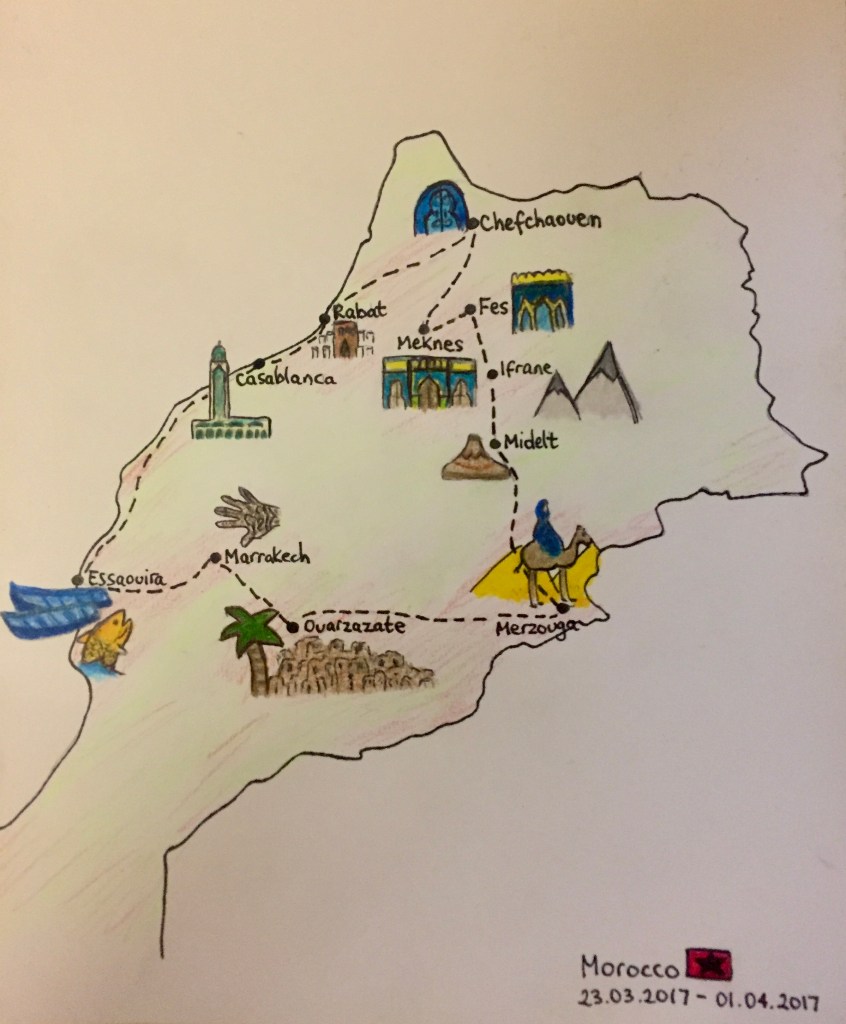
🇲🇦Our travel route:
Fes (- Ifrane – Midelt) – Merzouga – Ouarzazate – Marrakech – Essaouira (- Casablanca) – Rabat – Chefchaouen (- Meknes) – Fes
*(in brackets): places we visited, but didn’t stay for the night
© 2017 Julia Skreta. All rights reserved.
Things to know about Morocco:
– the official languages are Moroccan Arabic & Berber
– the largest mosque of the African continent lies in Casablanca: Hassan II Mosque
– in the early 20th century it was divided in a Spanish and a French protectorate
– the Northern enclaves Ceuta and Melilla are Spanish territory and the EU’s only land boarders with Africa
– approx. 11 Mio. tourists visit Morocco per year (2017)
– the country is relatively safe, peaceful, and stable
– traditional guest houses are called “riads”
Our 10 tips for Morocco:
1. Even though Morocco is quite liberal for a muslim country, you should stay respectful towards the religion (women need to dress in long pants).
2. Be careful on the night market in Marrakech (don’t get a “free” Henna tattoo).
3. Don’t eat street food (to avoid a bad stomach or even food poisoning).
4. Don’t expect people to speak French or English.
5. Be aware that the mountain regions can be quite chilly (we experienced heavy snow falls in March).
6. Stay in traditional Riads.
7. Keep the speed limit on the streets (we passed 40+ remote police controls).
8. Stay away from strangers offering free tours or directions.
9. Bring toilet paper (those berber toilets are a true experience).
10. ALWAYS haggle (-25 to -50%).
Fes (Fez)
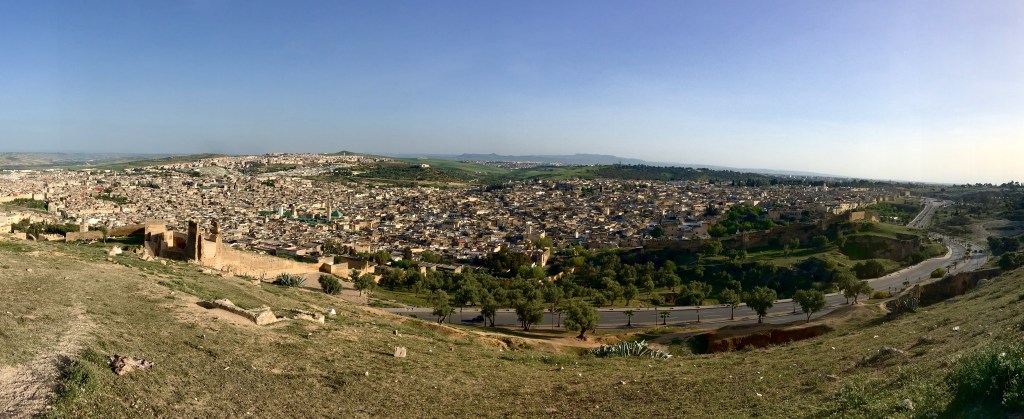
“Mecca of the West” or “Athens of Africa”: Fes is well known for its history and role as the spiritual and learning capital of Morocco.
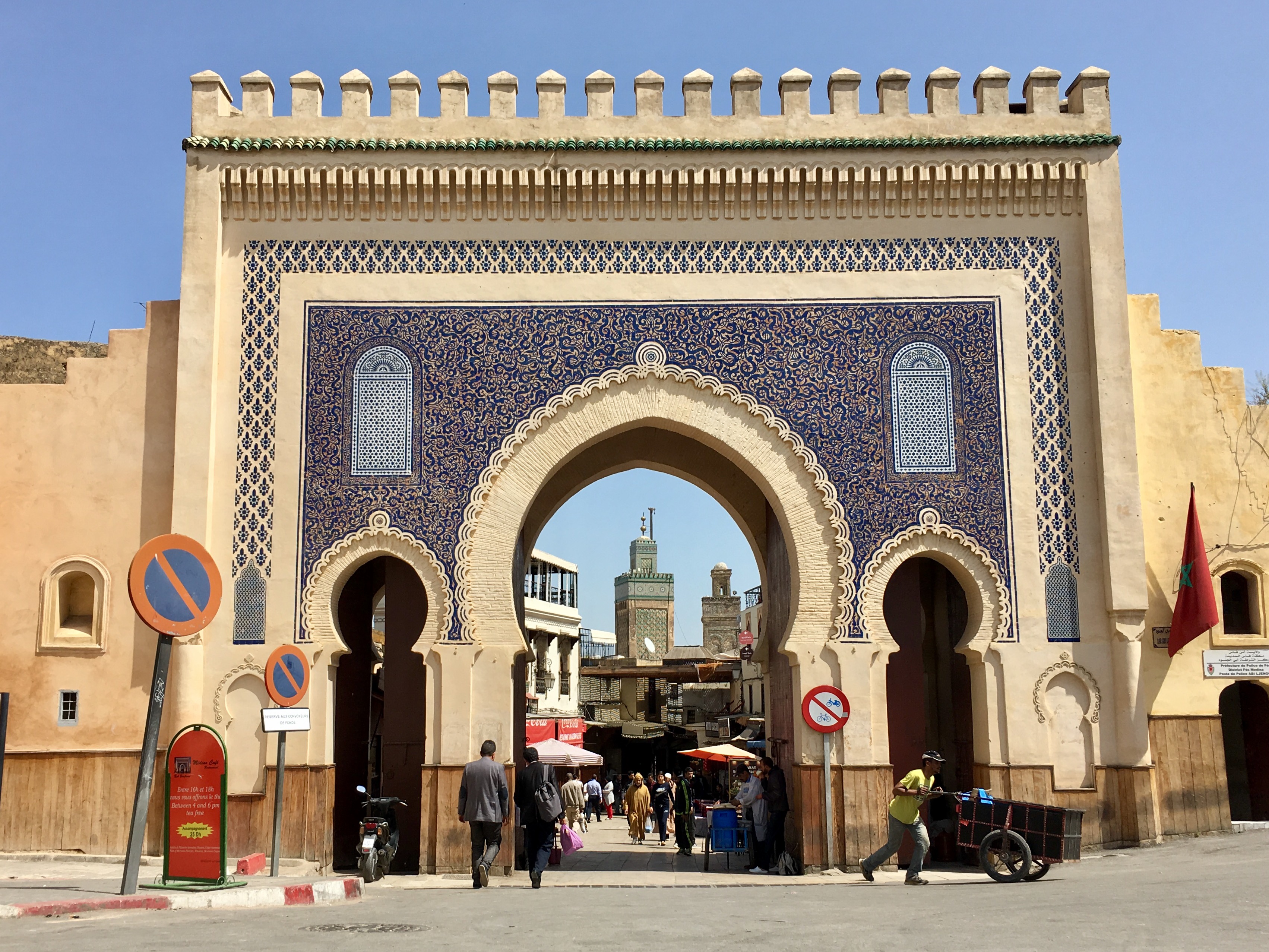
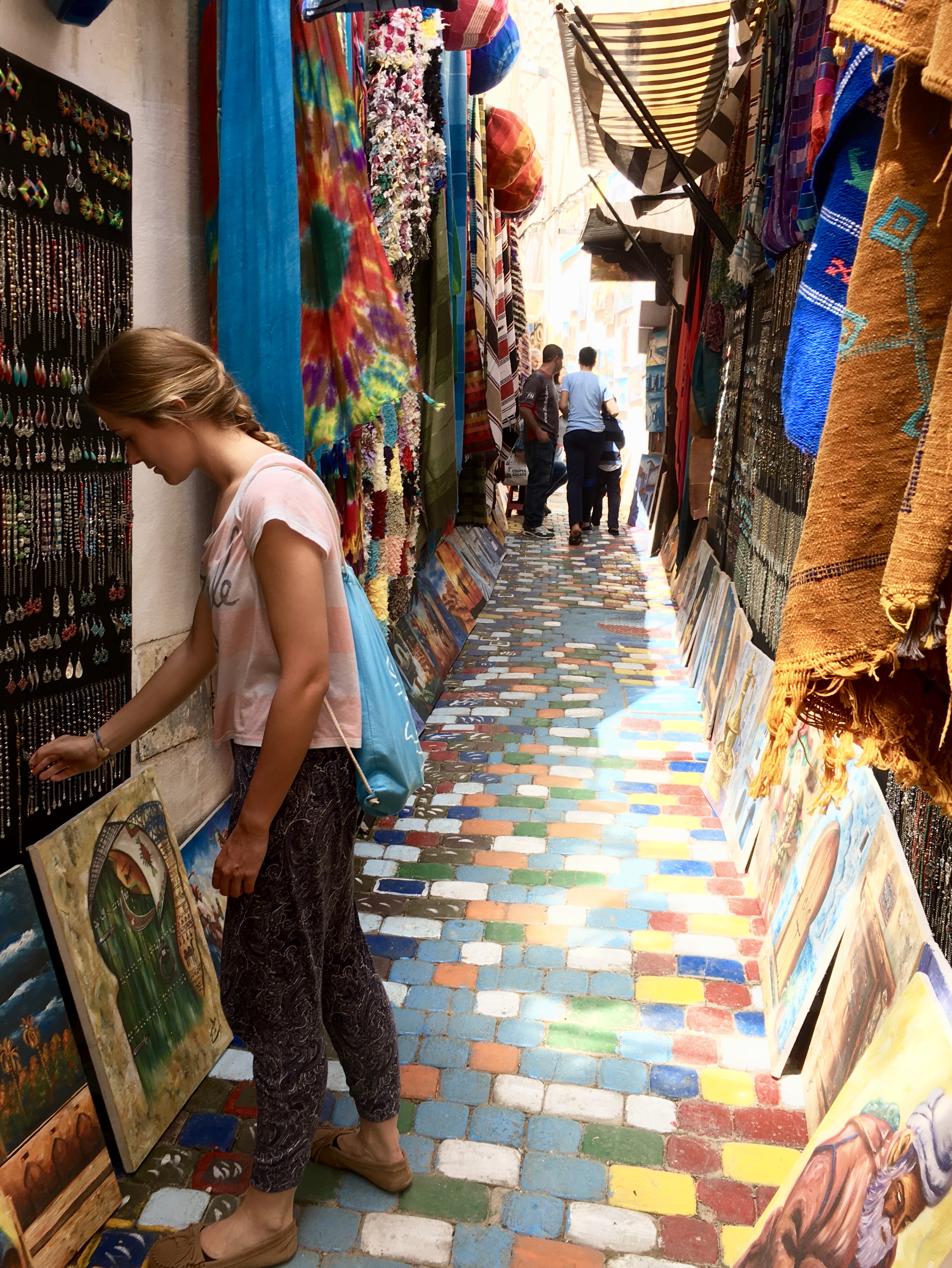
The old part of the city, Fes el-Bali, counts as the world’s largest car-free urban space. It is also a UNESCO World Heritage Site and the center of tourist attraction. The 1.300-years-old labyrinth of Moroccan heritage houses multiple mosques and well-recognised medersas (schools). Starting from the famous blue gate Bab Boujeloud, it is the perfect place to stroll around and discover on your own.
Did you know that Fes used to be the largest city in the world?
By 1170 A.D. the medieval city was an important trading hub and inhabited over 200,000 people.
PLACES TO SEE:
Al-Karaouine, Bab Boujeloud, Fes el-Bali, Henna Souk, Jnane Sbil, Medersa al-Attarine, Medersa Bou Inania, Mellah, Merenid Tombs
© 2017 Jonas Flachmeier. All rights reserved.
WHERE TO STAY:
- Hostel/Low Budget: Funky Fes, the first hostel for young travellers in the Medina. It offers 6 to 12-bed dorm rooms (incl. breakfast). Price for a dorm: 6-7 €/night.
- Riad/Guesthouse: Dar Rabha is a guesthouse located 5 mins from the old Medina. The rooms for two to five people (incl. Moroccan breakfast) start from 30 €/night.
- Luxury: Dar Bensouda, a hotel and spa in the heart of the Medina offers rooms with private bathrooms, two courtyards and a swimming pool. Price for a double room: 110 €/night.
Merzouga
Surfing on sand dunes, riding camels and sunsets in the desert. If this sounds appealing to you, Merzouga is your call. The pre Saharan village lies in the East close to the Algerian border and is the gate to the picturesque landscape of Erg Chebbi or the Saharan desert.
Morocco’s desert is in most parts made up of flat terrain (hamada), but Erg Chebbi has sweeping dunes that reach 150 metres in height. The area is accessible by feet from Merzouga, but the real experience comes with a Berber tour.
There are plenty of options to book a camel tour after your arrival (don’t forget to bargain!). You can choose to go out into the sand dunes for the day or even stay for the night to watch the stars. Your local guide will serve you with food, tea and sometimes even anecdotes from the nomad life.
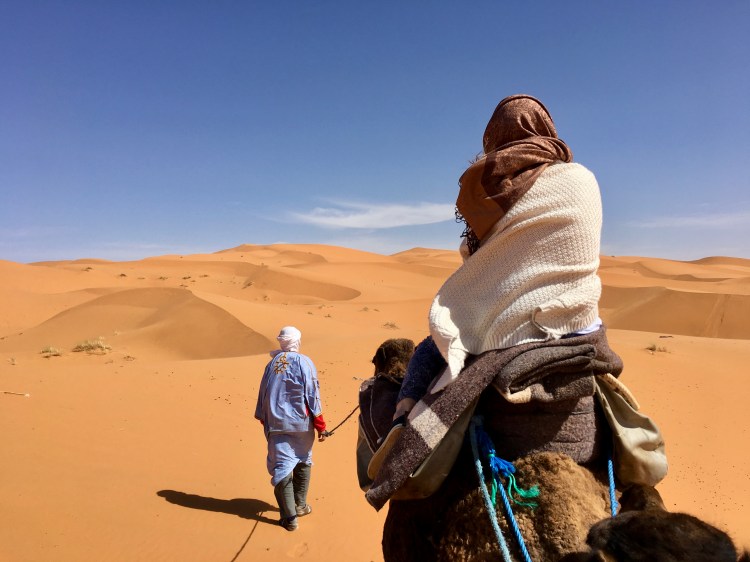
A camel tour with a local guide is worth the experience. © 2017 Jonas Flachmeier. All rights reserved. 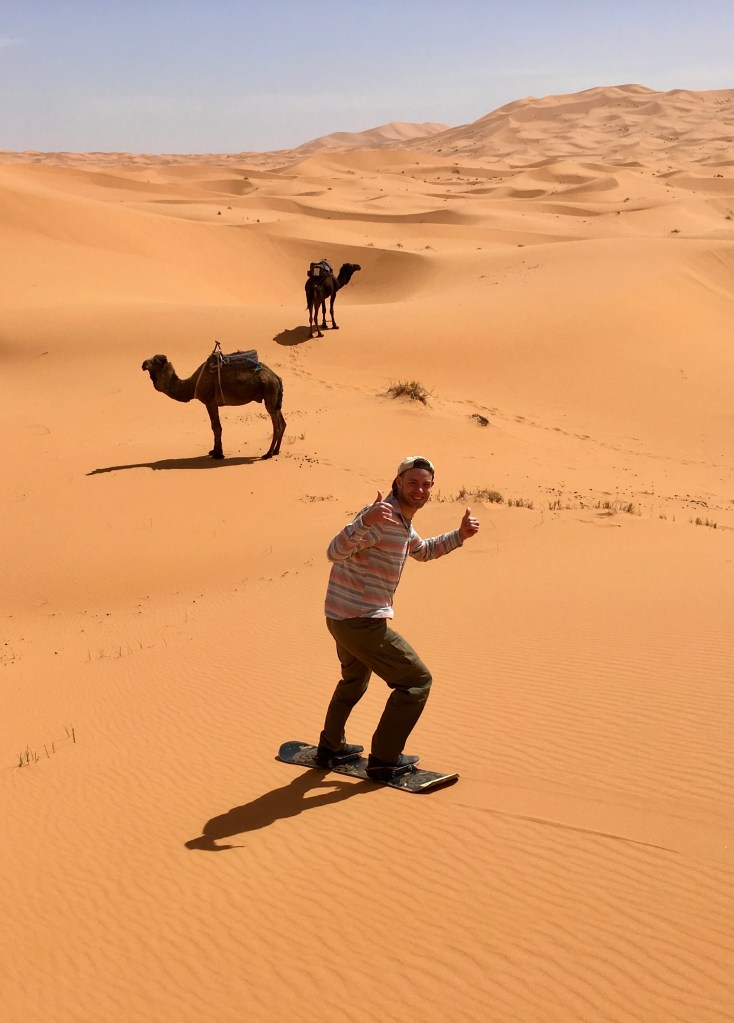
Show your boarding talents in the sand! © 2017 Jonas Flachmeier. All rights reserved. 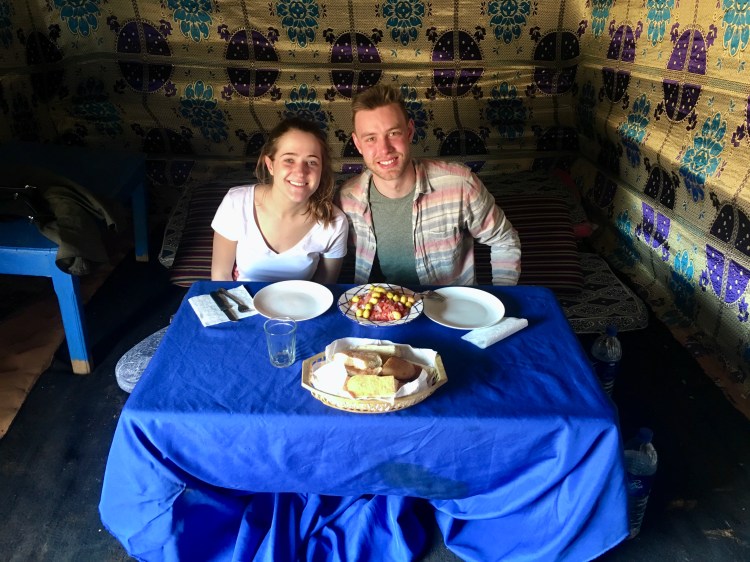
Your local guide might even serve you Berber whiskey (tea), Moroccan salad and tajine in his tent. © 2017 Jonas Flachmeier. All rights reserved. 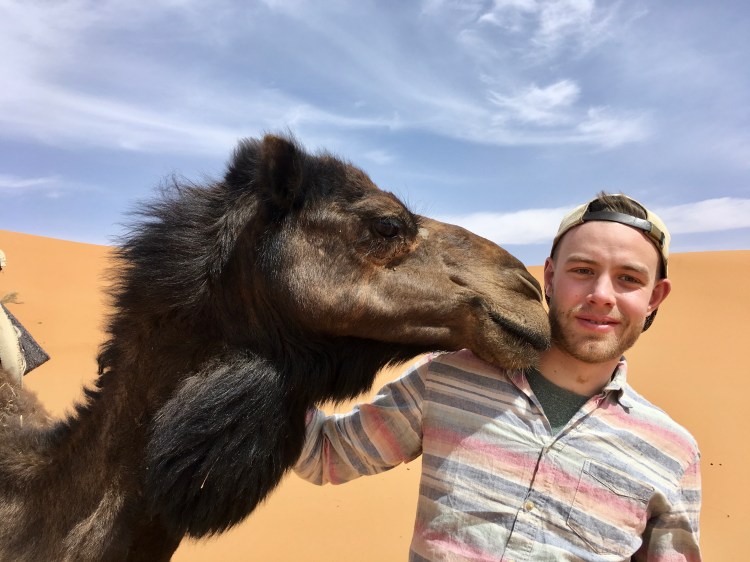
Love is in the (h)air. © 2017 Jonas Flachmeier. All rights reserved. 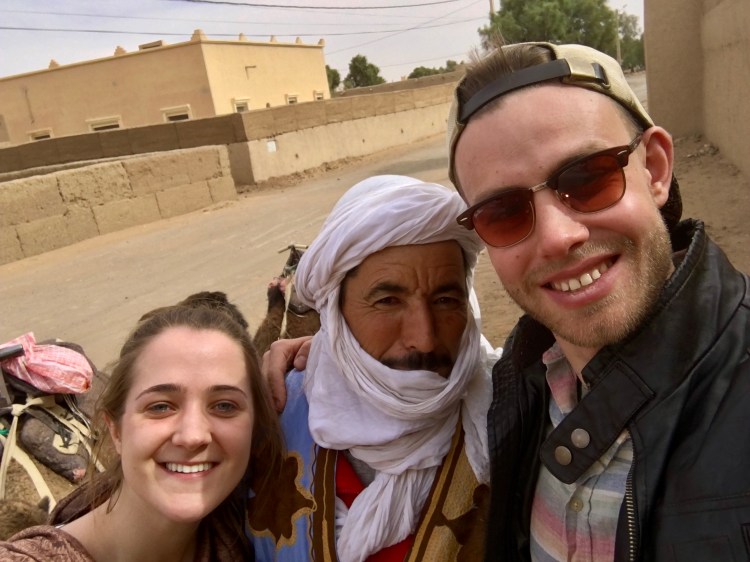
Our local guide Hassan. © 2017 Jonas Flachmeier. All rights reserved.
OUR TIPS FOR A DESERT TOUR:
Light clothing (protects from the sun, doesn’t heat you up), a lot of water, sunscreen, sunglasses, warm clothes for the night and a scarf (protects you from sand and sun).
Merzouga itself is a tiny village, packed with auberges (kasbah) and hostels. There’s not much to see besides a local mechanic, net cafe, teleboutique, carpet shop and some local touts.
WHERE TO STAY:
- Berber Tent/Low Budget: The family-run Nomad Bivouac offers tents for 15 €/night (with shared bathroom and toilet). Guests can trek into the desert.
- Auberge/Kasbah: Located beside the sand dunes of Erg Chebi, Auberge Les Roches features an interior courtyard with palm trees. BBQ facilities are available and a swimming pool. Rooms start from 31 €/night.
- Hotel/Luxury: Kanz Erremal is located in the heart of the desert itself, immersed in the fascinating landscape of the dunes of Erg Chebbi. Costs for a room: 83 €/night.
Ouarzazate
Ouarzazate or “Ouallywood” has a long established relationship with cinema and carries the usual chilled-out charm of the southern regions. You can find the two major film studios of Morocco in this city: CLA studios and Atlas studios. You can visit the film production venues and explore the sets. Gladiator (200), Babel (2006) and Game of Thrones, 3rd Season (2013) are just some of the productions that found their way to the surrounding areas and are worth being named.
The most iconic attractions closeby are the beautiful ancient ksar Aït Ben Haddou and the picturesque Oasis de Fint.
Both of Morocco’s desert regions (M’Hamid or Merzouga) are in half-day driving distance.
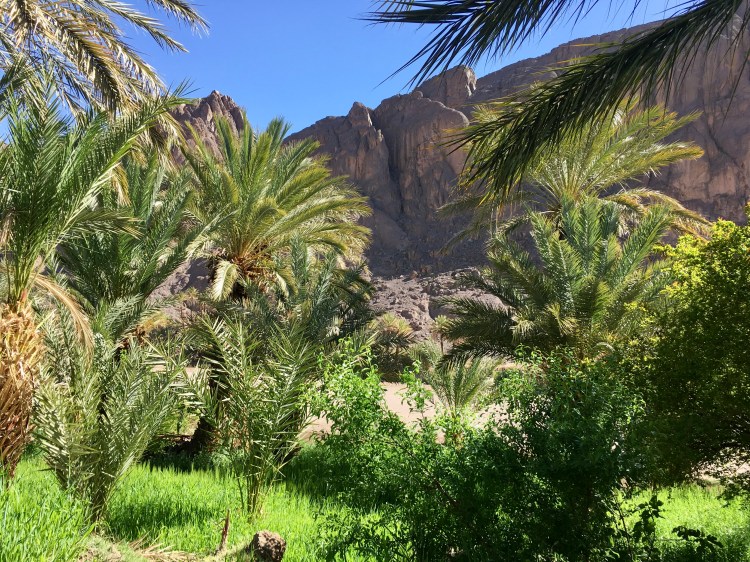
Oasis de Fint: A green landmark within a canyon. © 2017 Jonas Flachmeier. All rights reserved. 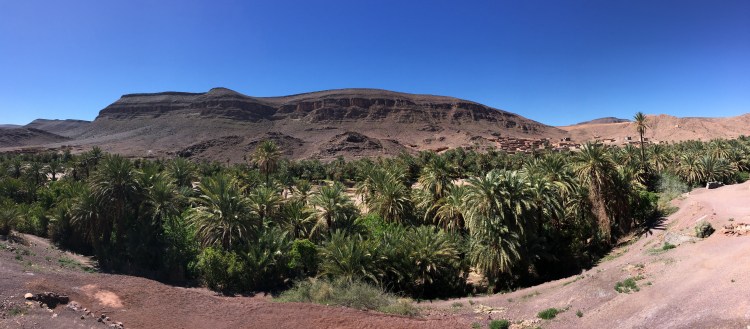
Oasis de Fint from the top. © 2017 Jonas Flachmeier. All rights reserved. 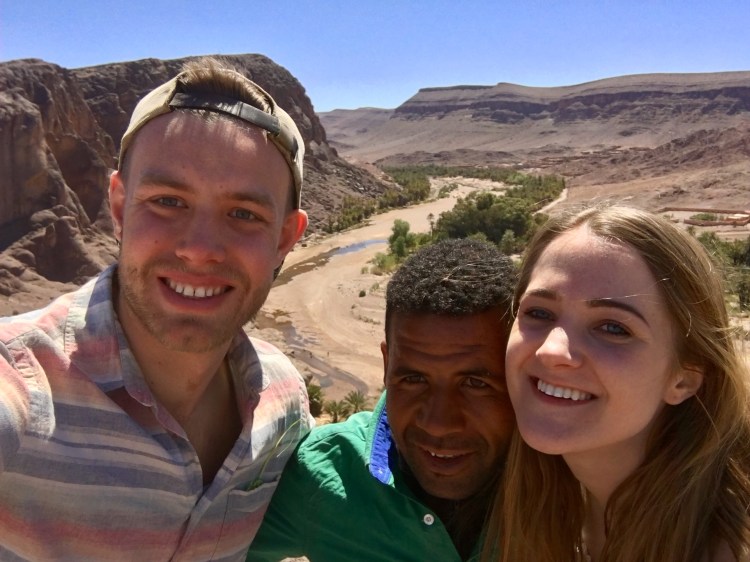
Be aware of the local people at the Oasis de Fint. They will offer to show you around for 10-15 €. © 2017 Jonas Flachmeier. All rights reserved. 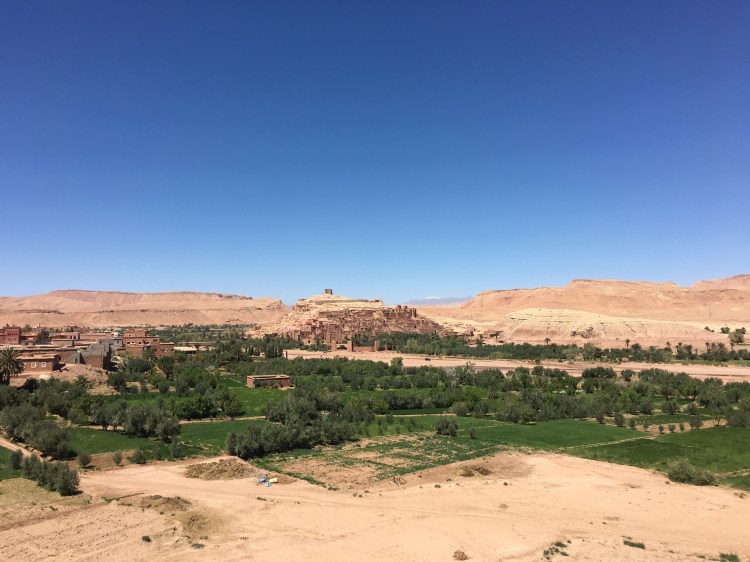
View on Aït Ben Haddou . © 2017 Jonas Flachmeier. All rights reserved.
PLACES TO SEE:
Atlas Studios, Dades Gorge, Draa Valley Palmeries, El Mansour Eddahbi Barrage, Oasis de Fint, Ounila Valley, Place Al-Mouahidine, Tamdaght Kasbah, Taourirt Kasbah, Telouet Kasbah, Ziz Valley Palmeries
WHERE TO STAY:
- Berber Tent/Low Budget: Ecolodge La Palmeraie Ouarzazate is a 6-minute drive from the center of Ouarzazate and an 8-minute drive from Taourirt Kasbah. Tent: 27 €/night.
- Mid-range: Located in the center of Ouarzazate, Hotel La Perle du Sud offers air-conditioned rooms and a big swimming pool. Rooms start from: 48 €/night.
Marrakech (Marrakesh)
For over a thousand years, Marrakech is known as a popular travel destination: Moroccans, travellers and traders have been visiting the city for business, pleasure and tourism. The broad plaza (Jemaa el-Fnaa) is the heart of this famous Red City. It has this name from the red color of the earth used for its walls.
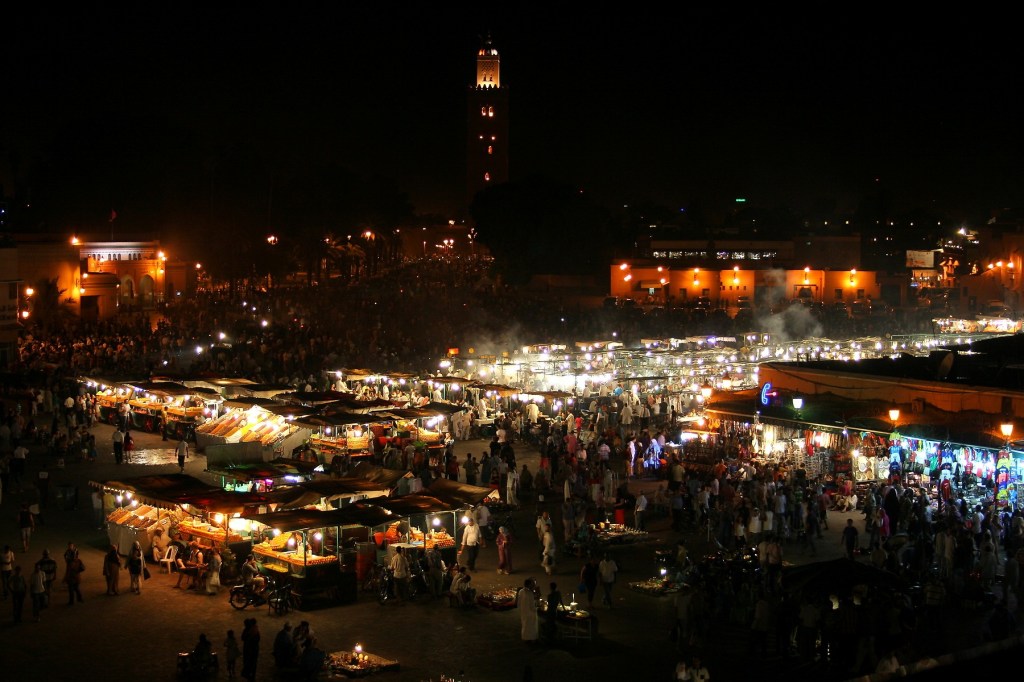
© 2009 by Andrzej Kosiński. Licensed under Creative Commons Attribution-Share Alike 3.0 Unported.
Driving to the city from Ouarzazate takes you on a scenic highway through the Atlas mountains. From the gate of the desert to the green and vital regions close to the bumblebee hive of Marrakech. The roads are curvy, but well maintained.
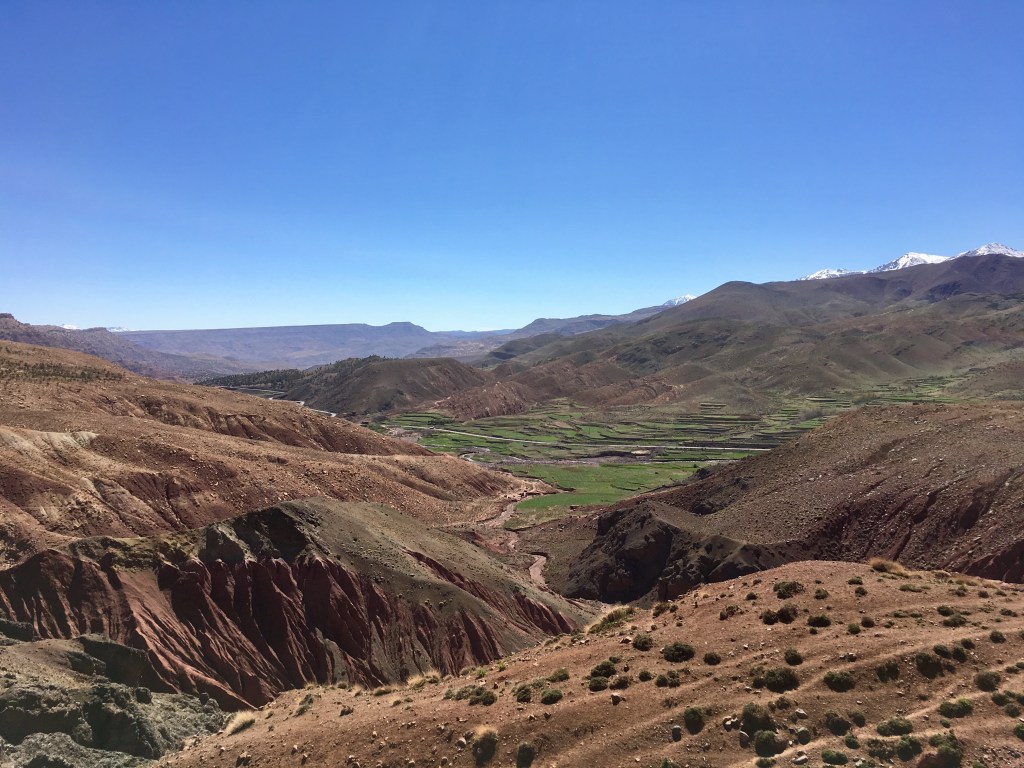
© 2017 Jonas Flachmeier. All rights reserved.
Many of the old homes in the Medina, now used as one of the over 800 guesthouses, have been restored. The best way to enjoy this place is on foot, so be sure to pack a good pair of walking shoes that will lead you through the labyrinth.
Our tip: Avoid eating street food!
THINGS TO SEE:
Bahia Palace, Ben Youssef Mosque, El Badi Palace, Jemaa el-Fna, Koutoubia Mosque, Majorelle Gardens, Medersa Ben Youssef, Palmeraie, Saadian Tombs, Souk Haddadine
WHERE TO STAY:
- Budget: Kasbah Red Castel is a small traditional oasis and is located close to Jamaa el-Fna. Dorms from 4 €/night.
- Mid-Range: Villa Verde. Attractively situated in the Medina district, this guest house provides a garden. Privates from 55 €/night.
- Luxury: Located close to Olive Plantations, the guesthouse Dar Sofil features an outdoor pool and spa center. Double room from 380 €/night.
Essaouira
The small fishing village, located 2.5 hours west from Marrakech on the Atlantic Ocean, offers excellent beaches and a vibrant culture. The UNESCO World Heritage site has a super chilled atmosphere that is different from the tourist hub of Agadir.
The tranquil spot is loved by wind- and kitesurfer that you will find on the broad beachfront. Throughout the year, musicians can also be found on the ramparts, playing traditional Gnaoua music as music plays an important part in the culture of the village.
Most people visit Essaouira to eat great fish and enjoy its scenic beach. There is also a series of ruins about a 1.5 kilometers to the far end of the beach.
Fun fact: Essaouira was picked as one of the top ten happiest places on earth in 2013 (TV Show “Voyages”).
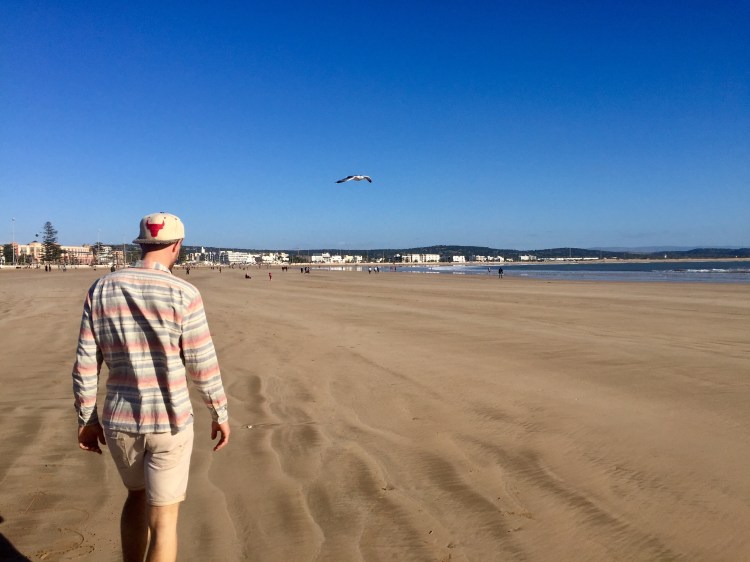
The picturesque wide beach of Essaouira. © 2017 Jonas Flachmeier. All rights reserved. 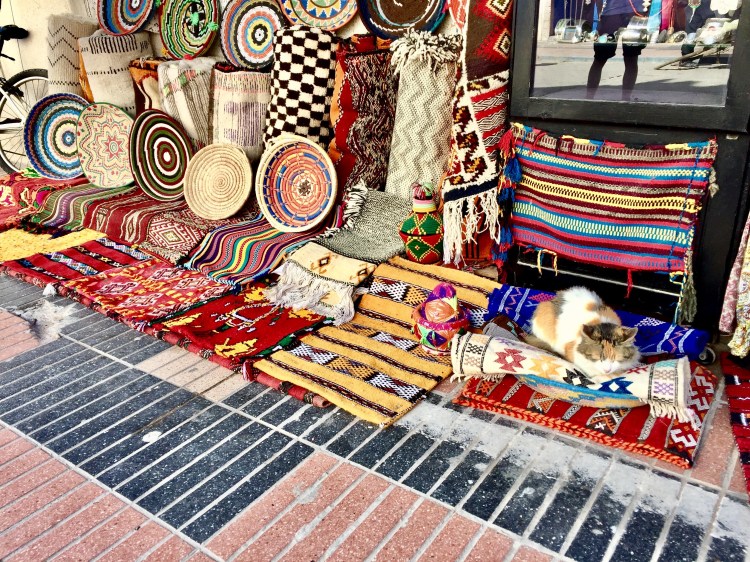
Besides carpets you can find many craft stores in the streets. A heaven for lovers of handmade. © 2017 Jonas Flachmeier. All rights reserved. 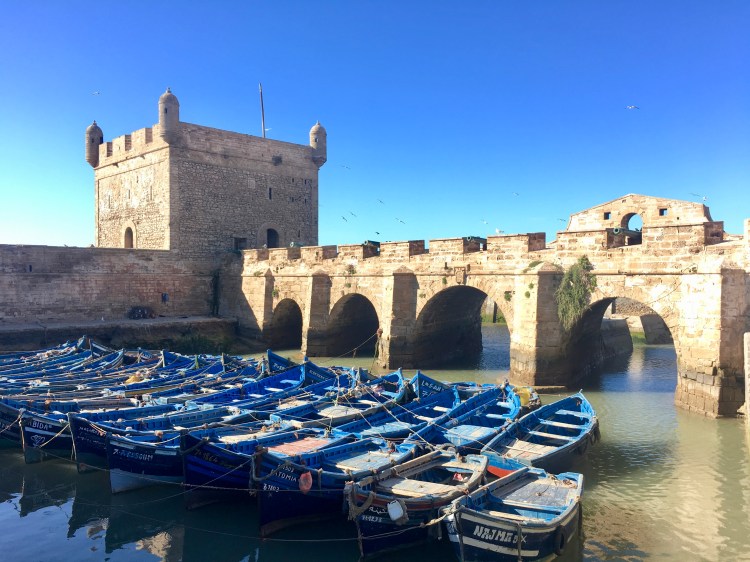
The fishing village was used as a set for Game of Thrones (The port where Danaerys meets the Unsullied). © 2017 Jonas Flachmeier. All rights reserved.
WHERE TO STAY:
- Budget/Hostel: Located next to the beach, Essaouira Beach Hostel provides accommodations with a restaurant and a garden. Dorms from: 10 €/night.
- Mid-range/Riad: Les Matins Bleus: The former primary school in the heart of the medina lies just 202 m from the beach. Double room from: 35 €/night.
- Luxury/Hotel: Riad Chbanate: Set on the city wall, this beautiful riad offers a rooftop terrace overlooking the old medina. Double room from 136 €/night.
Casablanca
When it comes to this fast paced Moroccan city, it is usually associated as a romantic spot with tales of the Marrakesh Express or the movie “Casablanca”.
Besides this, Casablanca (span. “White House”) is the economical heart of the country. The vibe is more urban than in any other city. One of the most popular destinations in this busy place is the Hassan II Mosque, which ranks among the 10th biggest mosques in the world.
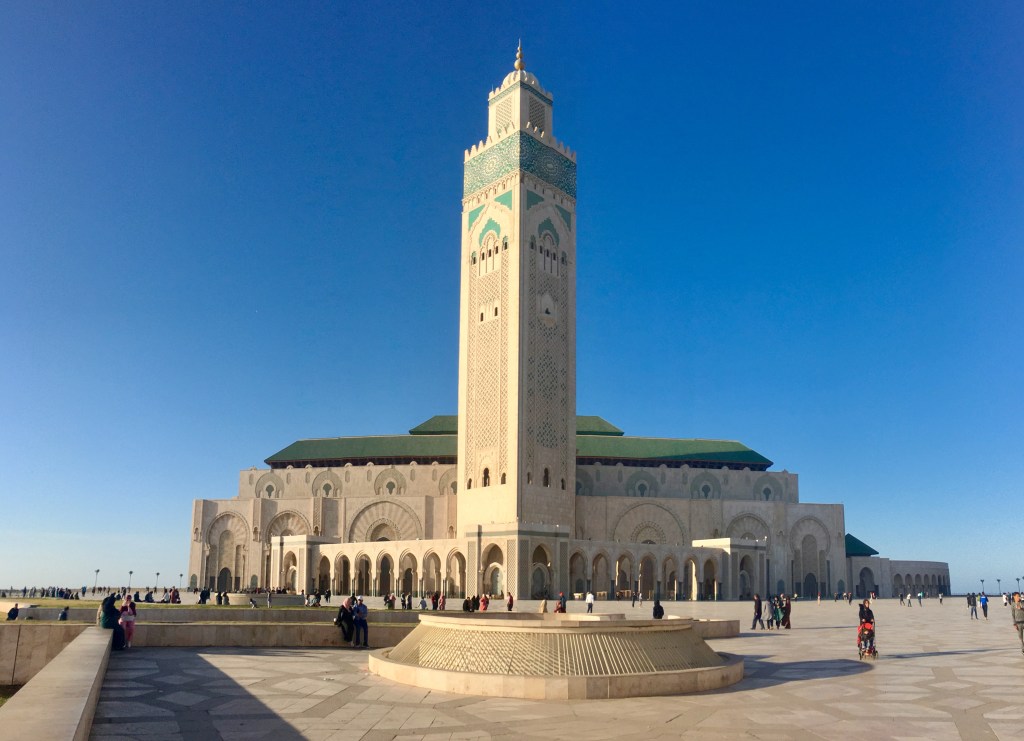
© 2017 Jonas Flachmeier. All rights reserved.
Today, the port town counts more than 4 million inhabitants from all over the world. As Casablanca is not a destination for typical sightseeing, it makes up for it in other ways: restaurants, shopping and nightlife. For the fact that it is so different from any other city in this country, it is definitely worth the visit.
WHERE TO STAY:
- Budget: The Medina Hostel is located in the heart of the old city with many markets around you. Dorms start from: 15 €/night.
- Mid-range: At Point du Jour each room is equipped with a terrace with a city view. Double room from: 55 €/night.
- Luxury: Hotel Le Doge Relais & Chetaux serves a full breakfast every morning in the Art-Deco dining room. Guests can relax in the spa area. Double room from: 160 €/night.
Rabat
The capital of Morocco is loved for its ease in which one can get around. With its cafes and boutiques it has a real European flair. The well-preserved fortress Kasbah of the Udayas lies just up from the hill from the medina. The perfect view over Rabat, the Atlantic and the river Bouregreg. Behind the medina a long stretch of the Rabat Beach starts. A great offer of art and culture can also be found in Rabat, e.g. in the Theater of Rabat.
The political hub of Morocco is also home of the King, His Majesty Mohamed VI, as well as various ministries, dignitaries and embassies.
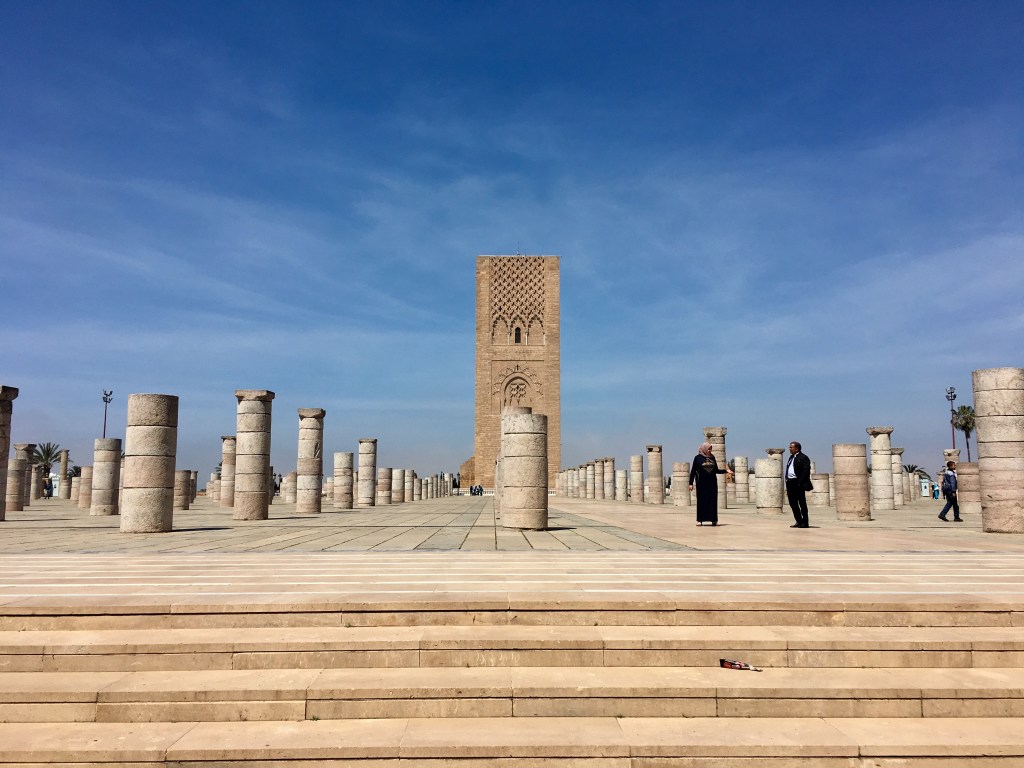
© 2017 Jonas Flachmeier. All rights reserved.
The ancient Roman-Moroccan ruins in the Chellah Gardens are the perfect place for a relaxing, beautiful walk.
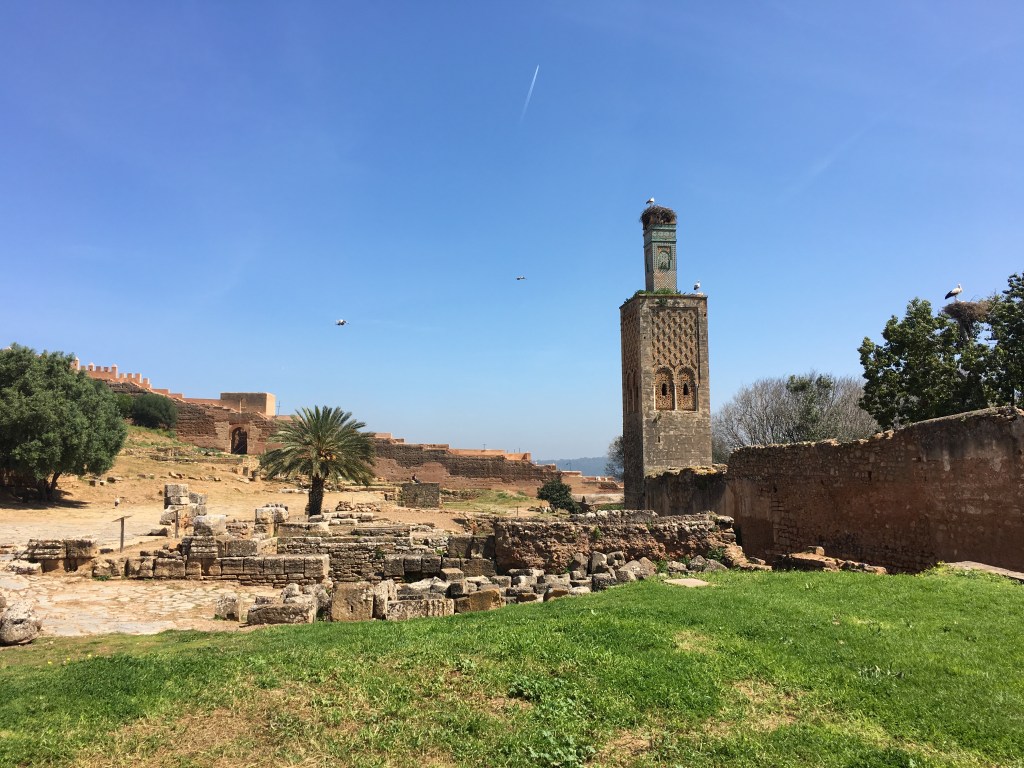
© 2017 Jonas Flachmeier. All rights reserved.
THINGS TO SEE:
Barid Al Maghrib, Chellah Gardens and Necropolis, Hassan Tower and Mosque, Jewelry Museum, The Mausoleum of Mohammed V, The Moroccan Parliament, Udayas Kasbah
WHERE TO STAY:
- Budget: Auberge du Jeunesse offers accommodation with a shared lounge and a garden. Dorms start from 11 €/night.
- Mid-range: Riad Meftaha is set in Marassa Ocean and Kasbah Oudaya is a 6 minutes’ walk away. Triple room from 65 €/night.
- Luxury: La Tour Hassan Palace offers luxury air-conditioned rooms, an outdoor swimming pool and a fully equipped wellness centre. Double from 191 €/night.
Chefchaouen
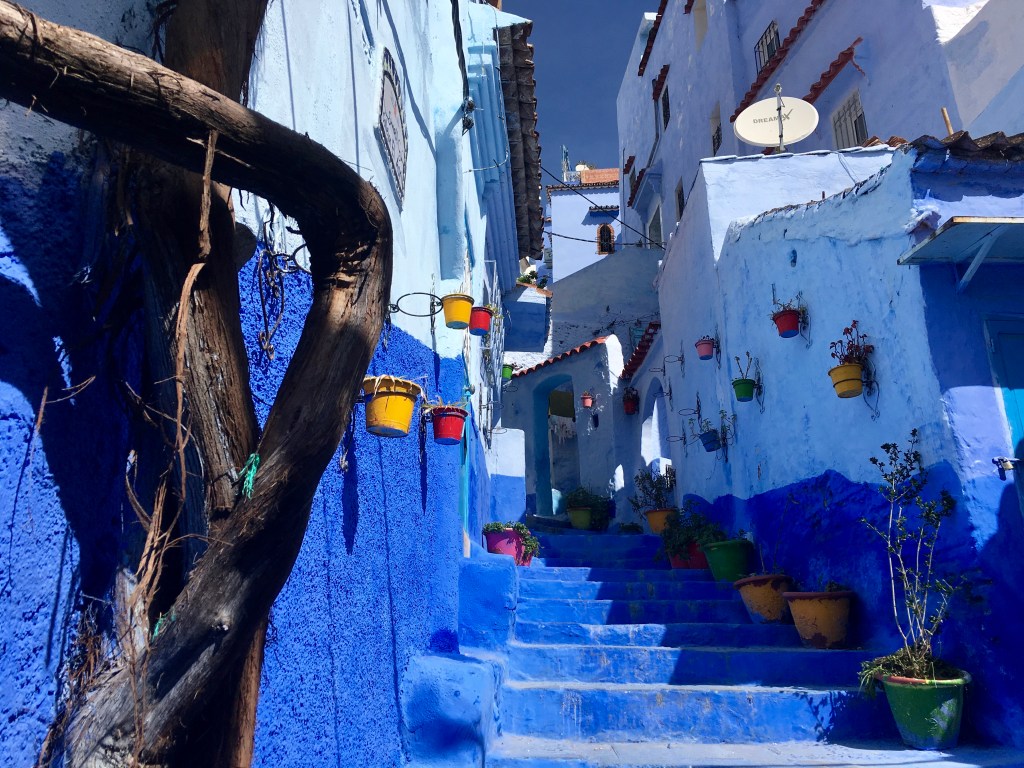
Known for it’s blue-washed buildings, the so-called “Chaouen” lies on the edge of the Rif mountains and is considered one of the most laid-back places of Morocco.
It’s far enough off the beaten track that you won’t find too many tourists there, even though it is developing itself as a travel destination in these days.
The easily accessible day hikes into the mountains are a blast for nature lovers. And shoppers will enjoy the (hassle-free) boutique shops for everything from artisanal soaps to hand-spun pottery made right in Chefchaouen. Children play in the streets and, unlike Fez, they will generally not ask you for money.
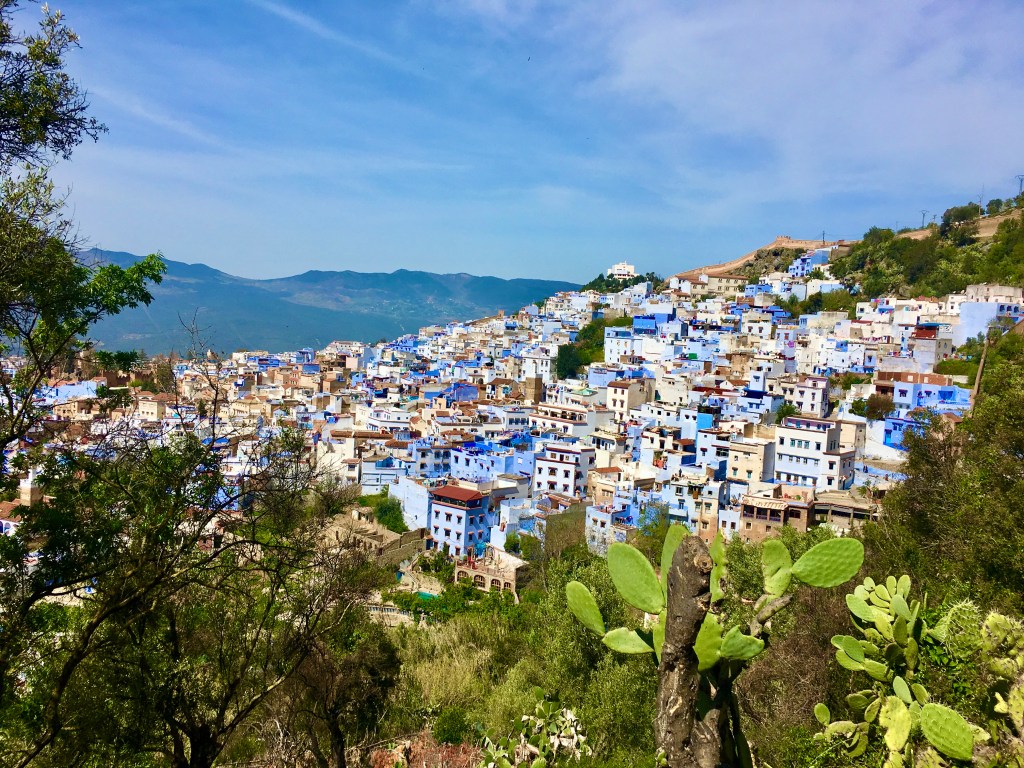
© 2017 Jonas Flachmeier. All rights reserved.
There are several myths as to why the city’s walls were painted blue. They include:
1. It was started by Jewish refugees, serving as a reminder of God and a reflection of the sky in the 1930’s.
2. The blue color keeps mosquitos away.
3. Some locals say that the blue helps keep their homes cool in the warmer months.
4. To attract tourists.
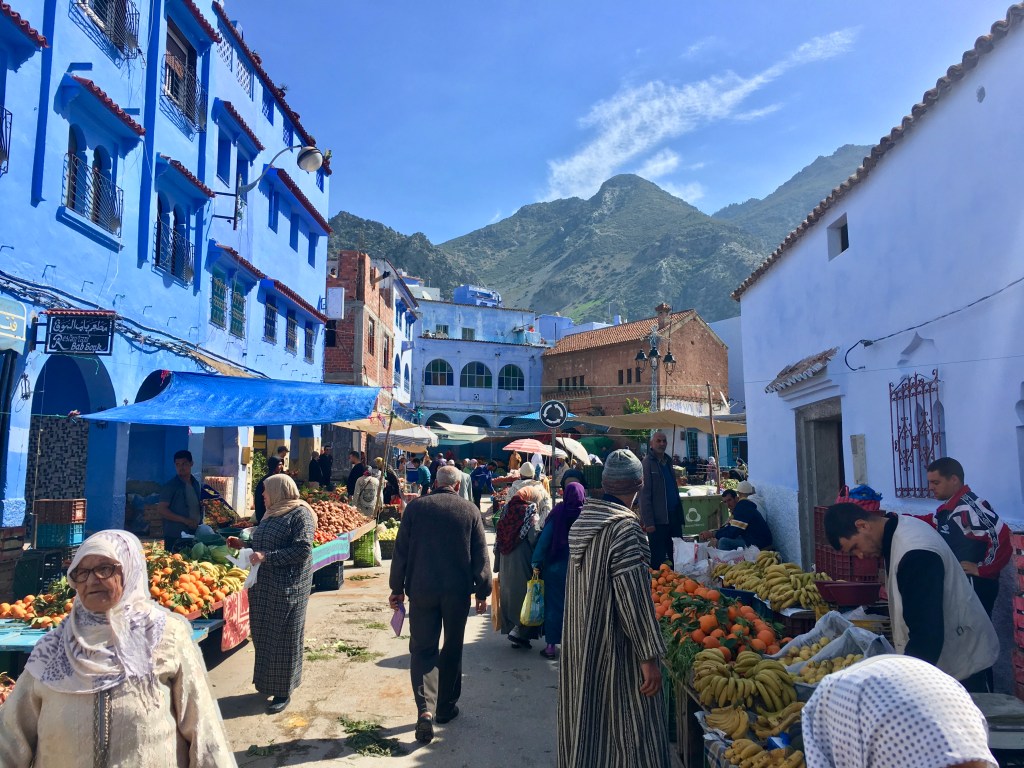
© 2017 Jonas Flachmeier. All rights reserved.
THINGS TO SEE:
Cascades of Akchour, Medina of Chefchaouen, Mellah, Ras el-Maa, Rif Mountains, Uta el-Hammam
WHERE TO STAY:
- Budget: Set in the medina, Hotel Souika features accommodation decorated in a typical Moroccan style with zelig tiles. Dorm for 6 €/night.
- Mid-range: Dar Touijar has a shared lounge, terrace and views of city. Rooms come with a patio and a private bathroom. Double room from 25 €/night.
- Luxury: Lalla Ghayta offers a terrace. Guests can also relax in the shared lounge area. The daily breakfast is buffet styled. Double room from 209 €/night.
Meknes
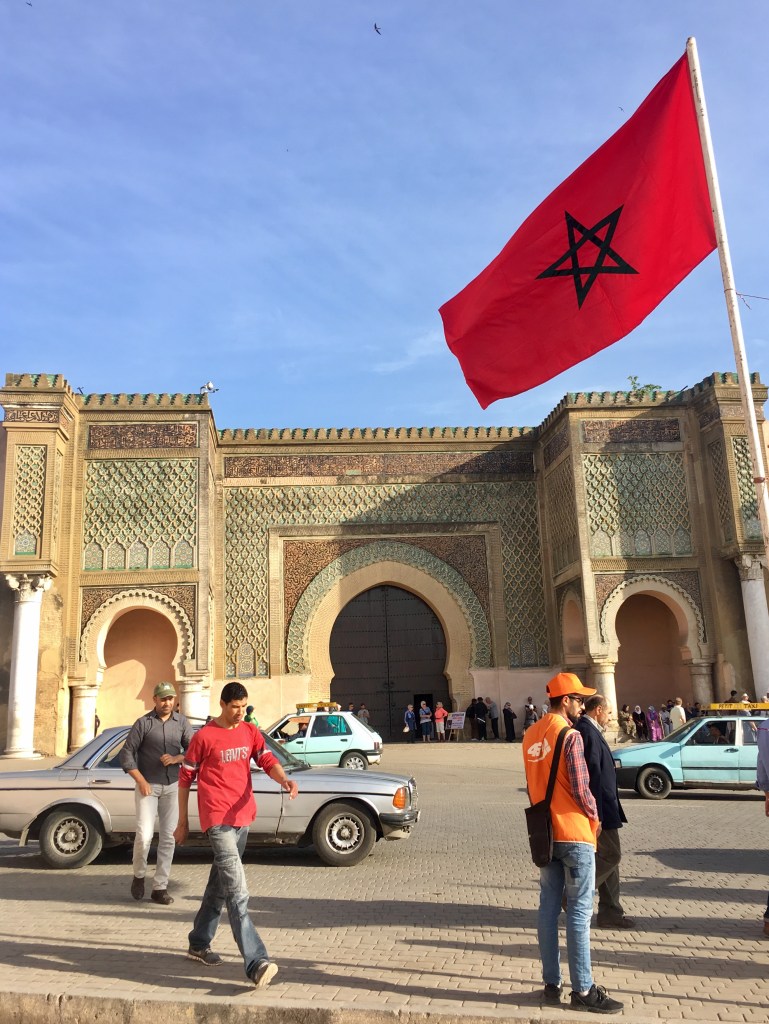
The city of Meknes is known for its grand architecture, medieval walls and beautiful gates. The most famous gate is the huge Bab el-Mansour. Due to its exceptional design including “elements of Islamic and European design and planning in a harmonious fashion”, Meknes is listed as UNESCO World Heritage Site since 1996.
The city is surrounded by the fertile plains below the Middle Atlas Mountains. It thrives on an abundance of agricultural products like olives, grains, citrus fruits, and wine.
Meknes is a great place for browsing artisan products such as baskets, ceramics, pottery or colored silk threads – it is much smaller and less busy as nearby Fes.
© 2017 Jonas Flachmeier. All rights reserved.
THINGS TO SEE:
Bab el-Mansour, Lehdim Square, Moulay Idriss, Moulay Ismael Mausoleum, Volubilis
WHERE TO STAY:
- Budget: Riad Malak offers a terrace and spacious rooms. The private bathrooms are fitted with a bathtub and breakfast is served daily. Double room from 25 €/night.
- Mid-range: Riad D’or is located near to place el-Hedim in the heart of the Medina. Double room from 67 €/night.
- Luxury: Zaki Hotel overlooks the old-town’s ramparts and the Oued Boufekrane Valley. Double room from 106 €/night.
 Two Shoulder Straps