
Thinking of a long weekend trip? Want to indulge in rich culture, delicious food and beautiful nature? Travel to Lithuania!
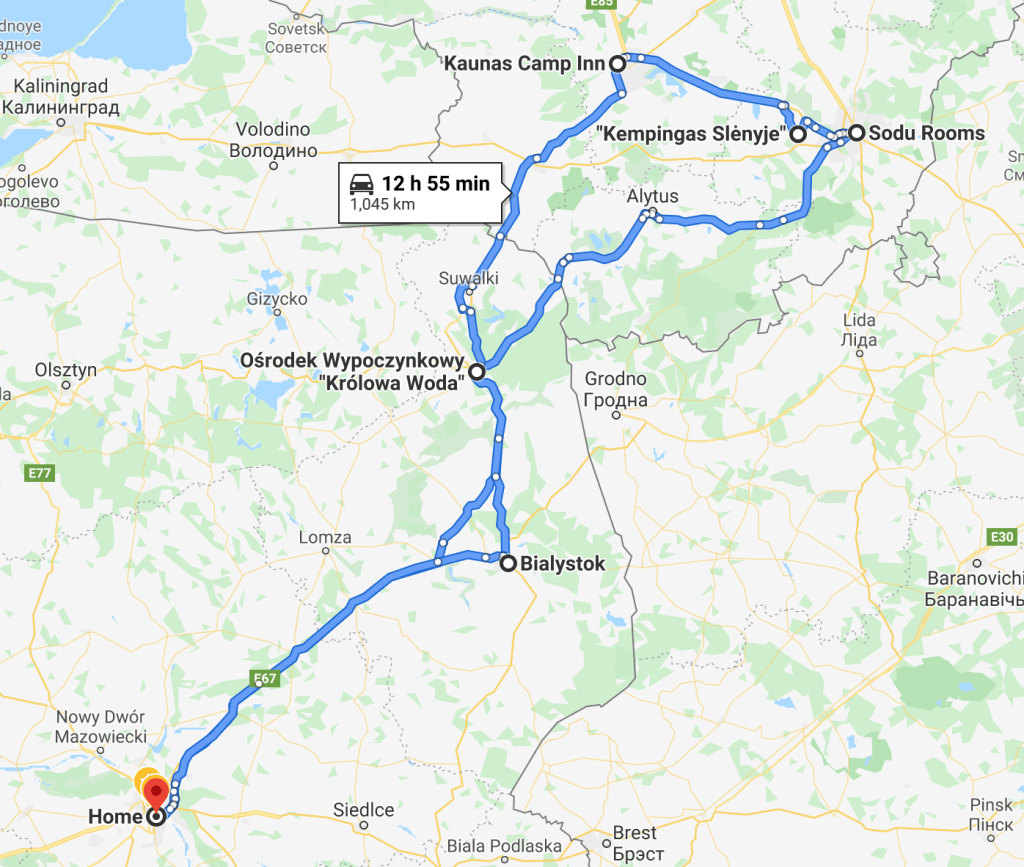
We travelled from Warsaw by car to Lithuania in August 2019, spending 3 full days there. Keep on reading to find out what to do, where to stay and what to eat – without breaking your wallet.
Facts about Lithuania 🇱🇹:
- You can’t buy alcohol after 8pm and drinking age is 20.
- The most common name for a man is Jonas
- By the end of the 14th century, Lithuania was the largest country in Europe.
- From mid-16th to the late-18th century Poland and Lithuania merged to form the Polish–Lithuanian Commonwealth
- Lithuania was the first Soviet republic to declare independence from the USSR.
- There is a Republic within Lithuania (keep reading to find out where)
- Lithuanian Language Is One Of The Oldest In Europe
- Europe’s Oldest Tree Is Located In Lithuania (Oak, Stelmuze – 2000 years old)
Places visited:
Day 1: Vilnius
Day 2: Trakai
Day 3: Kaunas
Warsaw, Poland to Vilnius, Lithuania
By bus: 8hr 40 mins
By car: 5hr 40 mins
By plane: 1hr 5mins non stop LOT flight – 410pln (85€-95€) if you plan ahead
Day 1: Vilnius, Lithuania
Vilnius is Lithuania’s capital and its largest city (population 550 000). Officially established in the 14th century, the city is well-known for its Medieval old town which was added to the UNESCO World Heritage List in 1994. The city is fully of old palaces, narrow streets and numerous churches and, its youthful and vibrant art scene radiates energy, and its historic, architectural presence honours its past.
WHAT TO SEE
Hit the best spots in Vilnius, without walking back and forth throughout the city, by walking in order to the places below. The whole route is around 6km, and of course you can take breaks along the way, while taking in all that Vilnius has to offer.
- Gediminas Castle Tower
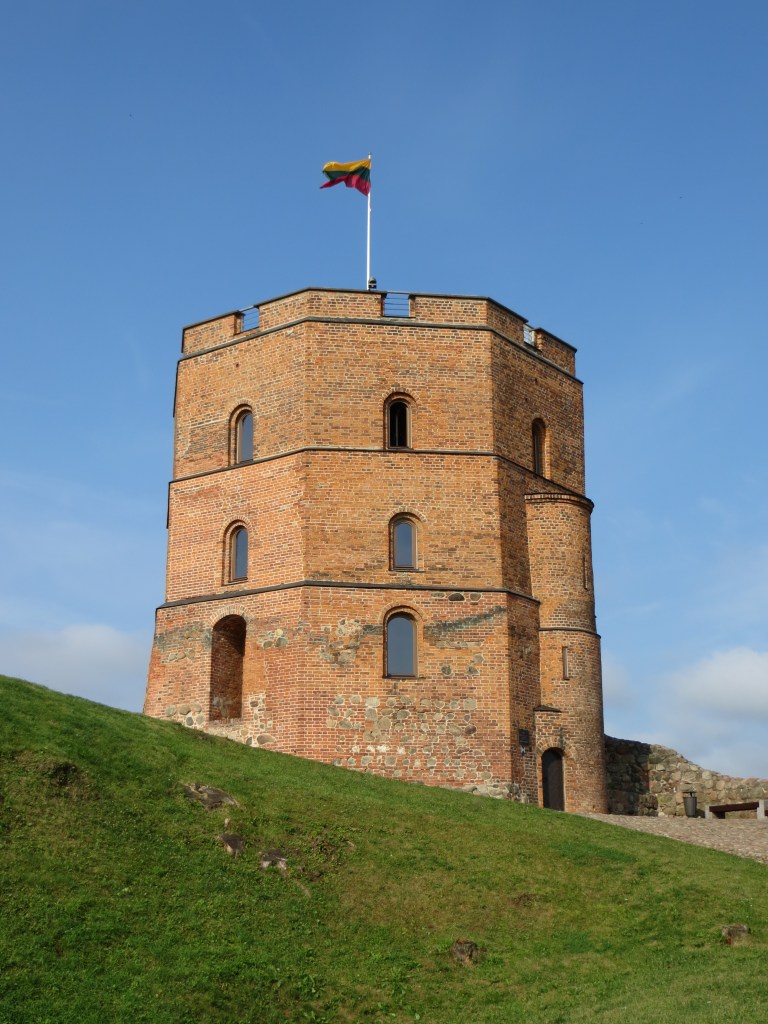
The Gediminas’ Castle Tower, nestled on Castle Hill, is a rebuilt red-brick octagonal tower and the only remaining part of the castle, which once included defensive structures. It provides good skyline views of the city and also hosts a small museum, showing how the castle looked in medieval times.
2. Vilnius Cathedral & Cathedral Square
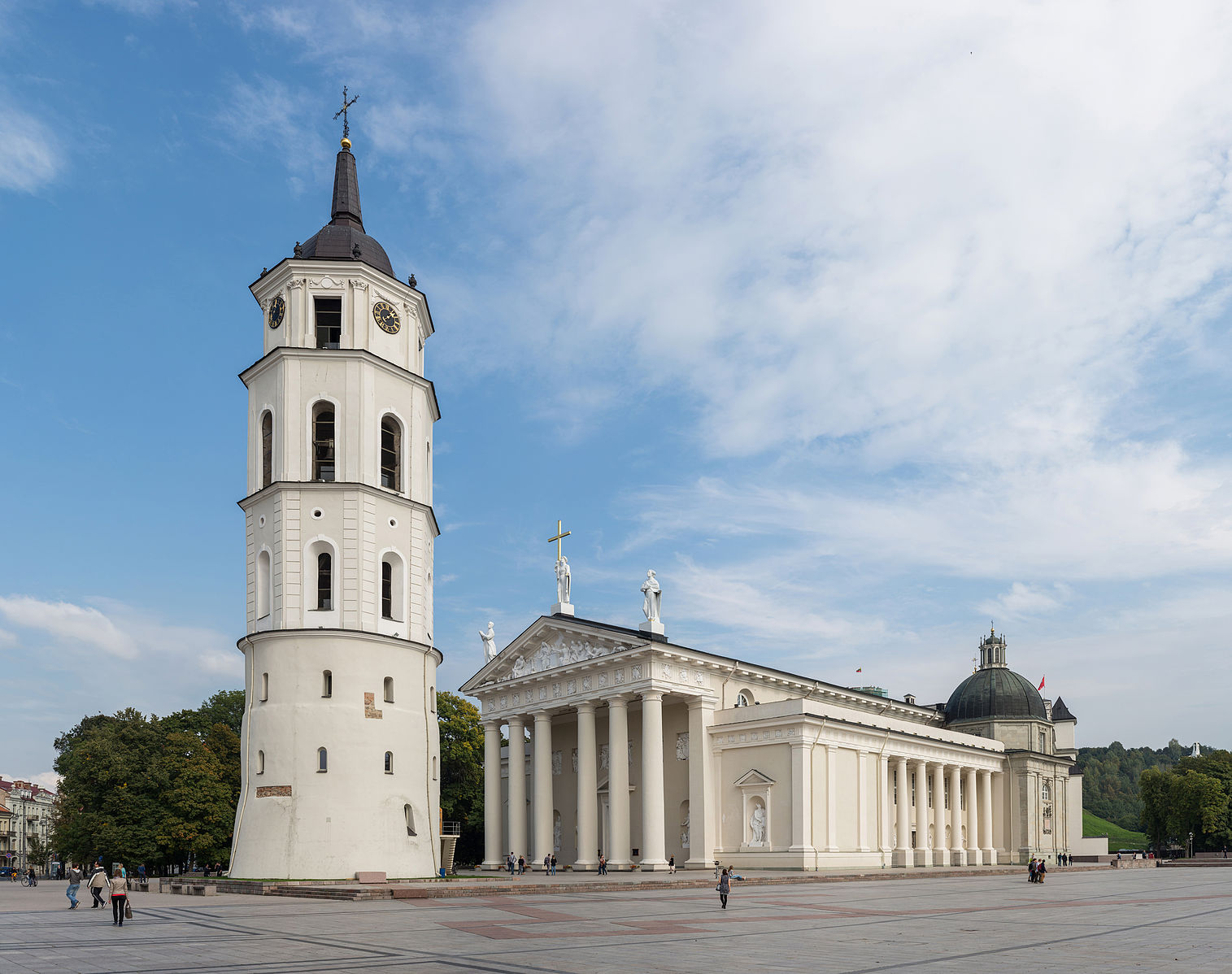
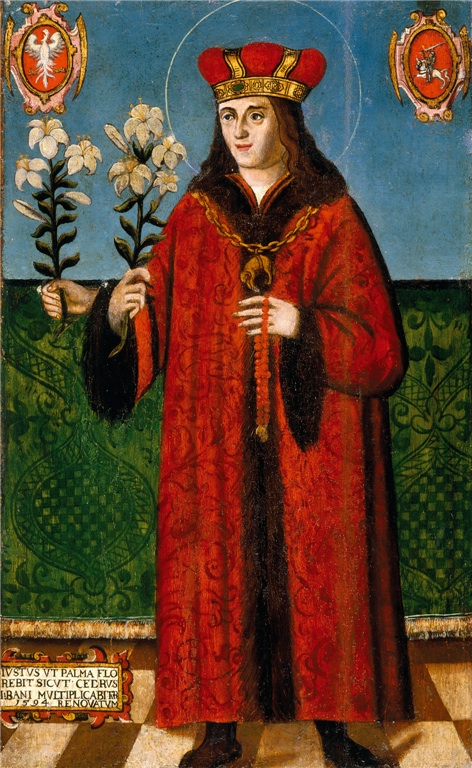
Vilnius Cathedral is one of the oldest Lithuanian churches. It was mentioned for the first time in recorded history in 1387, the same year as the Christianization of Lithuania. Throughout 600 years of its existence Vilnius Cathedral was rebuilt several times, until it acquired its current Neoclassical style at the beginning of the 19th century. The Cathedral was closed during the Soviet occupation and in 1988 it was re-consecrated, and the relics of St. Casimir, the patron of Lithuania, were returned.
Interesting fact: One of these relics is a painting of St. Casimir, painted by an unknown painter in the 16th century. When the painting was almost finished, the painter decided to change St. Casimir’s hand with a lily, to a different side, closer to the heart. After he painted the new hand, he painted over the old one. However, the next morning, the painter saw St. Casimir’s picture, but with three hands, including the new one and the old one, which was supposed to be under the thick layer of the paints. After many unsuccessful attempts to cover it, he left the painting with three hands. Till now, Three-Handed Saint Casimir picture is considered to be miraculous.
3. Gediminas Avenue

In 1989, the avenue which earlier carried the names of A. Mickiewicz, Stalin, Lenin, became known as Gediminas Avenue. Buildings of the 19th and 20th centuries were built along it, currently housing central government authorities and public institutions and many high-end shops and fancy restaurants and modern cafes.
5. Presidential Palace
All narrow streets leading to the Daukanto Square, suddenly widen and provide a view of a predominating structure; the Presidential Palace. It served as a residence for Vilnius bishops since the 16th century and in the 18th century, when Lithuania was occupied and annexed to the Russian Empire, the palace served as a residence for the Governor General of Vilnius. In 1997, the building was renovated and currently the President of Lithuania resides there. The grandeur of the square is somewhat diminished by the Baroque towers above the roof of the palace.
6. Pilies street
Pilies Street is the oldest and most flamboyant street in the Old Town of Vilnius. Its name was mentioned in historical archives as early as 1530. It was once the main road to the castle, taken by kings, members of the clergy, and visitors from other countries. Noblemen and rich citizens built their houses in Pilies Street and university professors used to live there, as Vilnius University occupied a big part of the city next to this street. The street varies in architecture: Pilies 12 and 14 are Gothic, Pilies 4 shows Renaissance architecture; and a part of the Church St. John is Baroque. A beautiful view of Gediminas Tower can be seen from Pilies Street.
7. Literatai street
It is believed that this street was named “Literatai” only at the end of the 19th century in honour of Adam Mickiewicz, the famous poet, who lived here. He lived at the beginning of this street, commemorated by three plaques on the building in Lithuanian, Russian and Polish. Recently, a group of artists had an idea to revive the street and to decorate it with artworks related with litterateurs. A wall is dedicated for painters and other artists to place plates or small objects made of metal, wood, glass, etc. on the wall in honor of litterateurs.
8. St. Anne’s Church
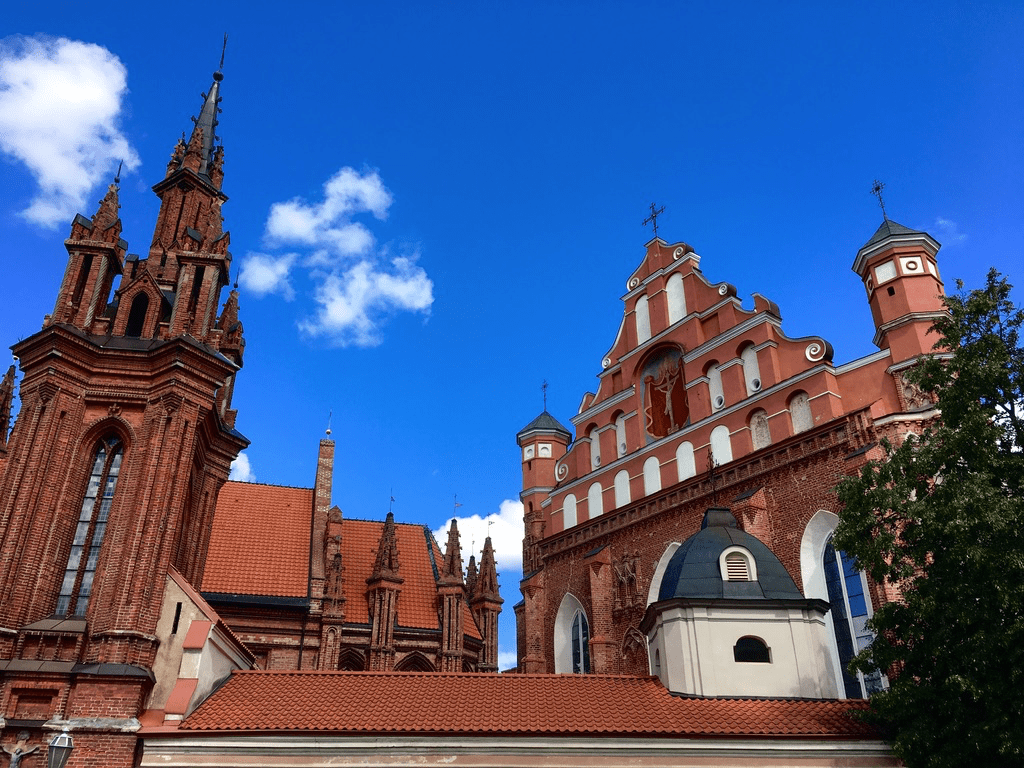
The church of St Anne is a masterpiece of the late Gothic period. There is no nonsensus about its originator or its construction period. Popular legend has it that Napoleon Bonaparte, who was fascinated by the beauty of the church, wanted to take it back to Paris in the palm of his hand. Unfortunately, the reality is not that romantic: during the march of the Napoleonic army through Lithuania, the church was consigned to the French cavalry forces. However, Napoleon did mention in a letter to his wife that „Vilnius is a very beautiful city“. St Anne’s Church, which has survived to the present day without changing for over 500 years, has become a symbol of Vilnius. At a closer look, one can see the letters A and M in the main facade of St Anne‘s. The letters A and M could stand for the Latin Ana Mater Maria or Ave Maria, i.e. „Saint Anne – Mother of Mary“ or „Hail Mary“. Some experts claim that the Pillars of Gediminas have been highlighted in the composition of the facade with the three towers of the church corresponding to the three pillars. Next to the church there is a bell tower initating the Gothic style and built in the 19th century.
9. Bernardine Church & Bernardine Park
A full name of the Church is the Church and monastery of St.Francis of Assisi (Bernardine). The building is monumental. In case of need it could have been used not only for prayer but also for defence. This is testified to by 19 aleois in the northern façade. Gothic pointed-arch windows and buttresses stand out on the façade; the 17th-century renaissance pediment is adjusted to the Gothic part with a 19th-century fresco. In the times of the Soviet occupation the Church was closed down and converted into a warehouse. After Lithuania re-established its independence, the Franciscan monks came back to the Church from the underground. The Bernardine complex has been declared to be a monument of Lithuanian cultural heritage, and in 2008 it was granted the status of a cultural project of importance to the state. 2008 Vilnius Bernardine historical – architectural ensemble was reconstructed (lofts of the church, choir and administrative premises of the cloister, the gate of the church, the passage, the basement and the inner courtyard were renovated), tourist observation paths were made.
10. Mickiewicz monument
The monument to the famous poet Adomas Mickevičius (Adam Mickiewicz) was unveiled in 1984 in Vilnius.
11. Užupis Republic
The self-proclaimed “Republic” of Užupis is Vilnius’ Bohemian and artistic district. It has its own anthem, constitution, president, bishop, two churches, the Bernadine Cemetery – one of the oldest in the city -, seven bridges, and its own guardian called The Bronze Angel of Užupis, who was put in the centre of the district in 2002.
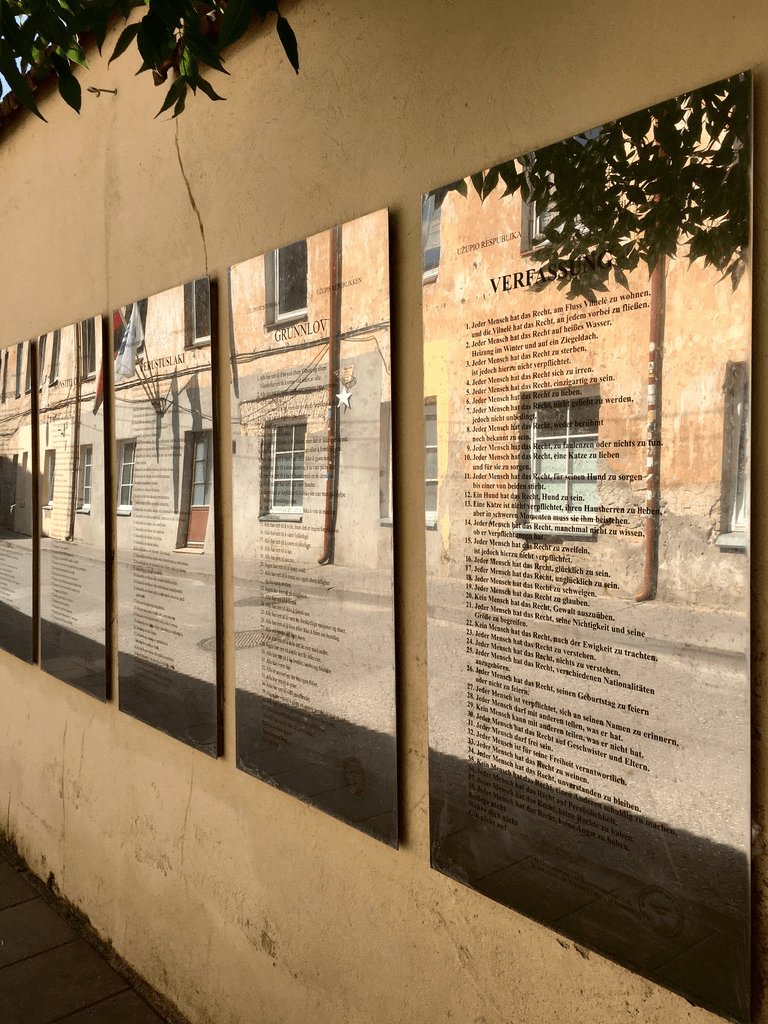
Dating back to the 16th century, Užupis is one of Vilnius’ oldest districts and despite its current prestigious status, was formerly the city’s poorest area and home to a number of manual workers and a red light-district.
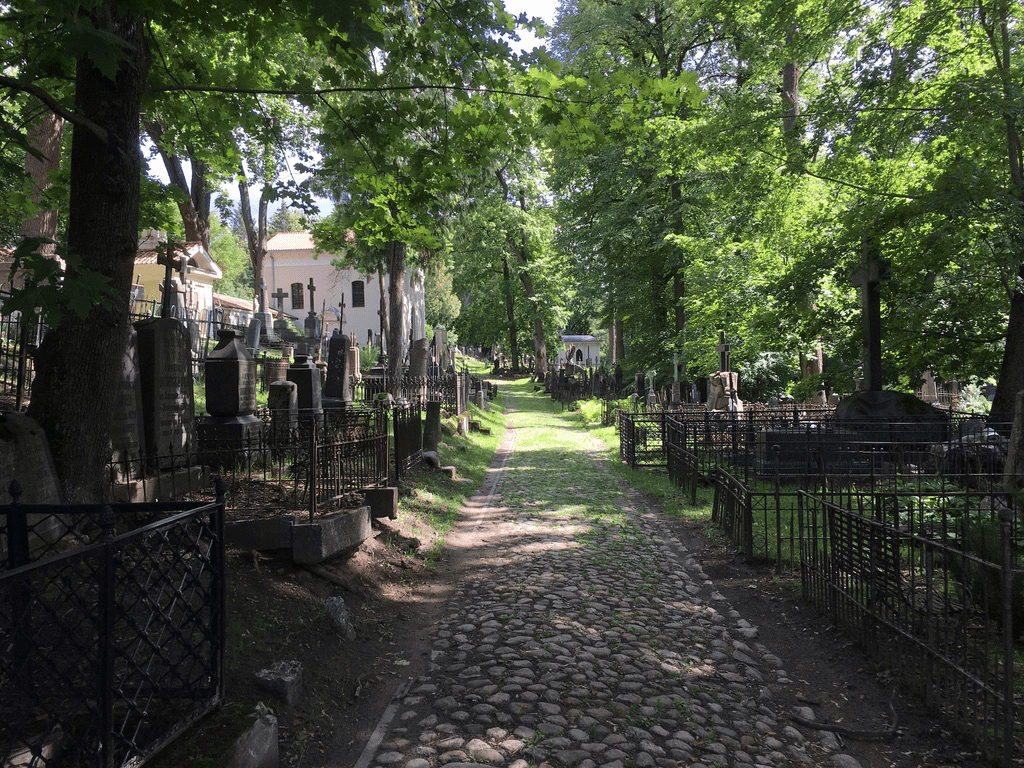
During the Soviet era, the authorities let Užupis go to ruin, and it quickly gained notoriety as the roughest districts in the city. Since Lithuania regained its independence in 1991, artists came and took advantage of the cheap accommodation, and moreover, the city’s art academy is located across the bridge from Bernadinų Gardens. Now its thriving creative community hosts regular fashion festivals, concerts, exhibitions and poetry evenings.
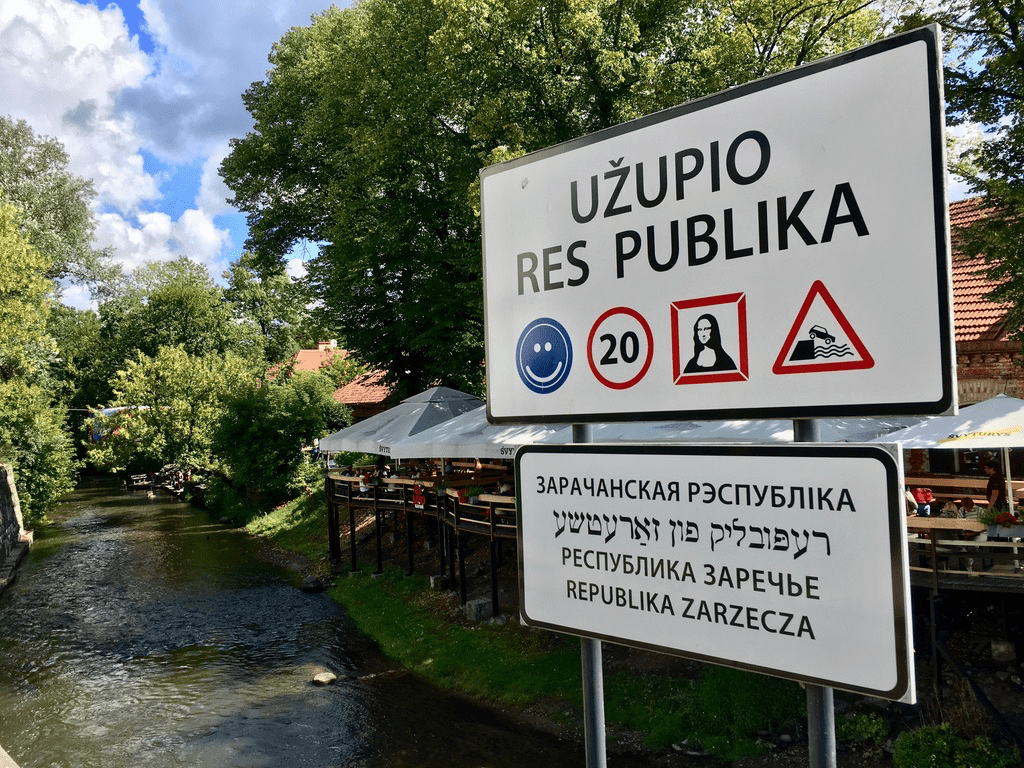
In Lithuanian, Užupis means ‘behind the river’ and this is proclaimed in a number of languages on its entrance sign. The Vilnelė is the district’s river, and is home to Lithuania’s only mermaid – she’s not real, don’t worry! But she lives on the embankment, and those who give in to her charms will remain in Užupis forever.
12. Town Hall Square
In 1387, Lithuania became a Christian state and Vilnius was granted Magdeburg rights. The Town Hall housed the city councillors, as well as court rooms, the treasury, archives, an arms and ammunition warehouse, and rooms for preserving standards of measurement. A prison was established in the basement. The Town Hall building was Gothic to begin with and changed with time. In the 19th century, the Town Hall was transformed into a city theatre where a famous personality – Polish composer Stanisław Moniuszko – conducted the premier of his opera. Among all the Polish composers, only Frederic Chopin could be considered more prominent than Moniuszko. Today Vilnius Town Hall is a representative building. Many different events are organised at the Town Hall during a year: concerts, literary evenings, presentations of books, exhibitions and festivals.
13. Artillery Bastion
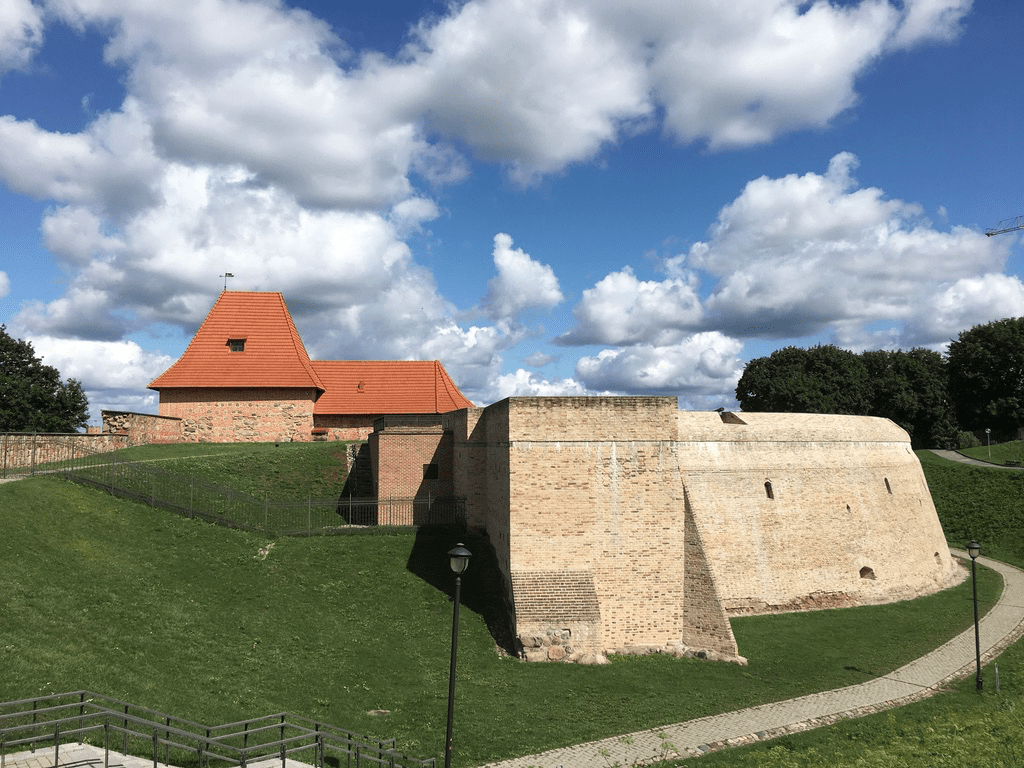
This is part of the Vilnius defensive wall, often called “barbican”. The Bastion is a Renaissance-style fortification consisting of a tower installed in the city defence wall, underground gun ports and a connecting corridor, which turns into a 48-metre long tunnel. The Bastion was built in the first half of the 17th century by a German military engineer. During World Wars I and II, German military arsenals were located in the building. You can enjoy a picturesque view of the Old Town from the Bastion terrace.
15. Gates of Dawn
During the Russian rule, the city walls were destroyed, and by 1805, only the Gate of Dawn remained among its five original gates. The Gate of Dawn is one of the most visited shrines in Vilnius that is famous not only in Lithuania but also abroad. The Gate of Dawn was originally called the Medininkai Gate, but later due to the cult of the Virgin Mary it could be related to the sunrise, dawn. The painting of the Blessed Virgin Mary, Mother of Mercy, in the Chapel of the Gate of Dawn is known all over the world. The picture, which is also called “Vilnius Madonna”, was painted in 17th century. Since the middle of the 17th century it has been said to have miracle-working powers.
WHERE TO STAY
The Old Town is the best place to stay in Vilnius as it is a good base to see all the major sights. There are plenty of good options in or in the vicinity of the Old Town for all budgets.
- Camping: Downtown Forest Hostel & Camping
6bed dorm – 8€/night, 4bed dorm – 12€/night, double bed private – 26€/night - Hostel: Jimmy Jumps House, in the heart of the Old Town, with free breakfast
6bed dorm – 10€/night, 4bed dorm – 9€/night, double bed private – 28€/night - Budget: Sodu Rooms (we stayed here)
Double bed private – 25€/night
WHERE TO EAT
- Alus Namai, near Baltasis Tiltas bridge on the river Neris, serves huge plates of fried bread served with cheese (Kepta Duona) alongside traditional beers.
What to get: Kepta Duona (rye bread with cheese) - Šnekutis an unpretentious tavern where you can meet locals and indulge in many variations of meat and potatoes.
What to get: Stuffed dumplings from potatoes (Cepelinai) or cold beetroot soup (Saltibarsciai) - Berneliu Uzeiga has been around since 1999 and has even opened a restaurant in London. It serves over 40 different meals certified as products of national heritage. What to get: The Lithuanian pork stew (Kiaulienos troškinys) or Potato pancakes (Bulviniai blynai)
- Other things to try: burokėlių sriuba (hot beetroot soup), raugintų kopūstų sriuba (sauerkraut soup), bulviniai vėdarai (potato sausage), kiaulės ausis (pig’s ear)
Day 2: Trakai, Lithuania
Trakai is a very small town squeezed between the two lakes in the middle of scenic Trakai Historical National Park. It has earned enormous popularity among Lithuanians as a holiday destination, the image of Trakai Island Castle has almost become a trademark of Lithuania abroad. The town is located only 20km from Vilnius, making it the perfect day trip, to escape city life and enjoy tranquility in the nature. The town is small enough for everything to be reached on foot, however you can also rent a bike (like we did) and explore a little more of the outskirts of the city. Bike rental: 4eur/hour, 12eur/day (Karaimų str. 14)
WHAT TO SEE
1. Trakai Island Castle
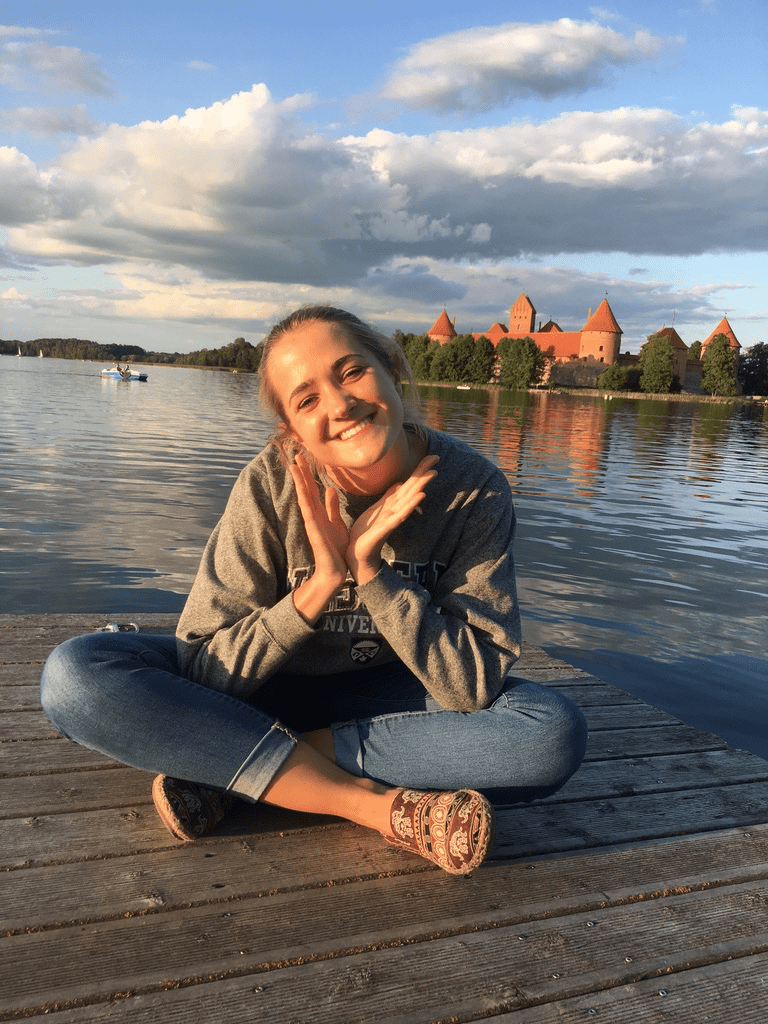
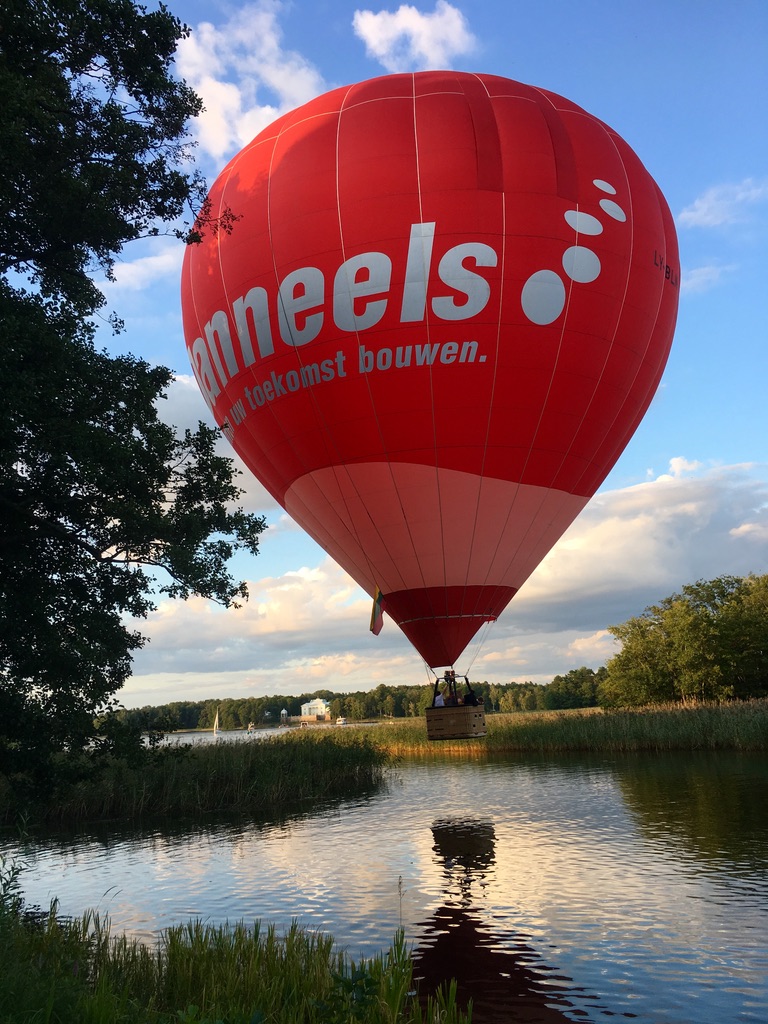
A 14th century Gothic residence of Lithuanian dukes, reconstructed in a 15th century style, Gothic with some Renaissance features. Most famous castle in Lithuania, probably symbol of medieval Lithuania itself.
2. Varnikų pažintinis takas (Varinikai Trail)
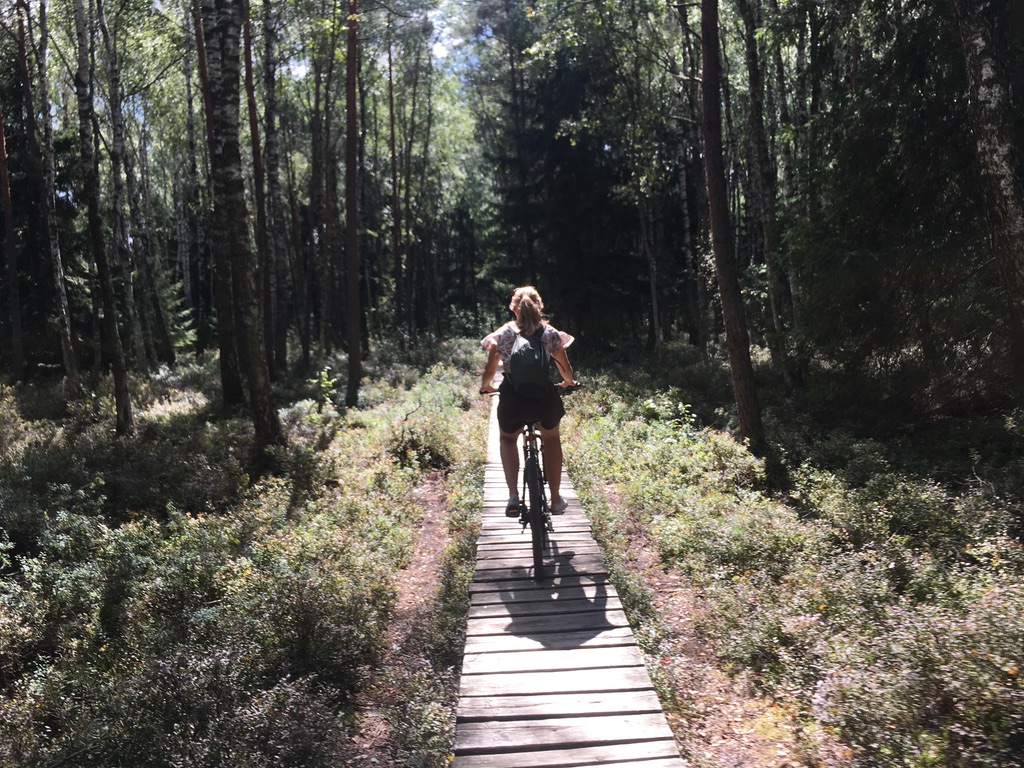

The 4km trail leads hikers along wooden path through a huge diversity of biotopes; marshes, wetlands, meadows with small lakes and a naturally formed mixed forest. At the beginning of the trail is a chain of hills formed during the last Ice Age. At the first stop, you will find a 15-meter deep glacier. After you will see a bridge, and behind it a wooden path through the swamp. About half of the Varnikai Trail passes through the Ilgelis Swamp, which covers an area of 207 hectares, its really charming and beautiful to look at. You can find everything on this trail: rare plants, fungi, lichens, insects, birds, mammals, amphibians, reptiles protected in Lithuania and other countries. Gentle birches are blossoming and, depending on the season, blueberries and sickling lingonberries show their blooms, and the soft and marshy forest floors catch the eye with their greenery. At the entrance to the trail there is the parking, Varnikų tako parkingas. The trail takes about 2 hours and is also accessible by bicycle.
3. Užutrakis Manor Estate

It is a late 19th-century residential manor of the Count Jozef Tyszkiewicz and his family in Užutrakis, on the shore of Lake Galvė, opposite the famous Trakai Castle. Today, the estate is accessible by road, but the Count’s family did not use it. It was only used for agricultural purposes and was known as ‘the Potato Road’. During the Soviet occupation, the manor was nationalized and turned into a sanatorium, later it served as a pioneer camp, and then it became a tourist base. Nowadays it has been revived, and many concerts and exhibitions are often held here, making it now one of the most visited places in the region.
WHERE TO STAY
- Camping: Kempingas Slėnyje (we stayed here)
7.50€/adult, 10€/camper, 3-5€/tent, 5€/car - Hostel: There are no hostels in Trakai
- Budget: double bed private, most are 35€/night
- Mid Range: Tony Resort 65€/night
- Luxury: Esperanza Resort 166€/night
WHAT TO EAT
Day 3: Kaunas, Lithuania
WHAT TO SEE
WHERE TO STAY
- Camping: Kaunas Camp Inn (we stayed here)
5€/adult, 12€/camper, 3€/car, 3.5€/tent - Hostel: The Monk’s Bunk
6bed dorm – 13€/night, 4bed dorm – 14.50€/night, double bed private – 34€/night
WHAT TO EAT
Additional places
- Siauliai – hill of crosses
- Klaipeda – sculpture park
- Riga, Latvia
On the way back we also stopped in Augustow and Bialystok in Poland.
 Two Shoulder Straps