
Here are 10 castles worth conquering in Poland. From the hundreds that have been preserved over the centuries, each undoubtedly holding its own share of history and beauty, we decided to share the ones we think are the most stunning, the most extraordinary, and those which have a place in the heart of Poland’s culture and history.
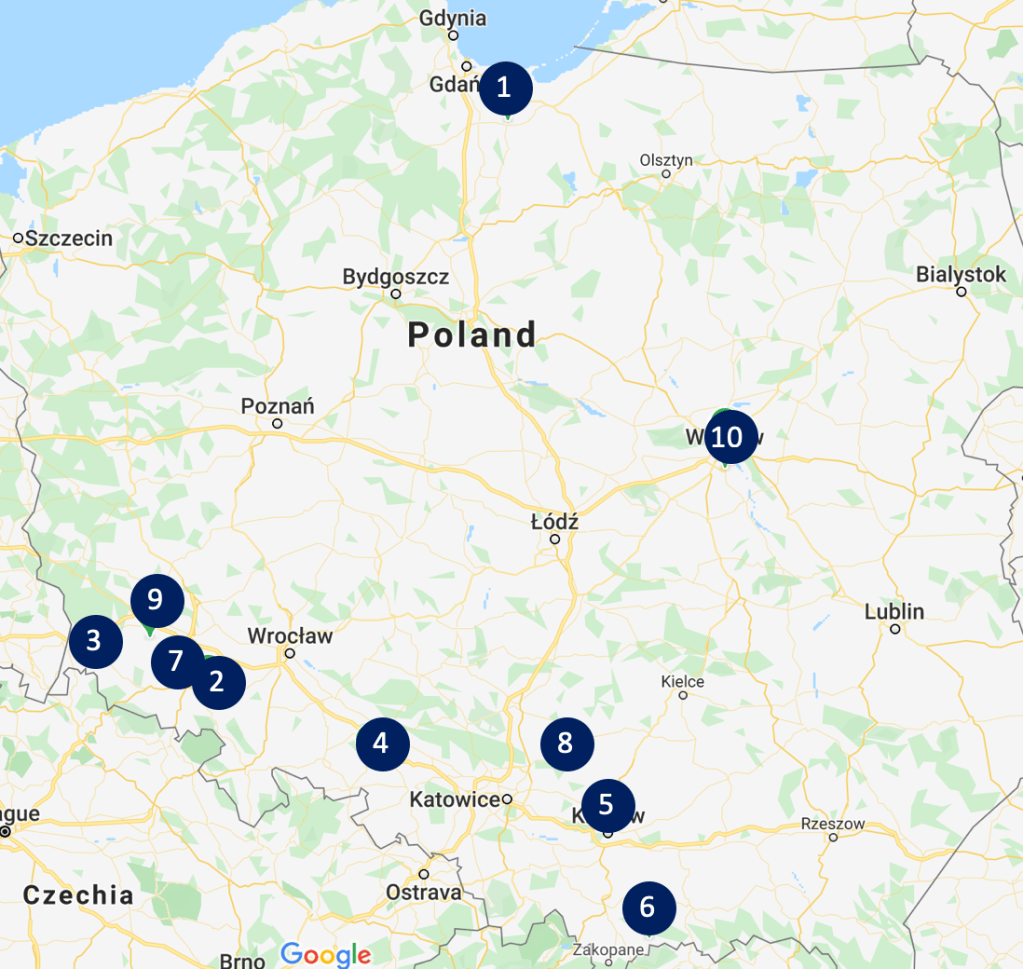
1. Malbork Castle

Malbork Castle is a 13th-century castle and fortress. It is the largest castle in the world measured by land area and a UNESCO World Heritage Site and was built by the Teutonic Knights, German Roman-Catholic crusaders. The Teutonic Knights dominated the area until 1457, when King Jagiellon and Polish forces captured the castle. Over the next 500 years, the castle changed hands several times, bouncing back and forth between German and Polish ownership. During World War II, more than half of the castle was destroyed. After World War II, the castle once again became part of Poland.
Price of admission: normal 35-45pln, reduced 25-35pln
2. Książ Castle
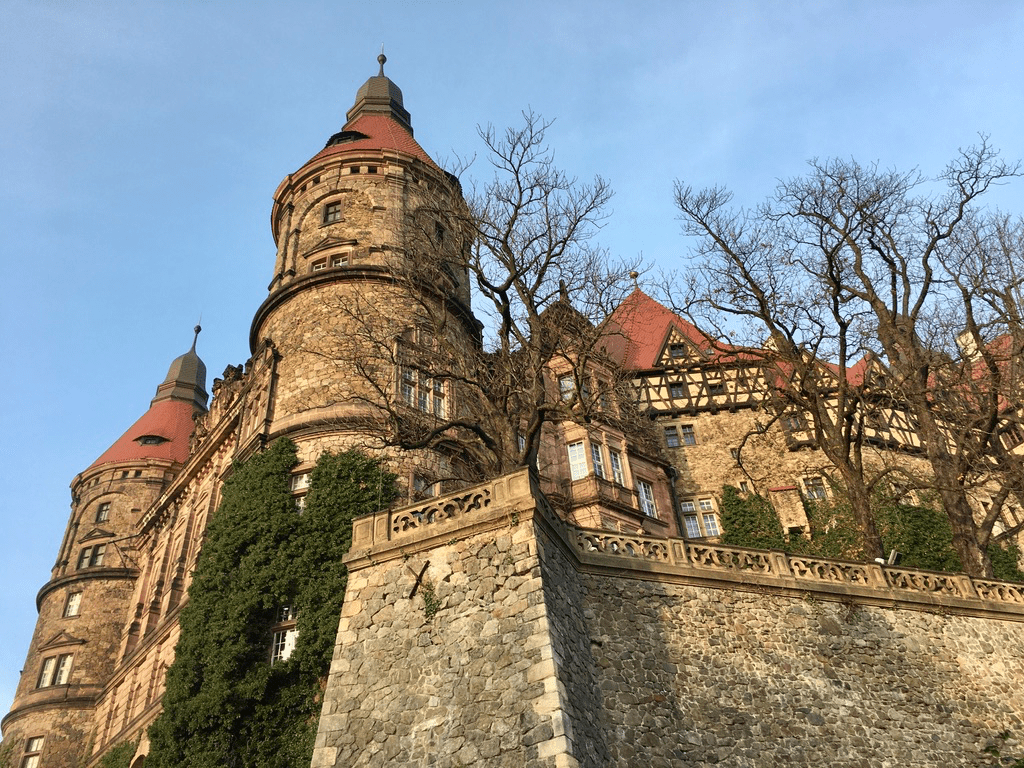
Referred to as the “Pearl of Silesia”, the 3rd largest castle in Poland, is located on a rocky mountain amidst huge grounds, and visible from afar. It was built by the Piast dynasty in the late 13th century, later owned by the Luxembourgs, and then assumed ownership for four centuries by the Hohbergs. They enlarged the castle and transformed its architecture from Renaissance to Baroque, instilling many French styled gardens. During World War II, the castle was seized by the Nazi regime and the castle was intended to become headquarters for Adolf Hitler.
Nowadays, the castle is regarded as one of the most beautiful in Europe, and its medieval tower dominates the surroundings.
Price of admission: normal 39pln, reduced 31pln, night tour 50-60pln
3. Czocha Castle
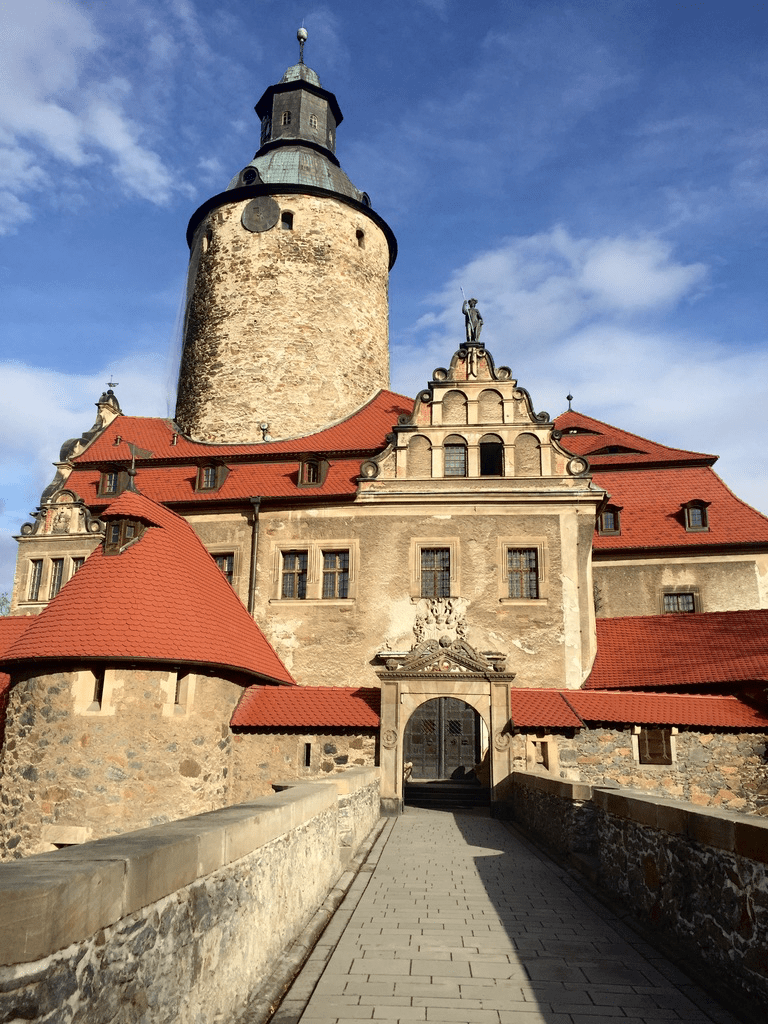
This fortified Gothic castle, was built in the 13th century for the Czech king Vaclav. In the early 20th century it was bought by a Dresden cigar producer who hid a treasure in the basement (still undiscovered). Some believe this to be the most haunted place in Poland, with the ghost of a child walled into the mantelpiece crying out for help, the “White Lady” Gertrude’s presence felt in the halls, and the story of the unfortunate fate of the cigar producers wife, whom he murdered on their wedding night. There is a well of the unfaithful wives, a bridge lined with mourners, and an interactive torture chamber. In the summer, the castle is transformed into Hogwarts, and Harry Potter fans can participate in interactive role play. Nowadays the castle has been partially turned into a hotel and visitors can feel the charm and the unique experience of staying in a castle overnight.
Price of admission: normal 22pln, children 16pln, night tour 45pln
4. Moszna Castle
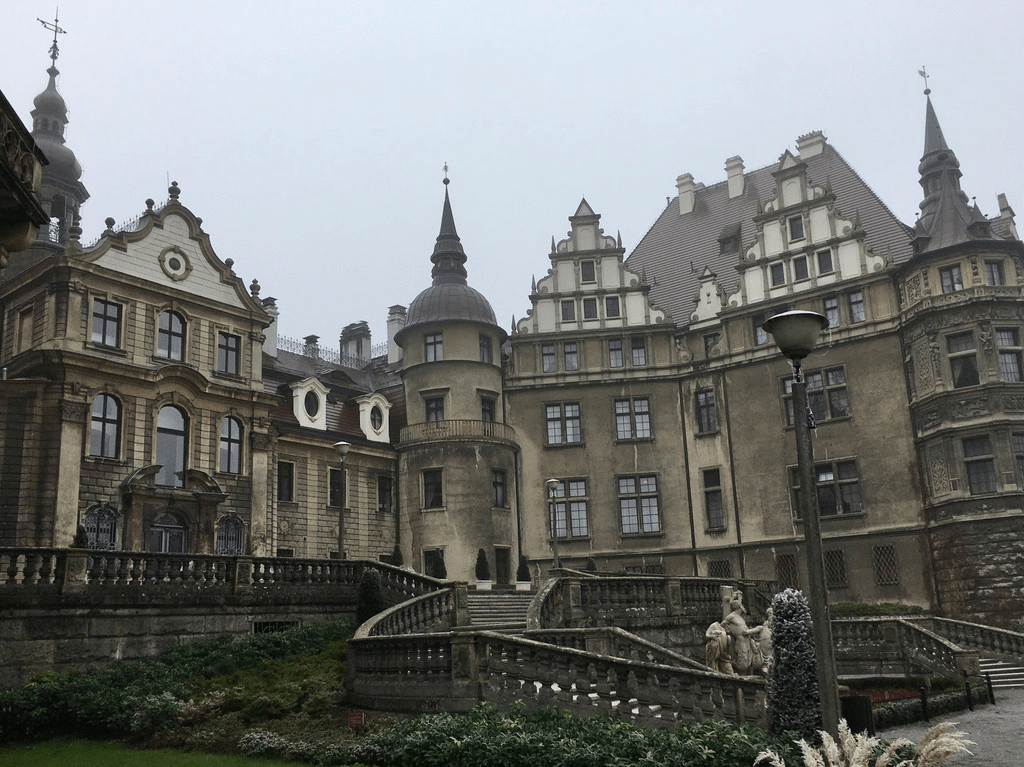
The castle in Moszna dates back to the 17th century, and is one of the best known monuments in the southern Poland. The castle and park complex is the former residence of the German Tiele-Winckler family. With its grand design and enormity, one would think from first glance that it is an English castle from the Elizabethan era. Yet looking more closely, Moszna shows an eclectic style, the result of the place being home to different families, at different times. Baroque, neo-Gothic and neo-Renaissance architectural styles can be seen in the castle design. One of the most noteworthy aspects of Moszna Castle is that it has exactly 99 turrets and 365 rooms.
Price of admission:
self tour: normal 10pln, reduced 6pln // guided tour: normal 15pln, reduced 9pln
5. Wawel Castle
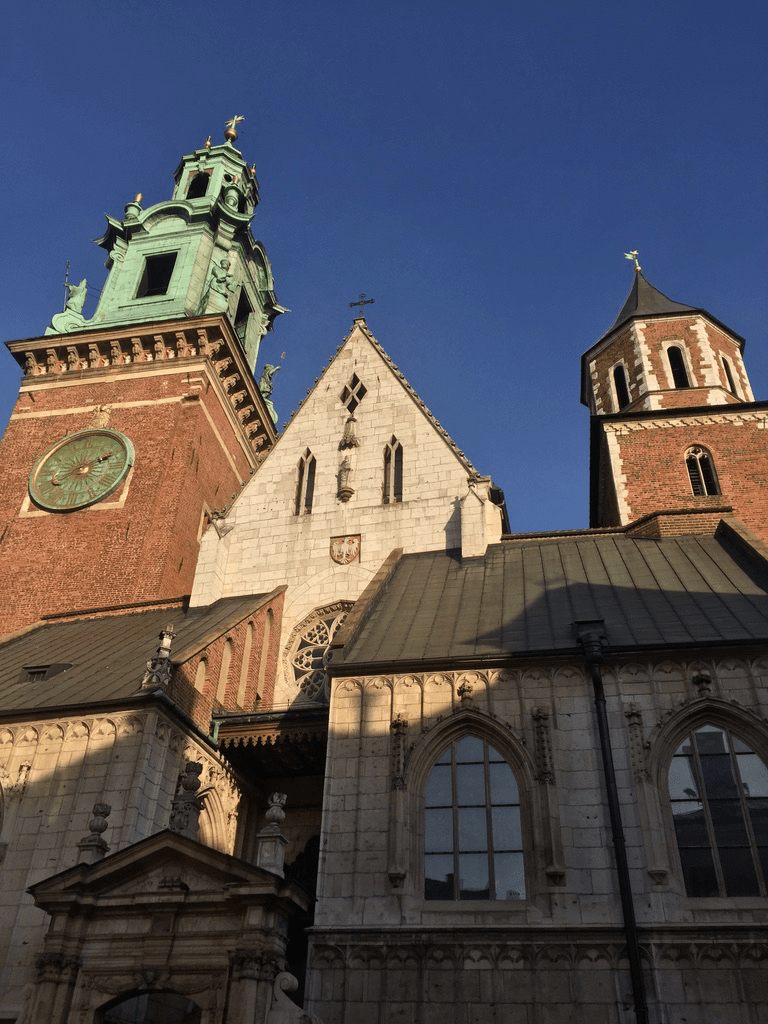
Located in the historic centre of Kraków, Wawel Castle is one of the most famous Polish castles and has been a UNESCO World Heritage Site since 1978. The oldest fragments found during archaeological research are dated to the 11th century. Throughout the centuries, the castle has served as a residence for Polish royalty both in the Kingdom of Poland as well as the Polish-Lithuanian Commonwealth, while Krakow was the capital of the country. That is the main reason why it often was upgraded with new designs, sculpture, art pieces and various architectural styles; medieval, Renaissance, and Baroque. Wawel Castle suffered during the Swedish invasions and later was invaded by Prussian armies. It’s now a museum containing five separate sections: Crown Treasury and Armoury, State Rooms, Royal Private Apartments, Lost Wawel and the Exhibition of Oriental Art. Each requires a separate ticket, see price of admission.
6. Niedzica “Dunajec” Castle
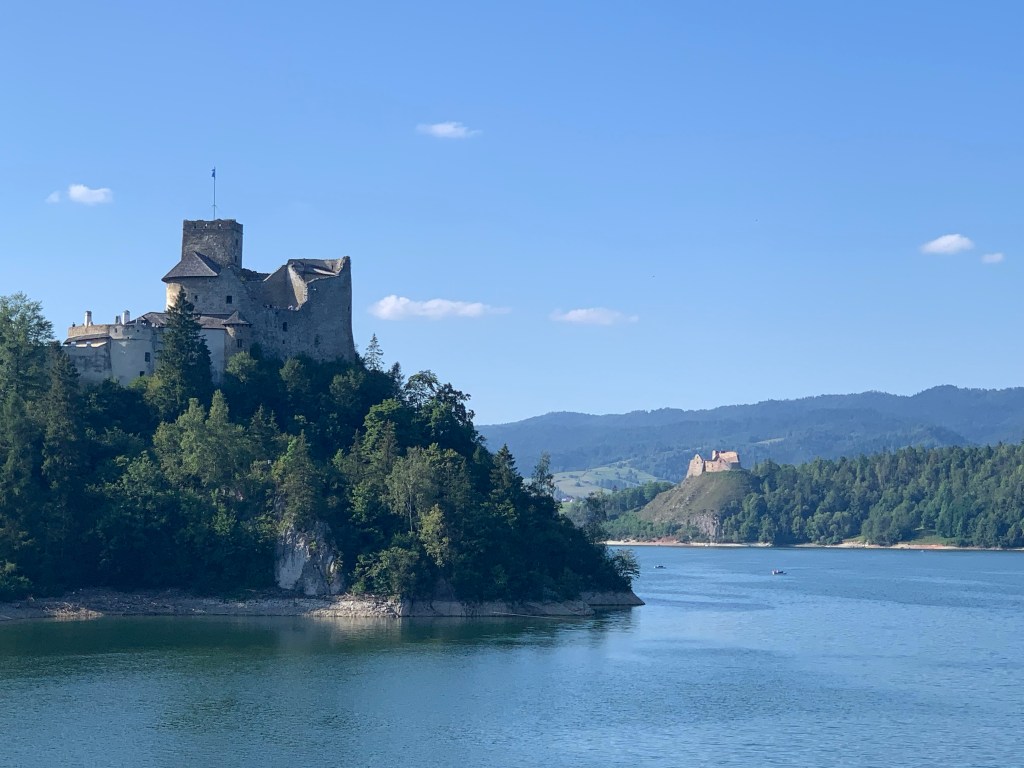
Niedzica Castle dates back to the 14th century, and has played a big part in Polish-Hungarian relations. The Polish-Hungarian border used to run near the castle, and it had an important role in trade. The medieval castle is nestled on a hill way above the sea level, the Dunajec River mouth just a few hundred meters away. Its picturesque location, makes Niedzica Castle a top favorite in Poland and has been pictured on many national publications and books. The castle was originally built by the Hungarian Berzavicsy clan and occupied by Hungarian owners until World War II when the last inhabitants abandoned it before the invasion of the Red Army. After the war the castle was repaired by the Polish Ministry of Culture and has remained one of the most visited places in this part of the country ever since.
Price of admission: normal 19pln, reduced 14pln, granary entrance 5pln
7. Bolków Castle

This 13th century structure was built as a strong but rather unremarkable stone fortress, and was used to defend trade routes. In the 16th century, the castle got an upgrade, when some Renaissance touches were added. This enormous castle was used primarily by monks for centuries, but now it is known for hosting events and even an annual rock music festival.
Price of admission: normal 10pln, reduced 5pln
8. Ogrodziniec Castle
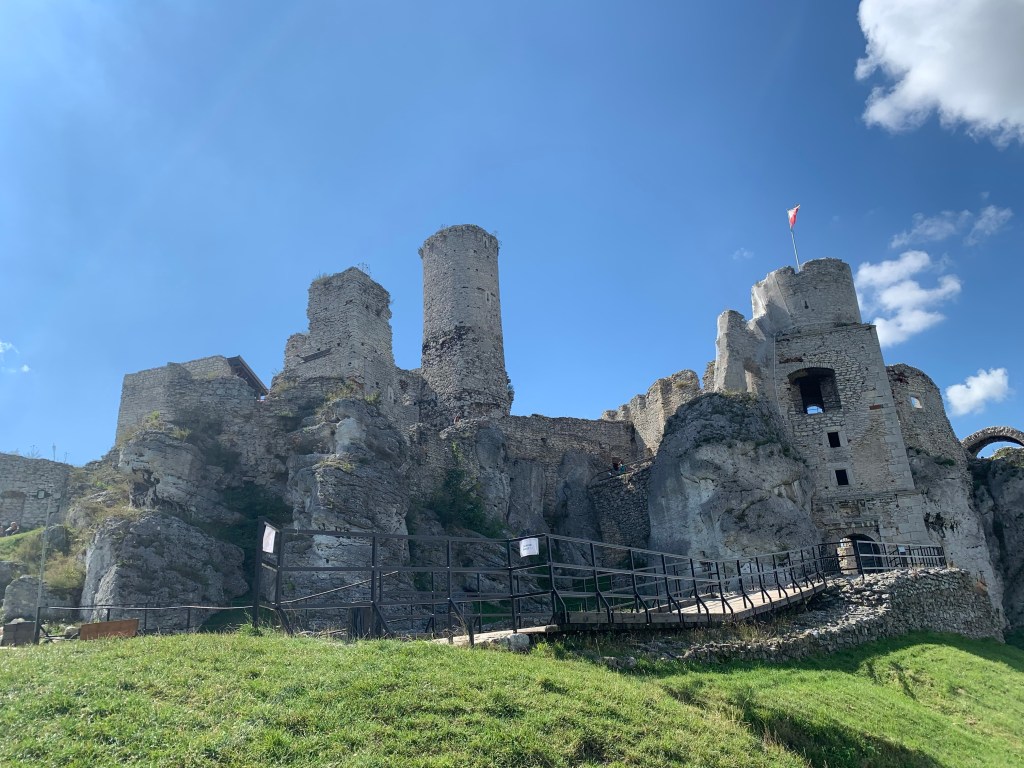
This is one of the most interesting castles (or actually ruins) on the Trail of the Eagles’ Nests in the Polish Jurassic Highland. Although only the stone structure remains from this medieval castle, it’s still a magnificent sight. Rebuilt several times in its history, the castle was originally built in the 14th–15th century by a wealthy noble family. In the 16th century, the castle was bought by one of the richest men in Poland, Jan Boner, a banker of the former king. The medieval Ogrodziniec was transformed into a beautiful Renaissance residency, however during the Swedish invasion in 1702, the castle was burned and never rebuilt. The ruins of the castle have been used as a set for numerous productions, Netflix’s The Witcher among others.
Price of admission: normal 17pln, reduced 10pln
9. Grodziec Castle
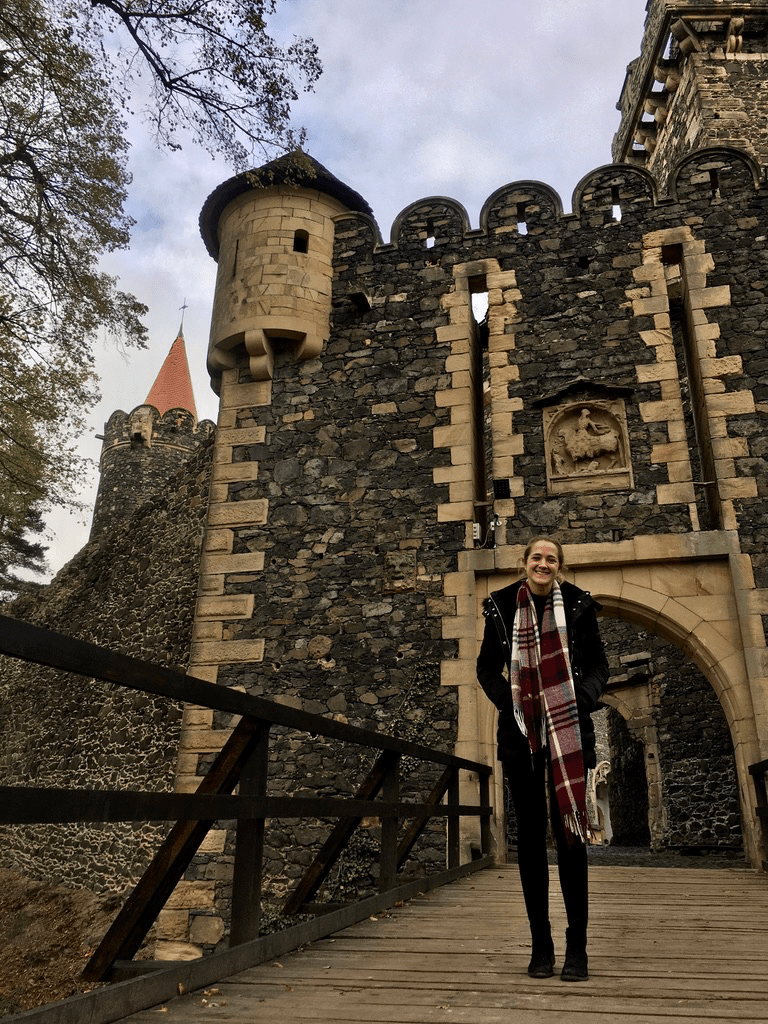
Grodziec castle sits perched on an extinct volcano, rising nearly 400 metres above sea level. The majestic grandeur of one of the most beautiful Gothic-Renaissance residences in Silesia became its downfall, attracting successive invaders for centuries. Residents of neighbouring villages were charged with maintenance costs and decided to assist in its dismemberment. Fortunately for the castle, this goal wasn’t fully realized. In 1800, the ruins were secured and rebuilt, Grodziec Castle became the first venue in Europe prepared especially for tourists. After a major upgrade, it regained its former glory and followed with the opening of a museum by Emperor Wilhelm II himself. The castle has maintained its tourist character to this day, offering not only sightseeing but also a range of accommodation and events.
Price of admission: normal 12pln, reduced 8pln
10. Royal Castle of Warsaw

This castle located in the Castle Square of Warsaw, is one of the most well-known castles in Poland, not only because it is located in the Polish capital, but also due to its importance in history. For centuries Polish monarchs resided here until the Partitions of Poland in the late 18th century. The Castle Tower was built in the mid-14th century, but only the ground floor has remained from the original structure as the facade was destroyed during World War II. In 1939 an order was issued to blow the castle up, but before that, parts of the castle were taken to Germany and Krakow, and Polish art historians also made attempts to salvage some artifacts. The walls were blown up in 1944, but immediately after the war a plan to reconstruct the castle was made. The Royal Castle was rebuilt as a symbol and monument of Polish history and culture.
Price of admission: normal 30pln, reduced 20pln
 Two Shoulder Straps