
During our 2020 and 2021 journeys through Costa Rica we truly fell in love with the great variety of colourful creatures in this country. It has such a dense wildlife that it is really hard to just pick the best animals you can find or watch.
This list shows some of our favourite species (birds, insects, reptiles, amphibians and mammals) that we spotted ourselves – unfortunately, some of them were too fast or too far away to get our own good photos.
We hope you enjoy our tribute to mother nature; it depicts just a tiny amount of wildlife that can be found in this diverse country.
Birds
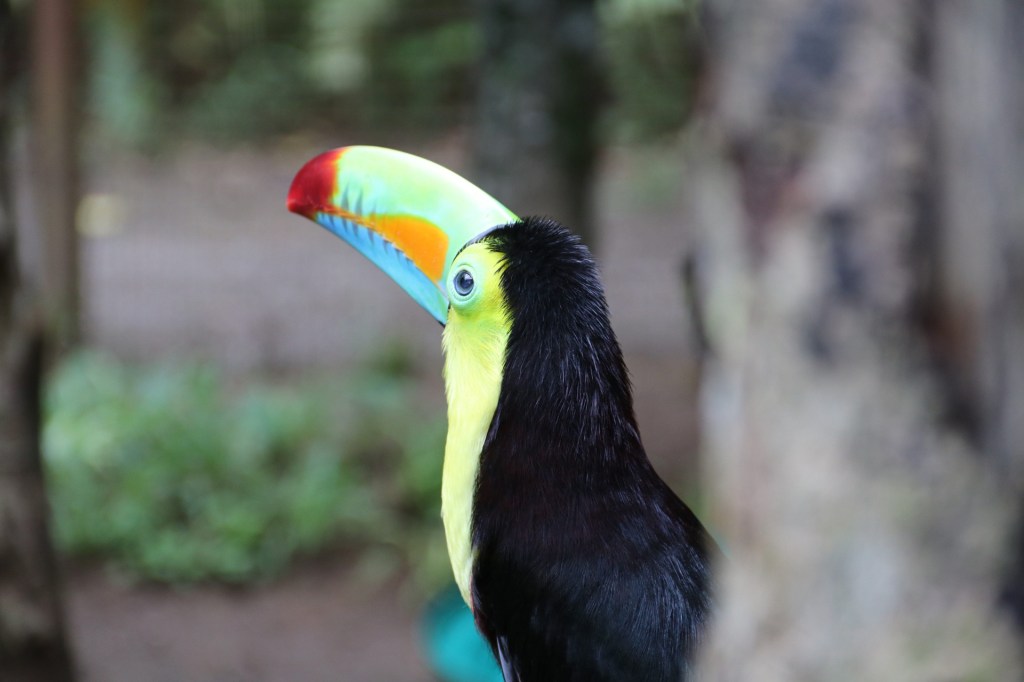
Keel-billed Toucan
The keel-billed toucan is a large omnivorous, social and playful bird with mostly black plumage and a very large rainbow-colored bill. It is not very good flyer and moves mostly via hopping. It uses its beak to “fight” with its playmates.
© 2021 Jonas Flachmeier. All rights reserved | JRC, Puerto Viejo
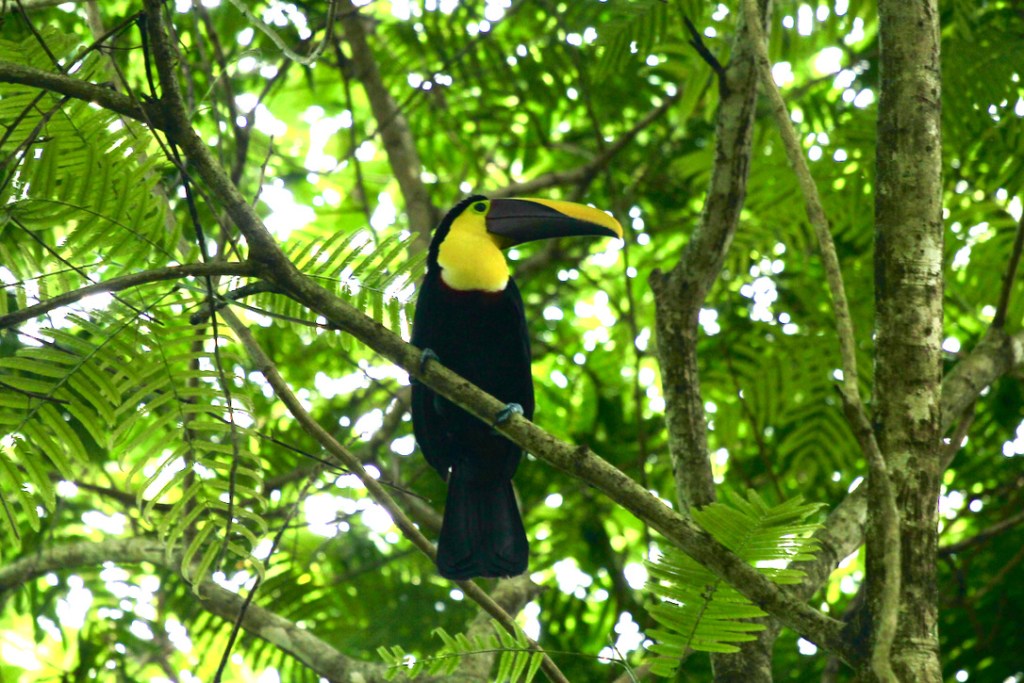
Black Mandibled Toucan
Toucans travel in groups and always in pairs when they’re adults. The Black Mandibled toucan is the biggest of the 6 toucans in Costa Rica. They are known as bullies, since they are bigger than the others, and bully them for food and territory.
© 2020 Jonas Flachmeier. All rights reserved | La Fortuna
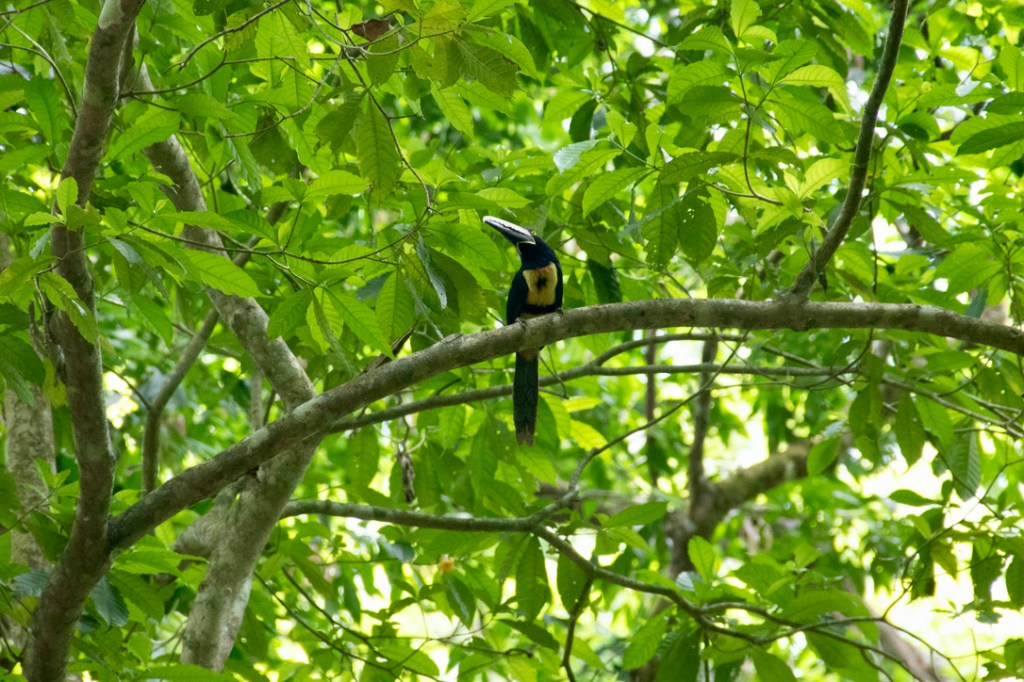
Collared Aracari
The Collared Aracari has a white beak and a black belly stripe. They travel in groups of anywhere from 4-12. They’re usually found in elevations up to 1000 meters.
© 2021 Jonas Flachmeier. All rights reserved | JRC, Puerto Viejo
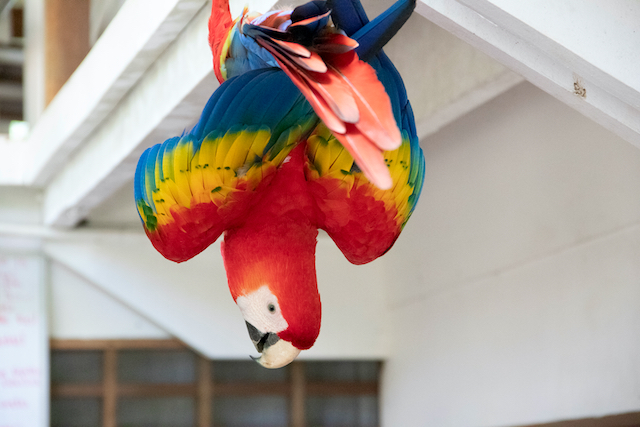
Scarlet Macaw
Scarlet Macaws can live to be over 60 years old and mate for life. In Costa Rica, an estimated 1,500 Scarlet Macaws live in dry, moist, and wet tropical lowland forests along the Pacific Coast. Between poaching and loss of habitat from deforestation, Scarlet Macaws are now an endangered species.
© 2021 Jonas Flachmeier. All rights reserved | JRC, Puerto Viejo
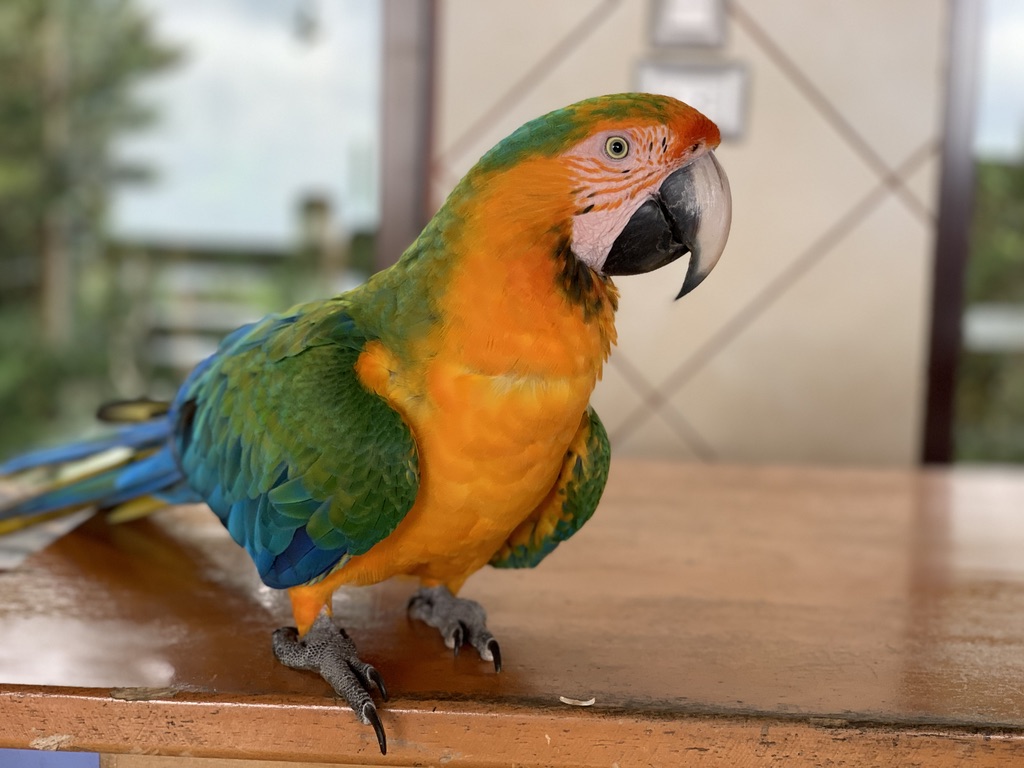
Blue and Yellow Macaw
These Macaws are larger than their red cousins but still easily recognizable by their unmistakable hooked beak, long tail and of course their distinct call. Its beak is also know as a “third foot”, used for climbing trees, or hanging to branches. It eats clay and minerals on riverbanks, as well as seeds, nuts and fruits.
© 2020 Julia Skreta. All rights reserved | Monteverde
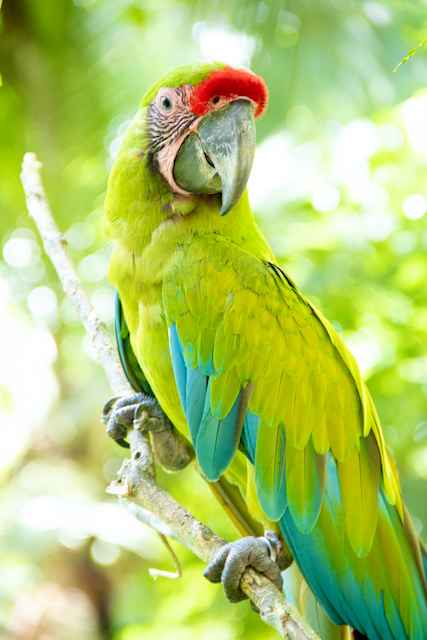
Great Green Macaw
Also known as Buffon’s macaw, this species is critically endangered. It is the largest parrot and belongs to the genus Ara. It is usually observed in groups of 2-8 birds that migrate in search of food. In Costa Rica it is locally known as lapa verde, whilst other countries refer to it as guacamayo verde mayor.
© 2021 Jonas Flachmeier. All rights reserved | JRC, Puerto Viejo
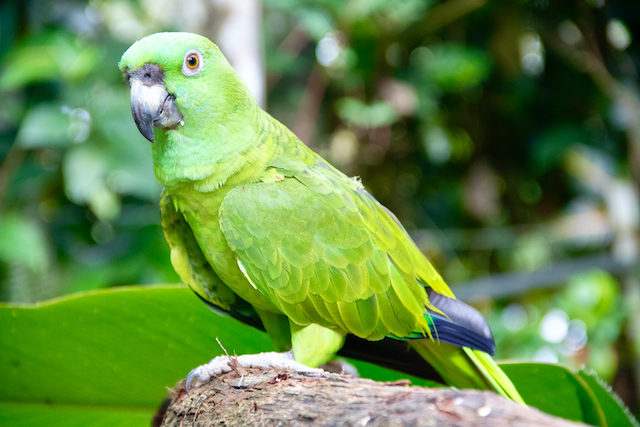
Yellow-naped amazon
Yellow-naped Amazons are brilliant, comical birds that love to be the center of attention and thrive on social interaction. They are endangered in the wild.
© 2021 Jonas Flachmeier. All rights reserved | JRC, Puerto Viejo
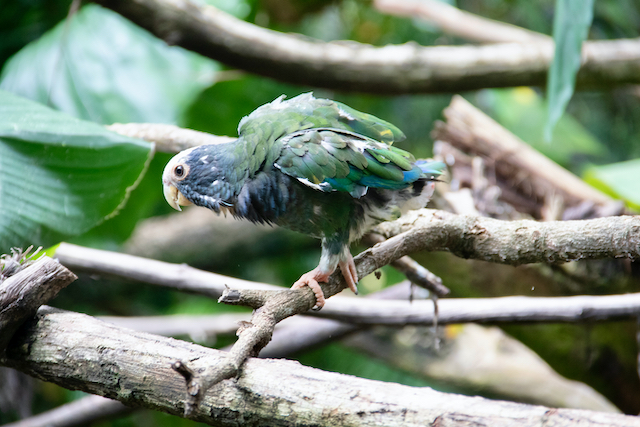
White-crowned parrot
Medium-size, blue-green parrot of tropical lowlands, mainly in humid forest and forest edge. Calls made in flight are continuous and screechy.
© 2021 Jonas Flachmeier. All rights reserved | JRC, Puerto Viejo
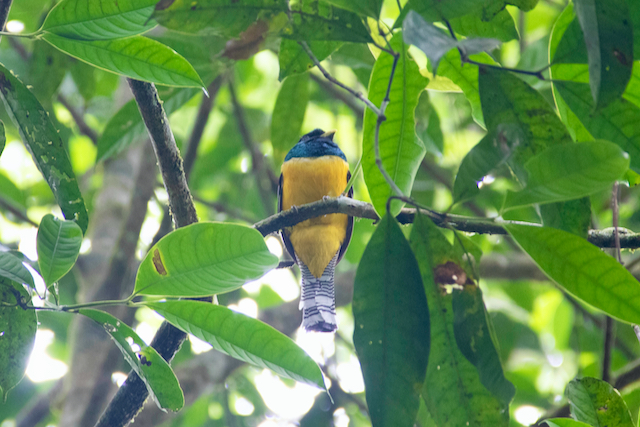
Gartered Trogon
Relatively small and compact yellow-bellied trogon of tropical lowland forest, mainly in humid areas. Perches at mid to upper levels, often high in canopy.
© 2021 Jonas Flachmeier. All rights reserved | Corcovado National Park
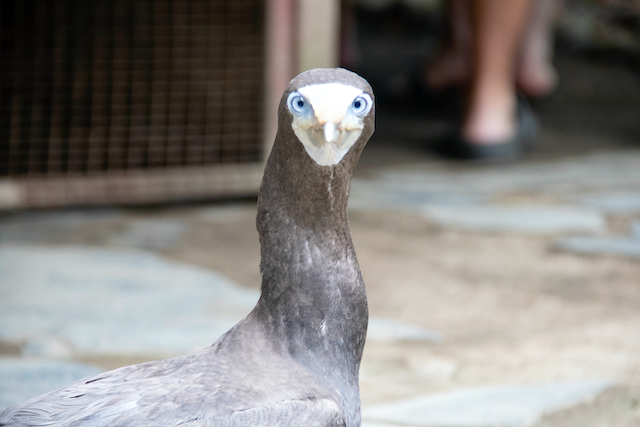
Brown booby
Found in tropical oceans around the world, the Brown Booby is a dashing seabird both in plumage, a natty brown-and-white (with bright yellow feet) and in flight style, which involves swift aerial maneuvers and dives.
© 2021 Jonas Flachmeier. All rights reserved | JRC, Puerto Viejo
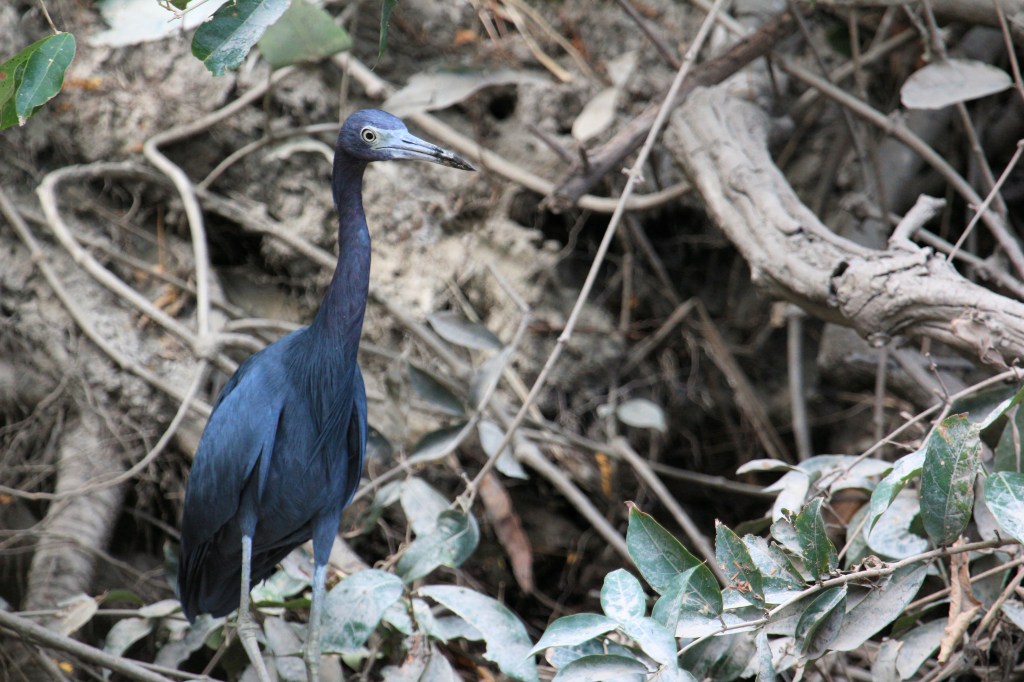
Little Blue Heron
The young is entirely white, after spending their first summer in Costa Rica, they develop dark-grey adult plumage. Found in almost any open wetland habitat, they’re distinguished in all plumages by a two toned bill (light blue base, dark tip) and dull greenish legs. Seen in 2020 in Tortuguero.
© 24 May 2017 by ImagePerson. Licensed under Creative Commons Attribution Share Alike 4.0 International.
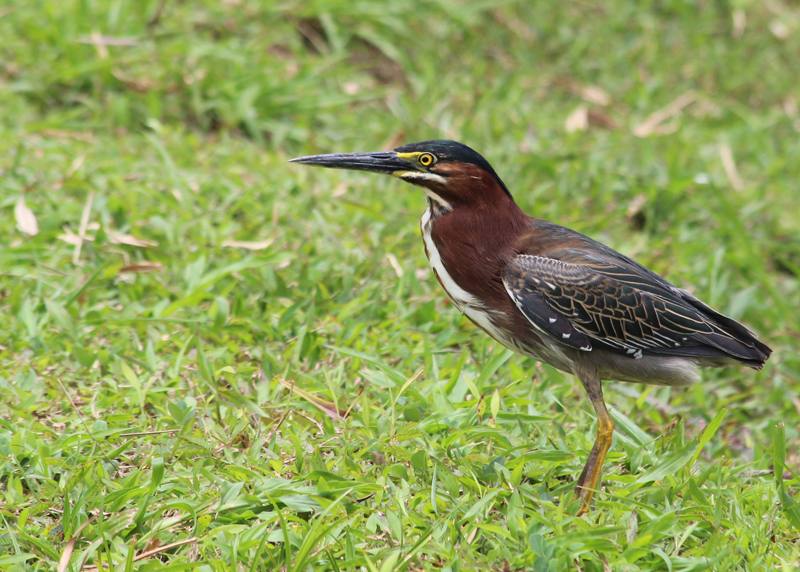
Green Heron
This bird uses tools to hunt by luring fish with insects, spiders and other small food items as bait. When its target takes the bait, it will attempt to take the target. They aren’t very social animals, and most of their activity takes place at night. Seen in 2020 in Tortuguero.
© 3 April 2012 by Benjamin Keen. Licensed under Creative Commons Attribution Share Alike 3.0 Unported.
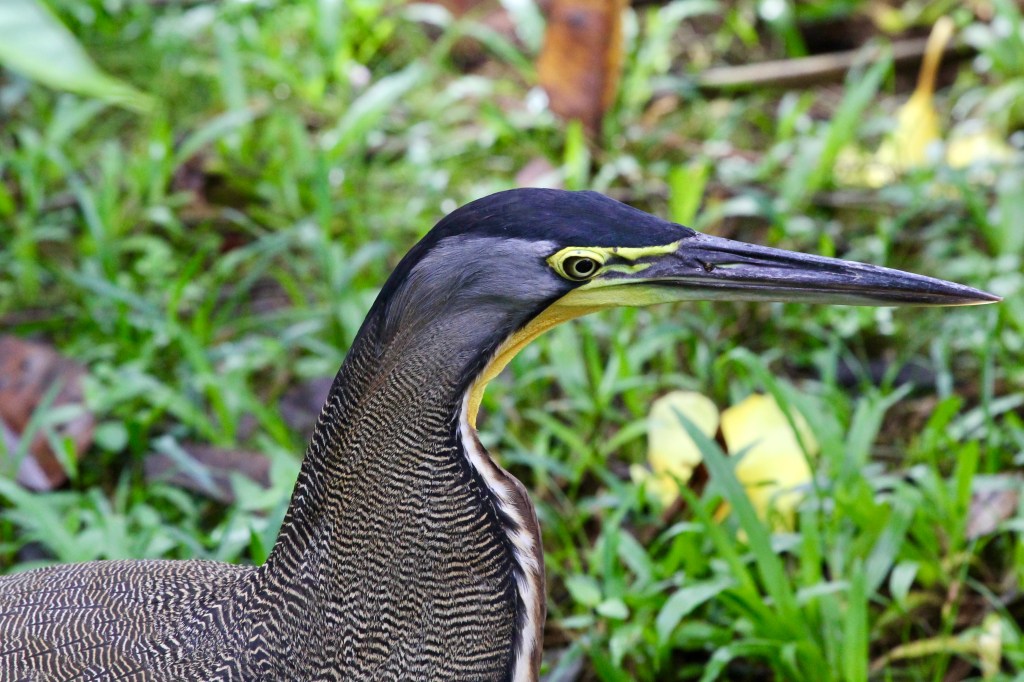
Bare-Throated Tiger Heron
It is a solitary breeder, not usually found in heron colonies. Their nest is a small flat stick platform in a tree. Their diet includes fish, frogs, crabs and insects. Tiger Herons like to walk in water, however, they have smaller legs compared to other herons.
© 2020 Jonas Flachmeier. All rights reserved | Tortuguero National Park
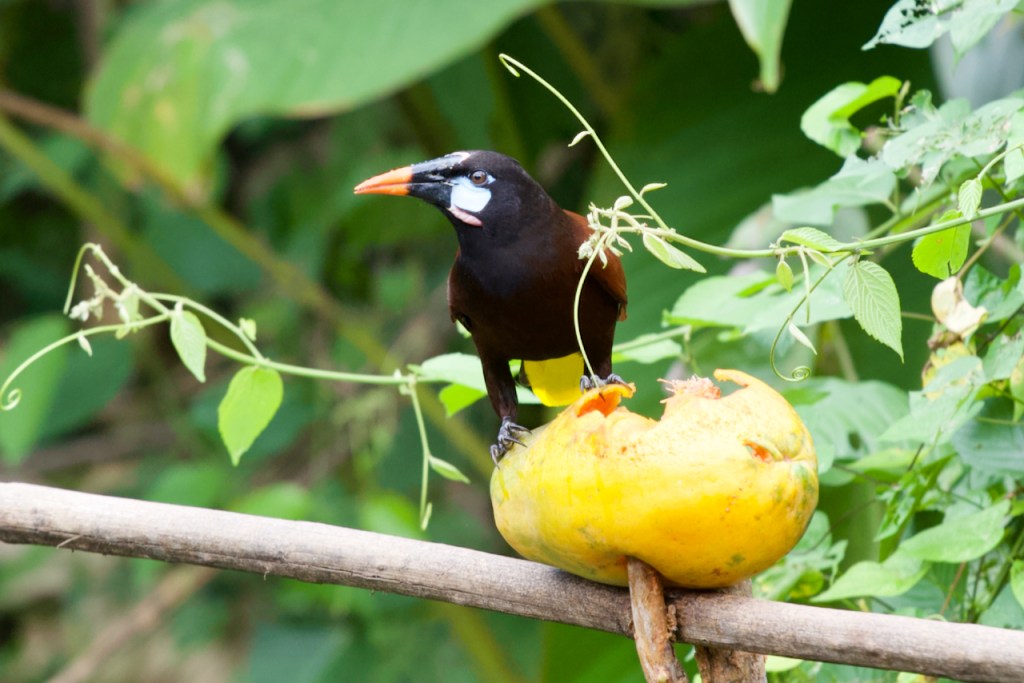
Montezuma Oropendola
A very large ‘blackbird’ of tropical lowlands that favours forest edge, open woodland, plantations, semi-open areas with trees. Known for its memorable gurgling song that sounds like water poured from a bottle.
© 2020 Jonas Flachmeier. All rights reserved | La Fortuna
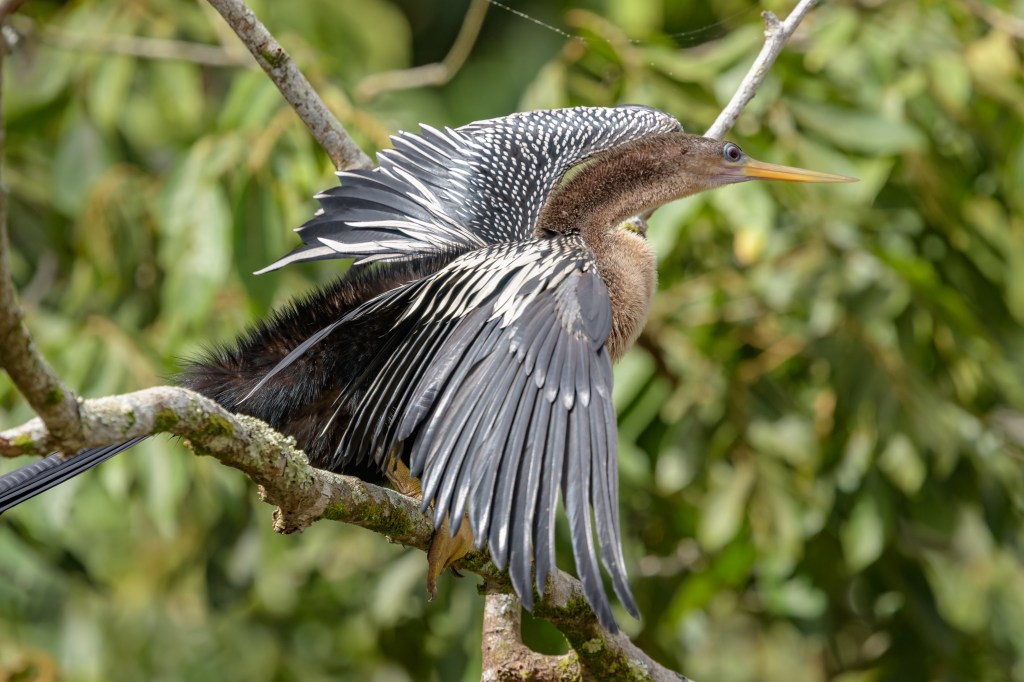
Anhinga
They are the closest relative to cormorants, differing in the shape of their bill. The kinked neck is a result of bone structure modified to act as a type of hinge to speed up their attack when spearing small fish. They dive up to 20 meters and can stay underwater for more than a minute. Seen in 2020 in Tortuguero.
© 1 December 2018 by Becky Matsubara. Licensed under Creative Commons Attribution 2.0 Generic.
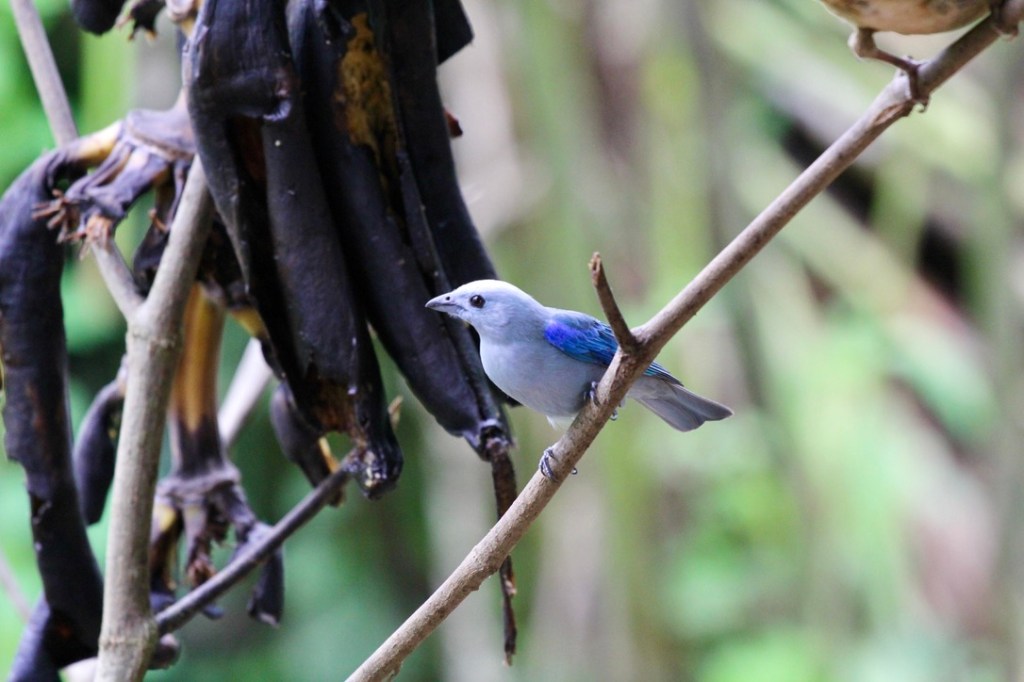
Blue-grey Tanager
Common and widespread powder blue-gray bird of open and semi-open areas with larger trees and hedges. Rather plain but distinctive appearance, with beady dark eye and fairly stout bill.
© 2020 Jonas Flachmeier. All rights reserved | La Fortuna
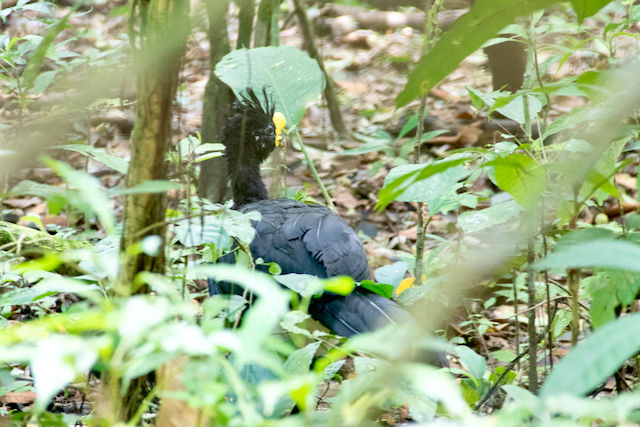
Bare-faced curassow
Very large terrestrial species. Males are mostly black with a yellow knob on a black-tipped bill. They are usually found in humid forests and gallery forests foraging singly or in pairs; can be very tame. Commonest call is a high-pitched whistled “kseuw.”
© 2021 Jonas Flachmeier. All rights reserved | Corcovado National Park
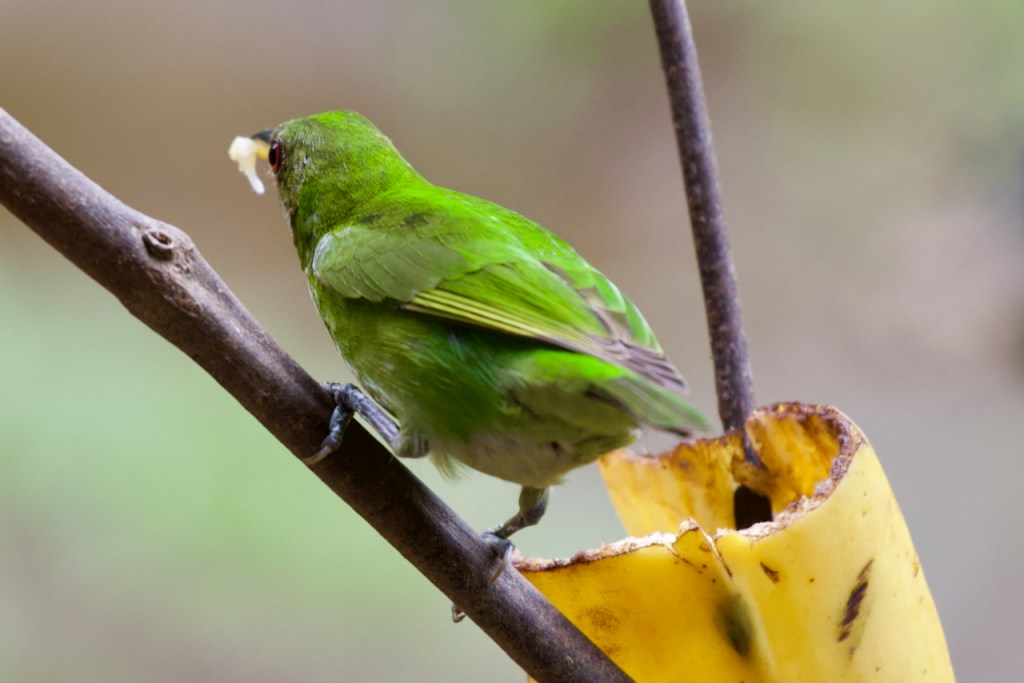
Green Honeycreeper
The female Green Honeycreeper is quite common and widespread in Costa Rica with its beautiful green plumage. It is a more subtle green than the glistening, bluish-green male.
© 2020 Jonas Flachmeier. All rights reserved | La Fortuna
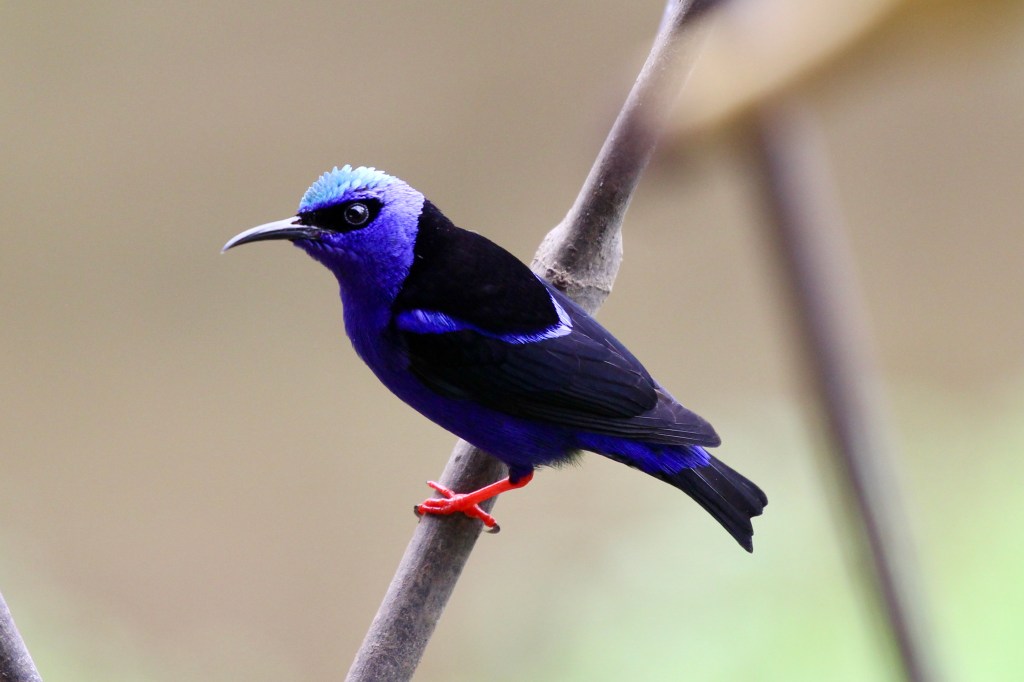
Red Legged Honeycreeper
The male is distinguished as bright blue with a turquoise head, black eye mask and red legs that stand out. Its underwings are bright yellow, and are only seen when flying. The female however, is mainly olive-green. Both parents care for the two eggs that the female lays.
© 2020 Jonas Flachmeier. All rights reserved | La Fortuna
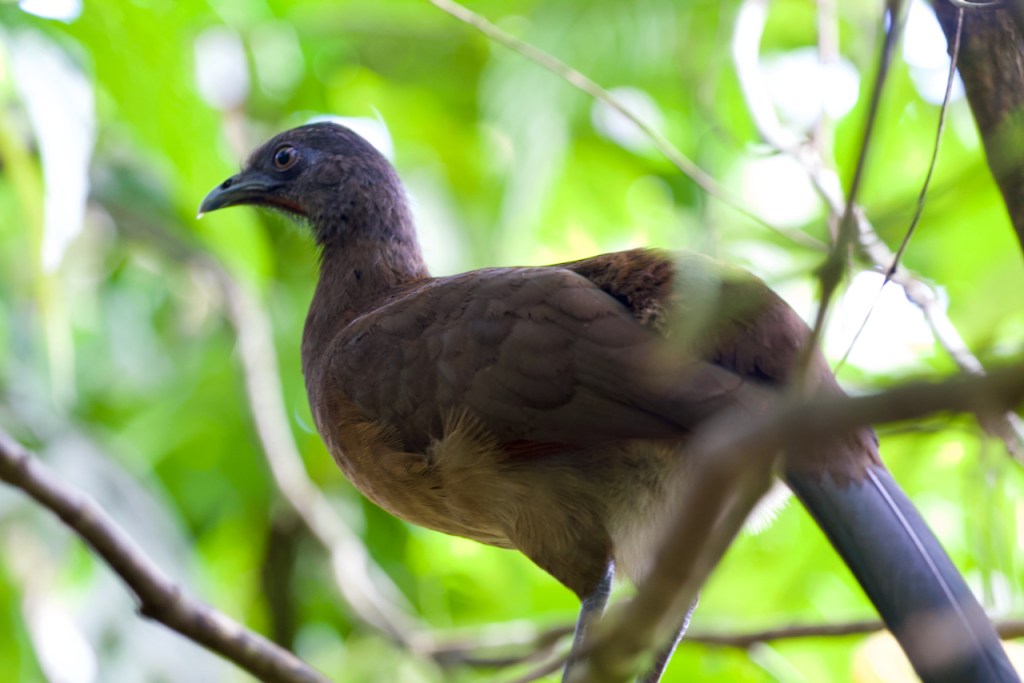
White-bellied chachalaca
The White-Bellied Chachalaca is a relative of the guan. It is found all over Central America in subtropical or tropical dry forests, but also tropical moist lowland forest.
© 2020 Jonas Flachmeier. All rights reserved
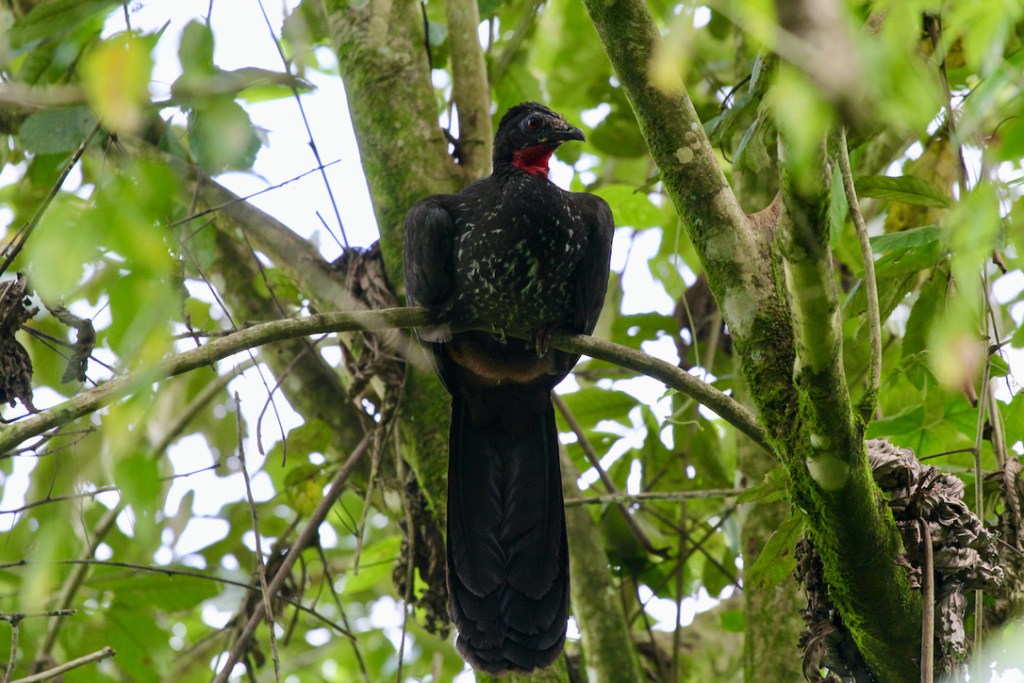
Crested Guan
It is seen alone or in pairs in the canopy or tall second growth forests. Its almost turkey-sized and eats seeds and fruits. Its feathers are mostly dark olive-brown and its skin dark gray to dusky.
© 2020 Jonas Flachmeier. All rights reserved | La Fortuna
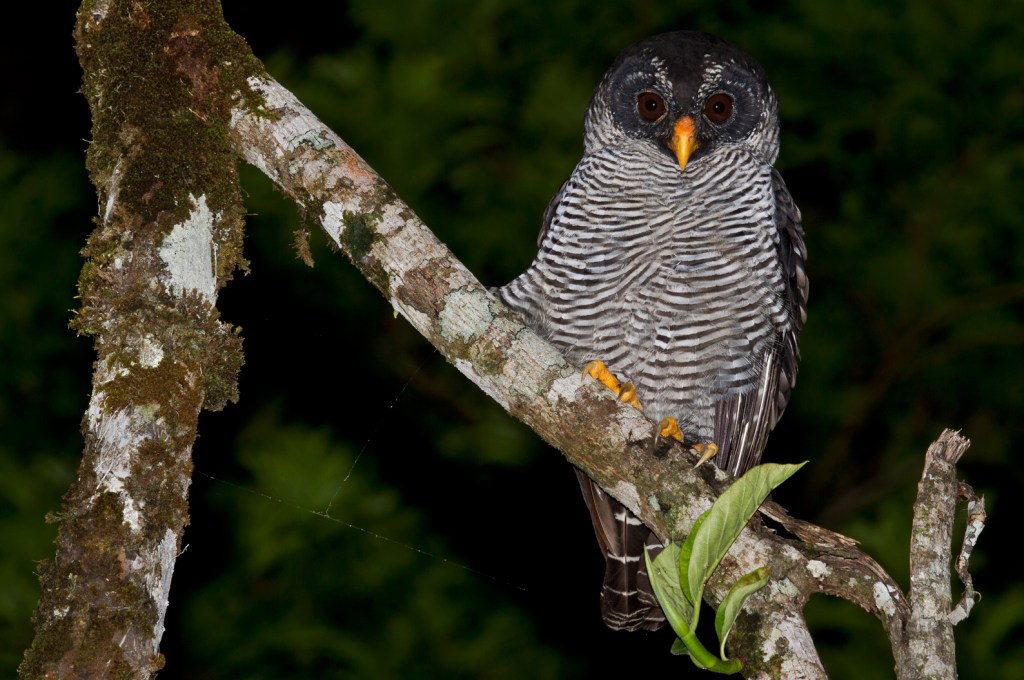
Black and white Owl
This non-migratory owl is found in rainforests and gallery forests. It is not afraid of living near human habitations. It forms a monogamous pair through out life. Seen in JRC in 2020.
© 30 September 2012 by Chris Jimenez. Licensed under Creative Commons Attribution Share Alike 2.0 Generic.
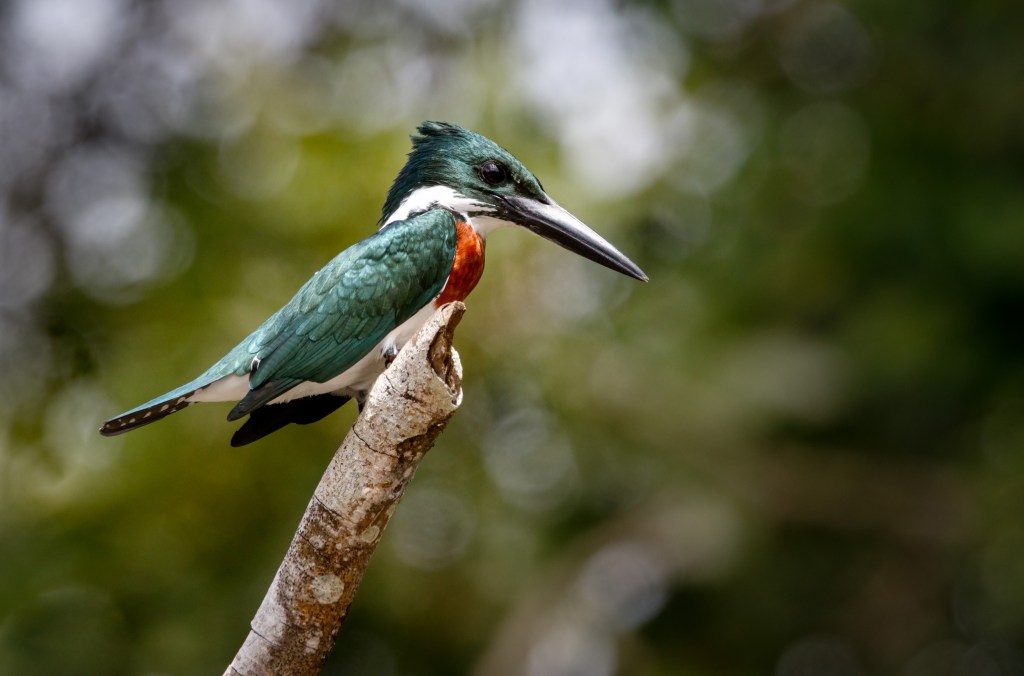
Green kingfisher
Green kingfishers can be commonly spotted perched on a low shaded branch close to water before plunging in head first after fish. The species breeds by streams in forests and mangroves. Seen in Corcovado in 2021.
© 14 February 2017 by Gerry Zambonini. Licensed under Creative Commons Attribution Share Alike 2.0 Generic.
Reptiles
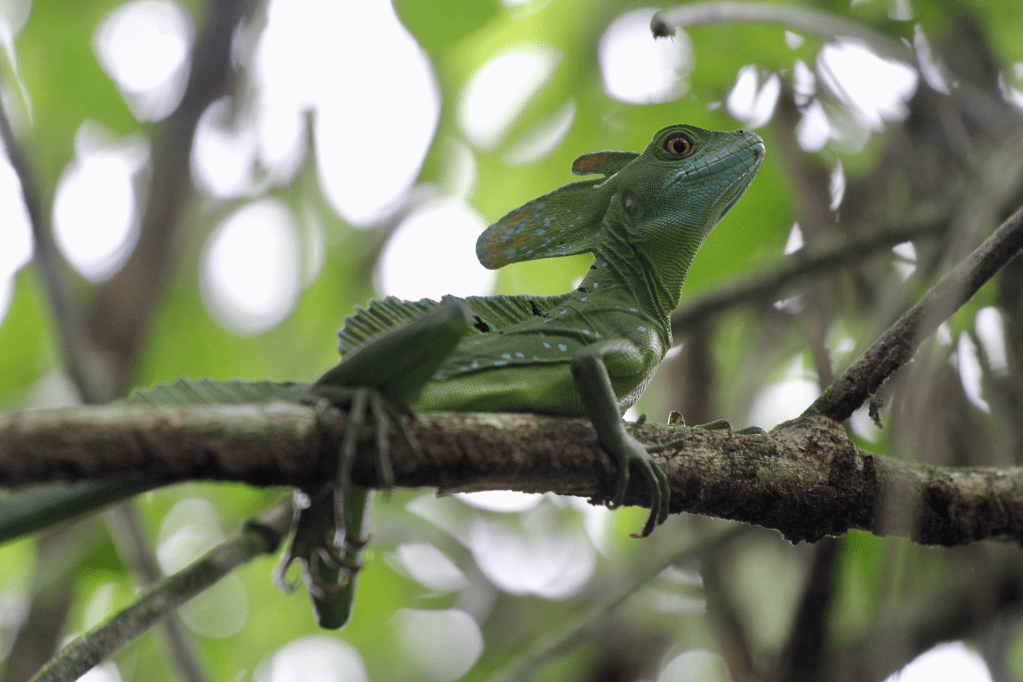
Common Basilisk
The Common Basilisk lives in low elevations, along bodies of water in a variety of forests. Its nicknamed the “Jesus Christ Lizard” and is distinguished by its finlike crests down its back. When in danger, it can run on water at a speed of 8.4kph, running only on its back legs, holding its arms at its sides, this is due to its hydrophobic scales at the bottom of its feet.
© 2020 Jonas Flachmeier. All rights reserved | La Fortuna
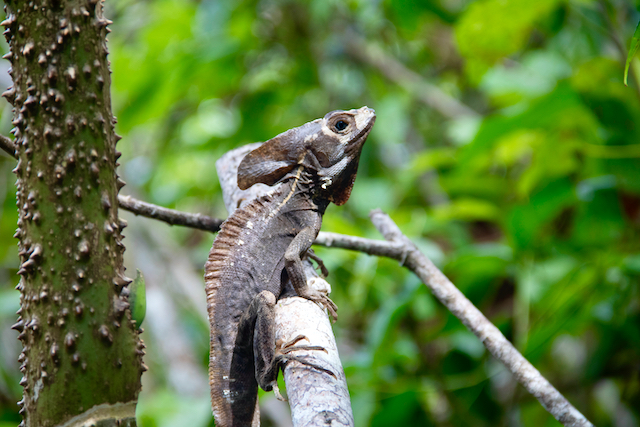
Brown Basilisk
The Brown Basilisk is a type of Common Basilisk or Striped Basilisk, that likes to remain close to water and has very long back legs, helpful in running very fast (even across water).
© 2021 Jonas Flachmeier. All rights reserved | Cahuita National Park
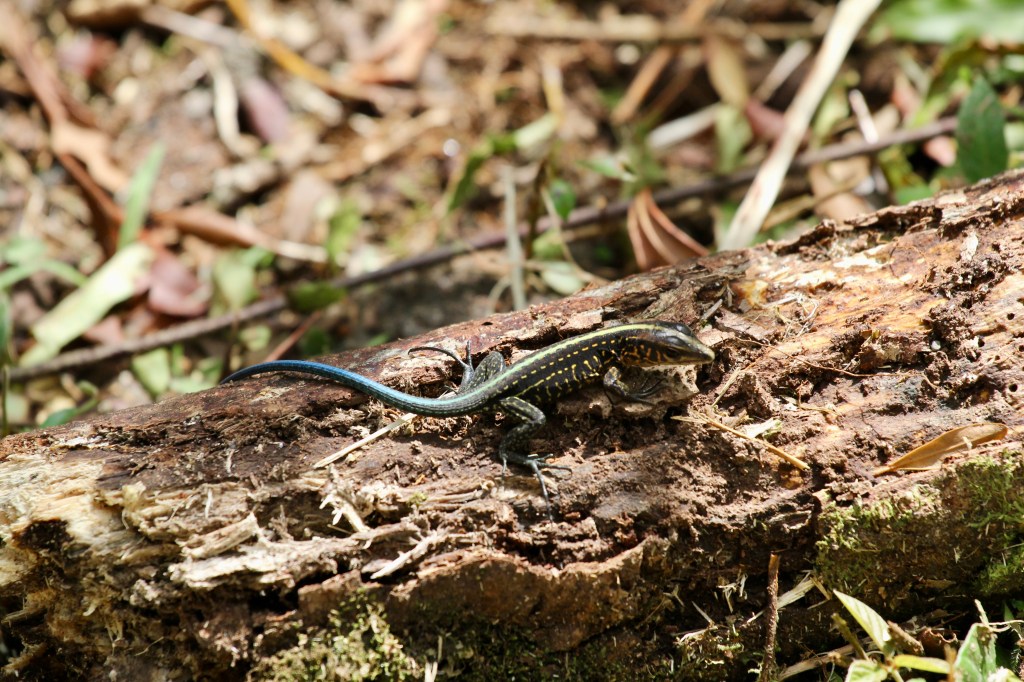
Central American Whiptail Lizard
They are very common, and live in open habitats and reproduce unisexually. As young, they have distinct blue tipped tails, which fade to brownish as they mature.
© 2020 Jonas Flachmeier. All rights reserved.
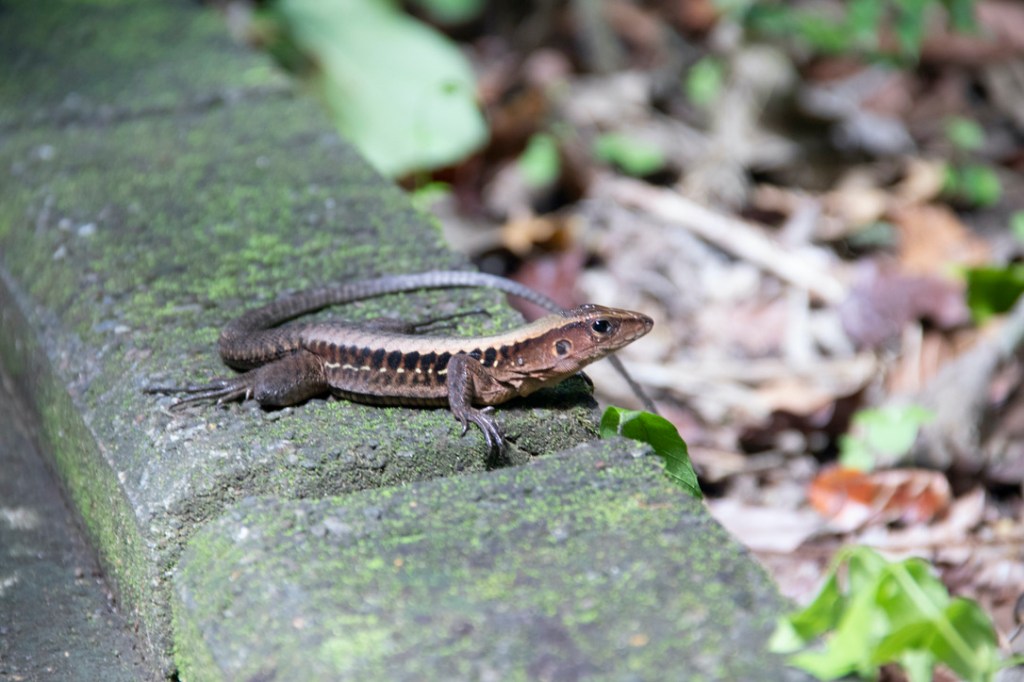
Delicate Whiptail Lizard
The Delicate Whiptail is a shy creature darting out of sight at the slightest disturbance into the fallen leaves and rock crevices. It is brown coloured with bark-brown zig-zag lines running down each side.
© 2021 Jonas Flachmeier. All rights reserved | Carara National Park
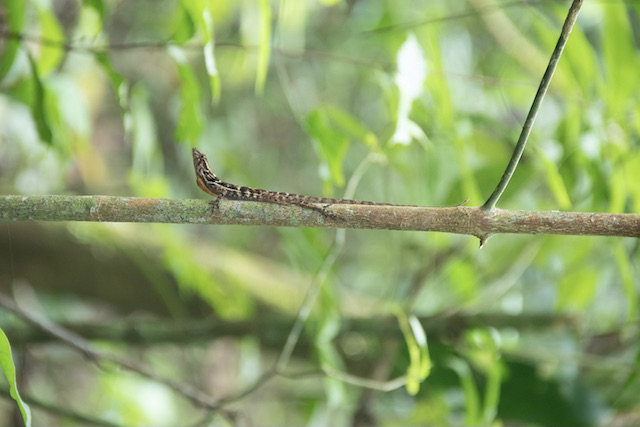
Many-scaled Anole (Anolis polylepis)
This brown and white speckled lizard is endemic to Costa Rica. It has an orange-yellow dewlap, made of erectile cartilage, that extends from its throat. Its toes are covered with structures that allow them to cling to many different surfaces. Their tails have the ability to break off at special segments in order to escape predators or fights.
© 2021 Jonas Flachmeier. All rights reserved | Corcovado National Park
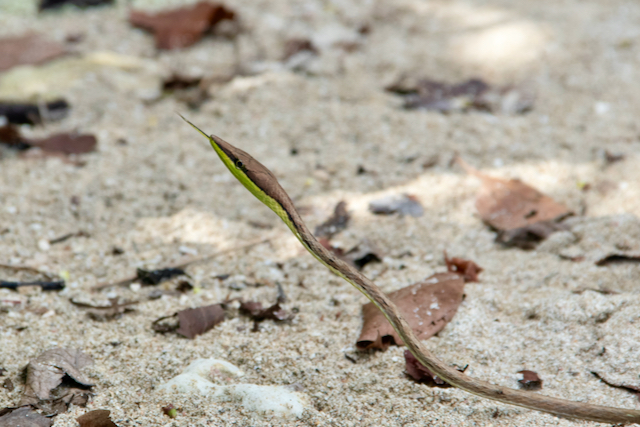
Brown vine snake (Oxybelis aeneus)
An extremely slender snake with pointed, elongated head. In defense it opens the mouth wide to display dark purple lining. The back of its dorsum is brown, while the underside is white. The snake is mostly arboreal and diurnal, feeding on lizards frogs and small birds
© 2021 Jonas Flachmeier. All rights reserved | Cahuita National Park
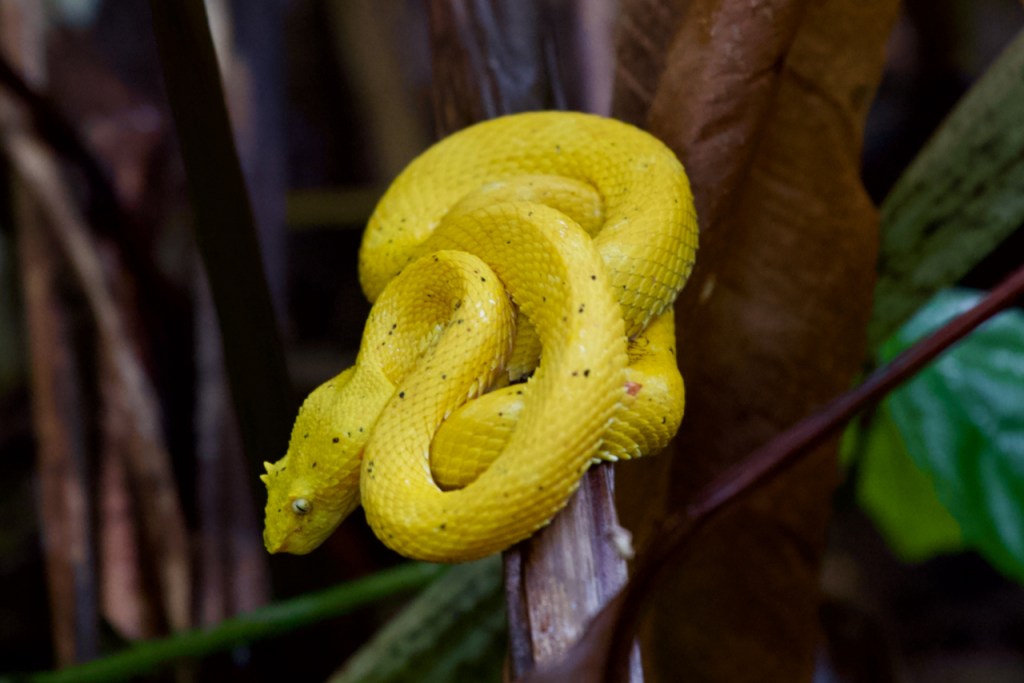
Yellow eyelash viper (Bothriechis schlegelii)
It is a species of venomous pit viper, that is small and arboreal and characterized by a wide array of color variations that help it to camouflage. It has superciliary scales above the eyes, that look like eyelashes. Its bite contains a dose of hemotoxic venom, capable of killing adult human beings and large mammals.
© 2020 Jonas Flachmeier. All rights reserved | Tortuguero National Park
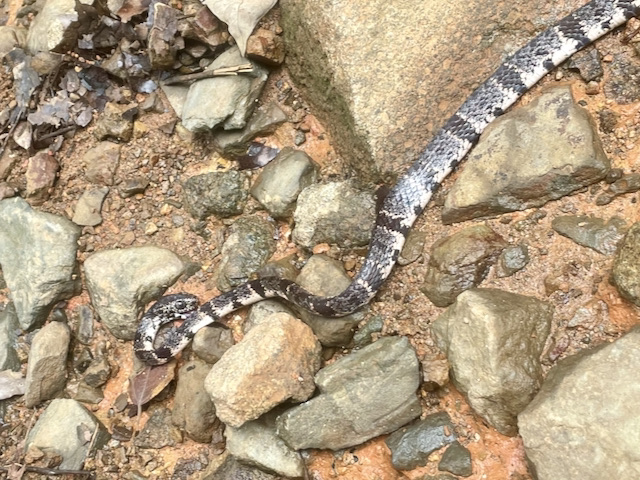
Northern Cat-Eyed Snake
This is one of the largest and most robust snakes in Costa Rica, capable of feeding on moderately sized birds, including small chickens. The body is mostly black with yellow dashes and patterns vary considerably. The snake can act aggressively but a bite will only hurt, not kill a human. Note: if you see a dead snake, bury its head.
© 2021 Jonas Flachmeier. All rights reserved | Nauyaca waterfalls
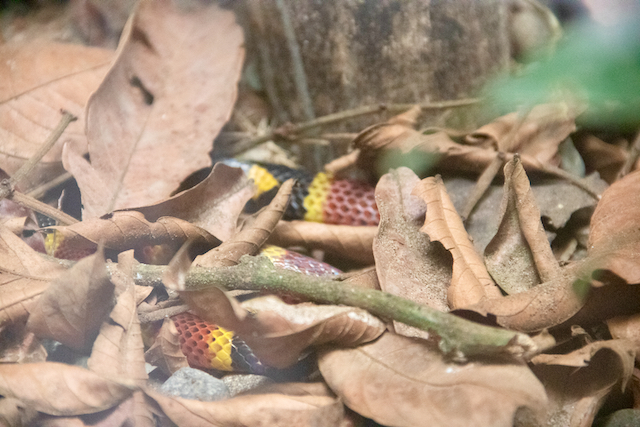
Central American Coral Snake
The Central American Coral Snake inhabits dry forest to humid forests of the Pacific side of Costa Rica. To distinguish the real coral snake from its imitants it’s best to concentrate on the black ring in the middle which is bordered by narrow white rings set between broad red rings.
© 2021 Jonas Flachmeier. All rights reserved | JRC, Puerto Viejo
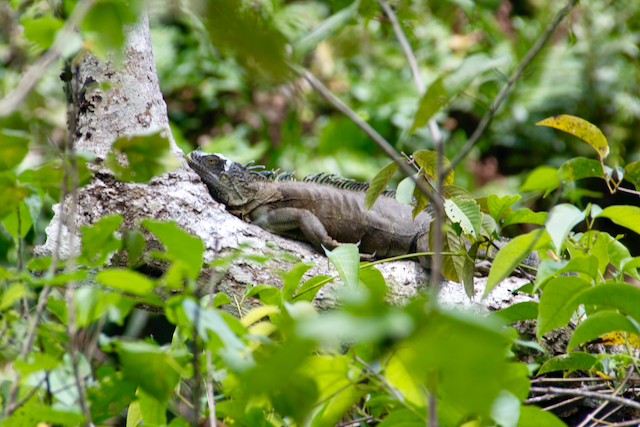
Green Iguana
The green iguanas can reach to a length of 2m and weigh up to 9kg. Usually, they are found near water during the day. Swift climbers, green iguanas have no problem in falling from 15m since they use their hind leg claws to grab onto leaves branches to avoid the harsh fall. In Central America, iguana meat is commonly consumed and they’re called “chicken of the trees” or “bamboo chicken”. Iguanas can hold their breath for up to 30 minutes.
© 2021 Jonas Flachmeier. All rights reserved | Cahuita National Park
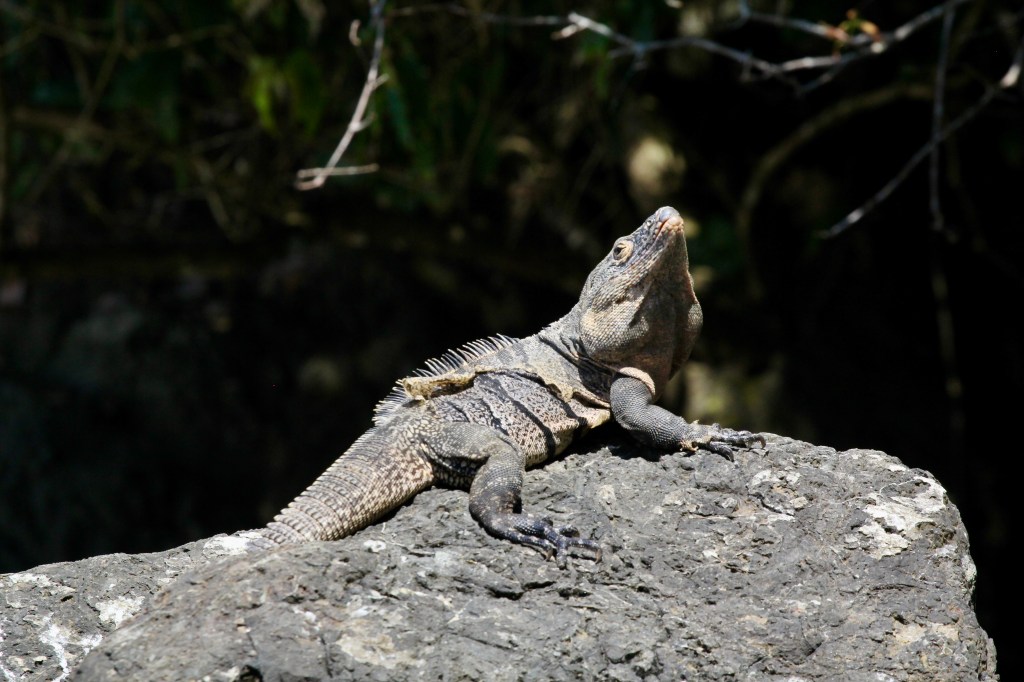
Black Spiny Tailed Iguana
They are the quickest among all lizards with a speed of 35km/h and have comb-like, spiny tails. They bite and use their tail as a weapon if they are threatened. They spend most of the day warming up in the sun particularly on rocks. They are good at climbing trees and eat leaves, fruit and small creatures.
© 2020 Jonas Flachmeier. All rights reserved. Manual Antonio National Park
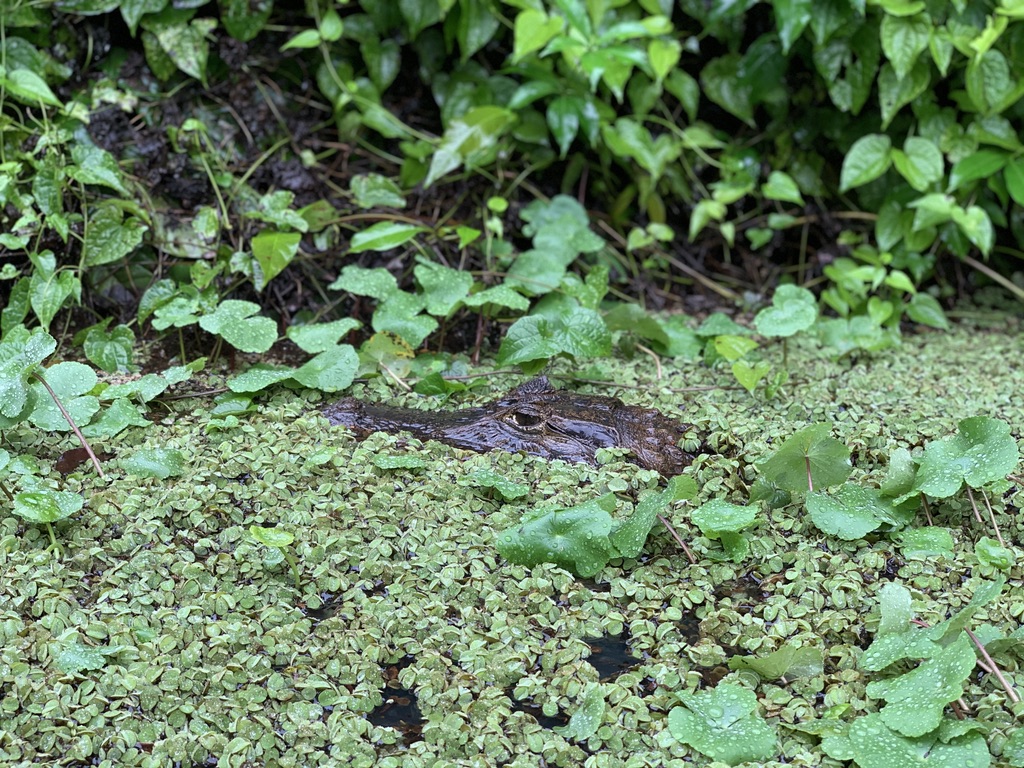
Spectacled Caiman
Caimans are smaller than crocodiles and are not harmful to people. The caiman has distinctive spectacle-shapes near its eyes. Its diet varies seasonally, commonly consisting of crabs, fish, mammals, and snails. Unlike the crocodile, its teeth do not stick out when it closes its mouth.
© 2020 Jonas Flachmeier. All rights reserved | Tortuguero National Park
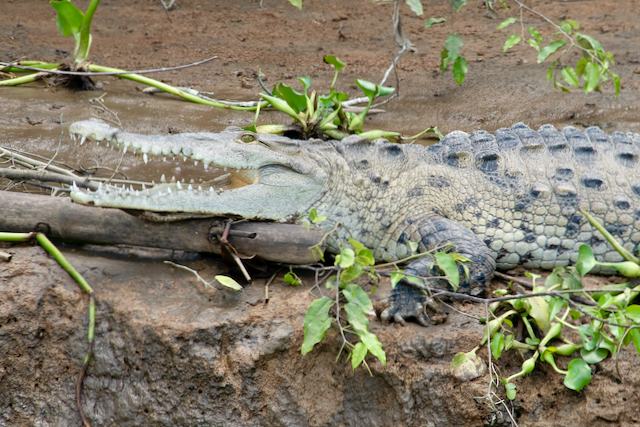
American Crocodile
The American crocodile can be seen throughout the lowlands of Costa Rica, gliding along salt-water rivers or sunning on muddy banks. Its eyes, ears and nostrils are on the top of its head, giving it a low profile. It can grow up to 6m and 1000kg and remain submerged for more than 1 hour.
© 2021 Jonas Flachmeier. All rights reserved | Sierpe River
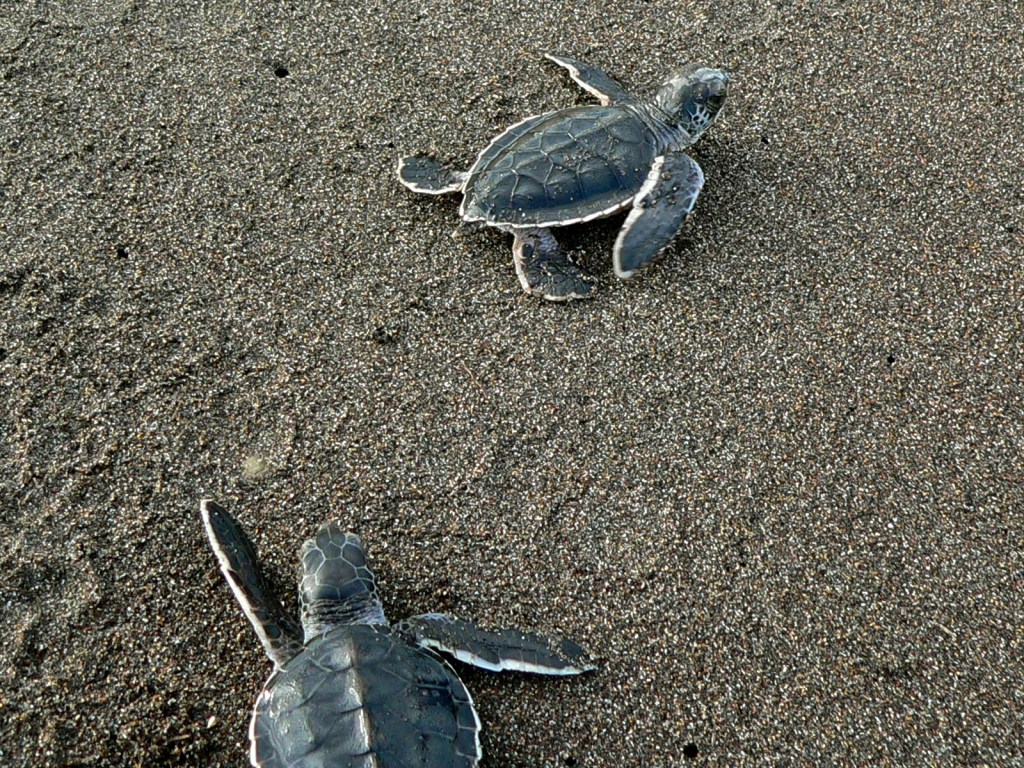
Green Turtle
Female green turtles can locate specific shores and tend to return to the same spots for nesting. During breeding migration they nest 2-5 times at 12 day intervals and it occurs during the night on the beach. The female makes an egg chamber and lays around 100 eggs. Incubation is 60 days, and when the baby’s break out they head straight to the water. They begin swimming right away and swim non stop for 6 days, using remaining yolk from the egg, for energy.
© 4 October 2006 by Bernard Dupont. Licensed under Creative Commons Attribution Share Alike 2.0 Generic.
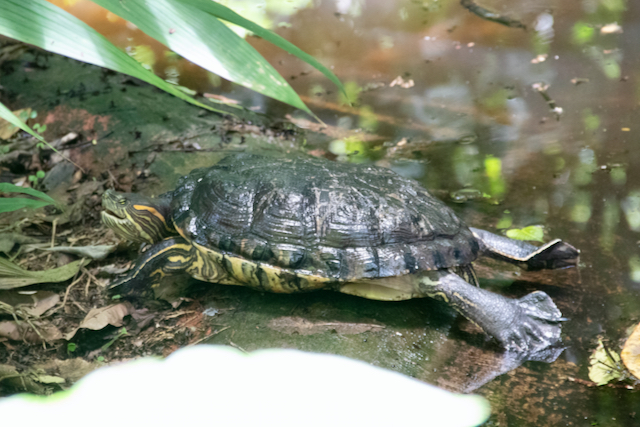
Yellow-bellied slider
One of the most popular pet turtles, they are long-lived aquatic turtles some living up to 40 years in captivity. It’s found in a wide variety of habitats, including slow-moving rivers, swamps, marshes, seasonal wetlands, and permanent ponds.
© 2021 Jonas Flachmeier. All rights reserved | JRC, Puerto Viejo
Amphibians
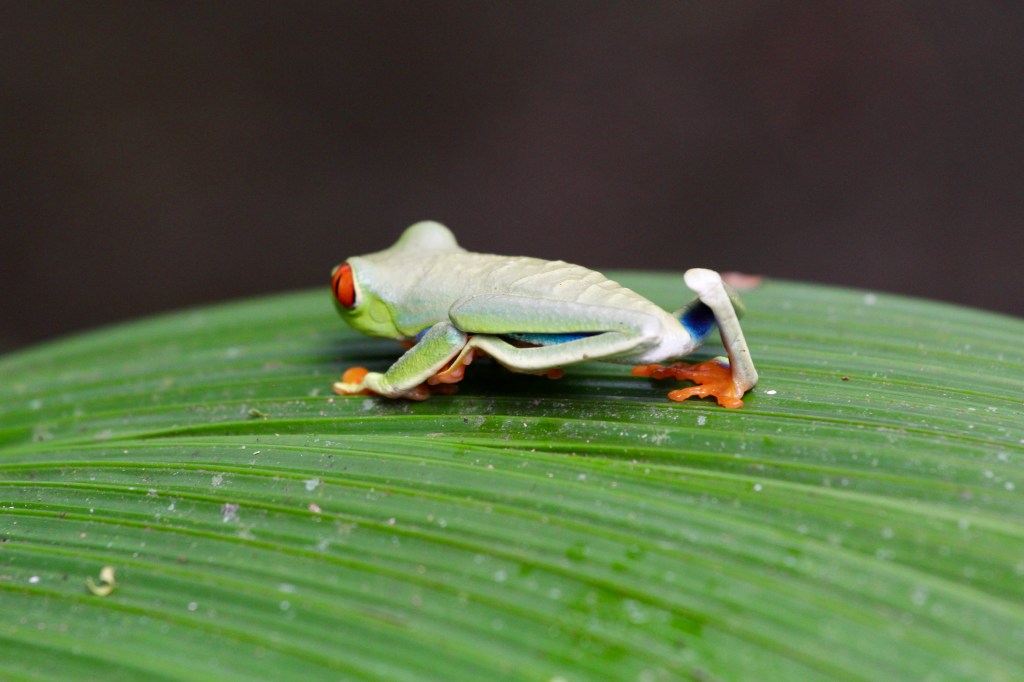
Red Eyed Tree Frog
This is one of the most popular animals of Costa Rica due to it’s prominent feature: the red eyes. Each of its bright colors plays a part in its well-being. Birds and snakes get shocked by seeing it.
These tree frogs’ feet have tiny suction cups on the bottom. They allow the frogs to cling to leaves without fear of falling. Their long, sticky tongues make it easier to catch food. They are nocturnal.
© 2020 Jonas Flachmeier. All rights reserved.
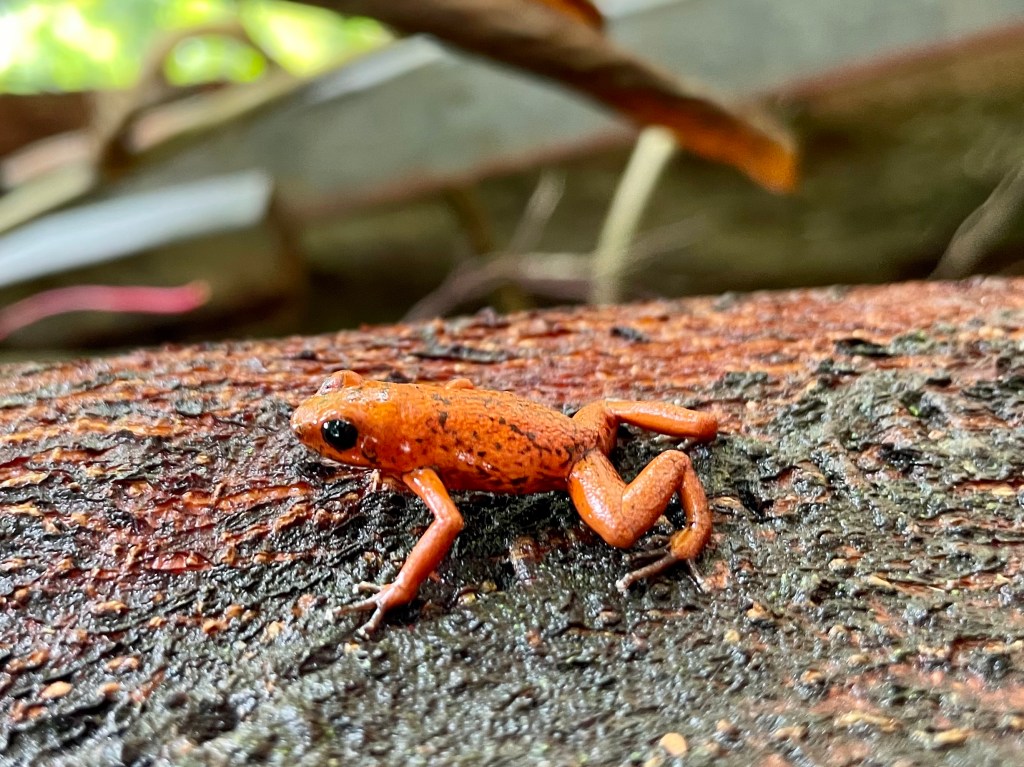
Strawberry poison-dart frog
The patterns on its skin are symmetrical, however the color variations for this species are the most diverse in the entire poison dart frog family, comprising approximately 15–30 color morphs, most of which are presumed to be true-breeding. This species typically resides in rainforest habitats and in cacao and banana groves.
© 2021 Jonas Flachmeier. All rights reserved. | Puerto Viejo Cacao farm
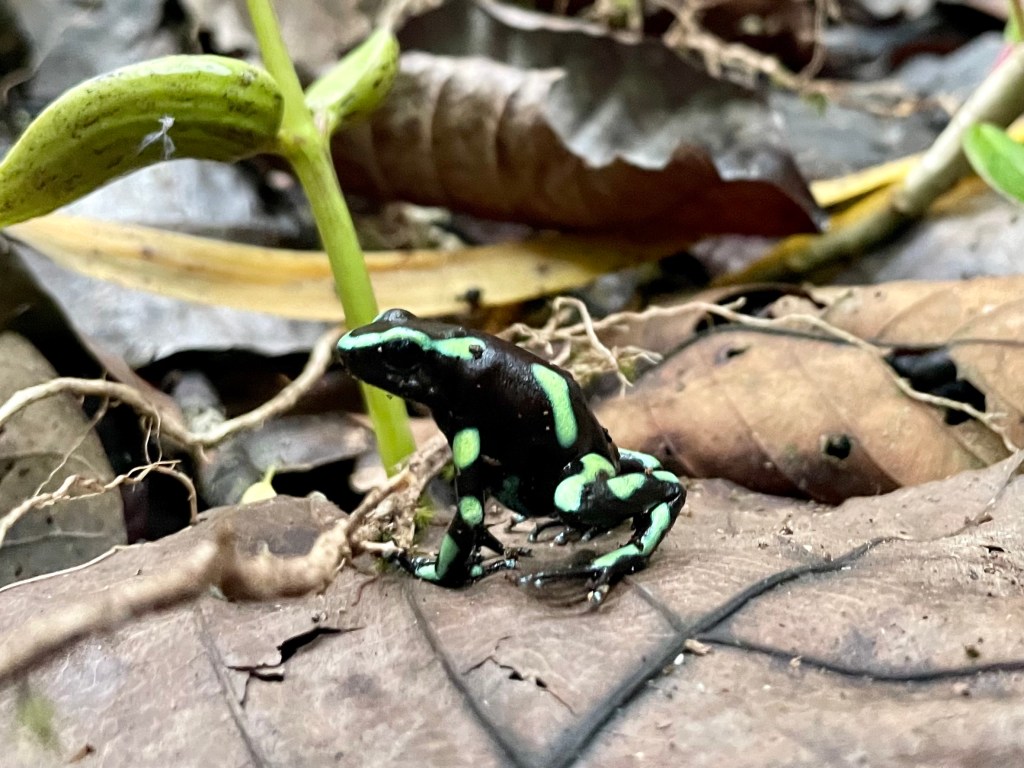
Green and black poison dart frog
They have toxins in their skin that can paralyze or kill potential predators. The bright green color of this frog’s skin warns predators not to eat it. Frogs use their excellent sense of vision to help capture prey. They have sticky tongues which also help them to catch food and a small sticky pad on the bottom of each toe.
© 2021 Jonas Flachmeier. All rights reserved.
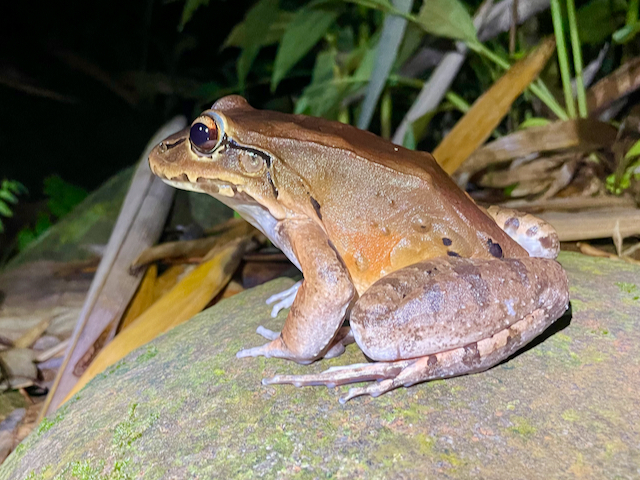
Rain Frog (Rana de Lluvia)
Found throughout the lowlands of Costa Rica’s coasts, the rain frog has a grainy appearance that helps conceal it from predators. A prominent gold stripe along the upper edge of its large eyes can help to identify it. The rain frog typically hides in the leaf debris, blending in during the day and then singing at night.
© 2021 Jonas Flachmeier. All rights reserved | Cascada Verde hostel, Cahuita
Mammals
Are the two types of sloth in Costa Rica similar?
The two type of sloths aren’t closely related as many think, they belong to different families and other than both being lazy, sleeping for 20 hours/day, climbing down the trees to poop and feeding primarily on leaves, they don’t have much in common.
Both types of sloths spend most of their life upside down, and many of their internal organs shift. Unless the sloths doing their business, they rarely come down. They are so sedentary that green algae develops on their fur, which they eat.
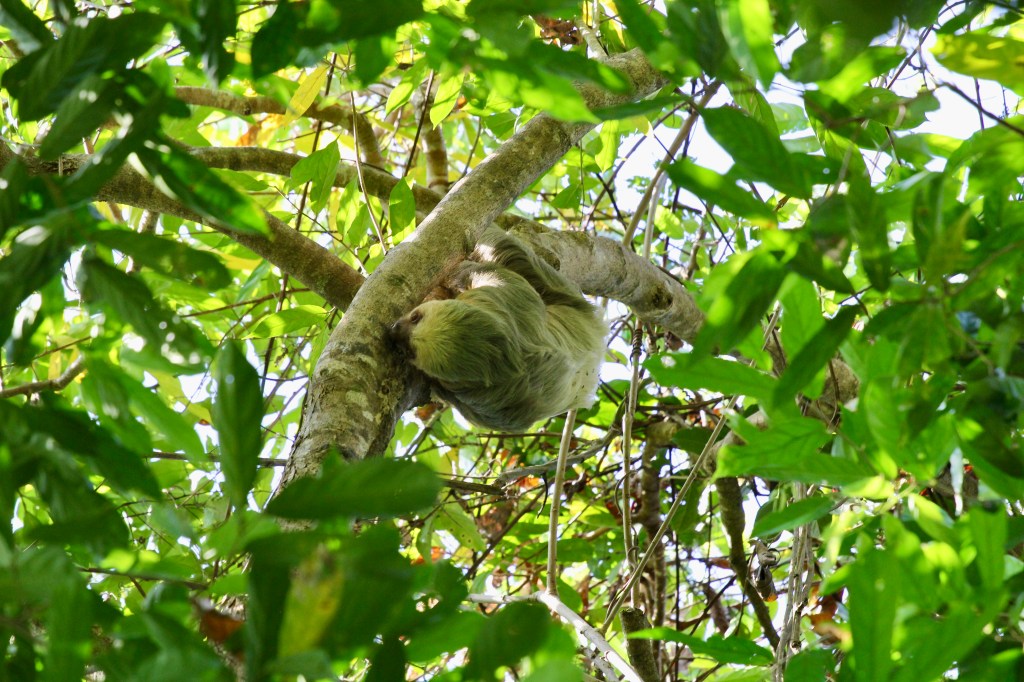
Hoffmann’s Two-toed sloth
Two toed sloths have 6 vertabrae, allowing them to turn their head only 90degrees. They don’t have tails and have similarly sized arms and legs. They also have a shorter neck and larger eyes than its distant cousin.
© 2020 Jonas Flachmeier. All rights reserved.
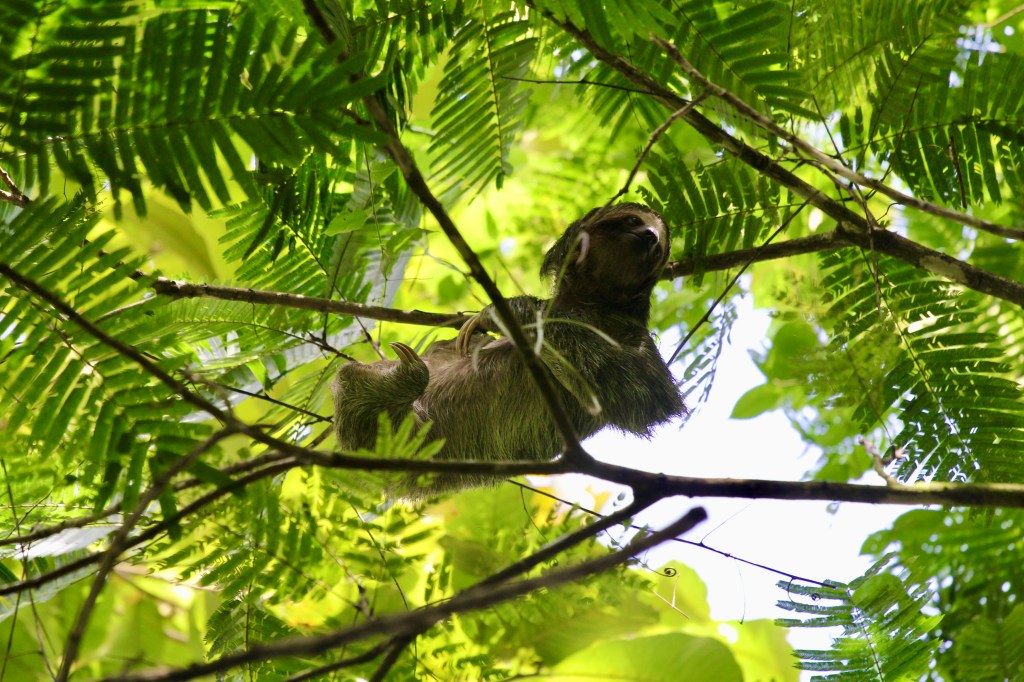
Brown-Throated Three-toed sloth
The three-toed sloth has 9 vertebrae, allowing it to turn its head 270 degrees. It has distinct mask-like black markings around its eyes, and has a small tail. Its front legs are substantially longer than the rear ones.
© 2020 Jonas Flachmeier. All rights reserved.
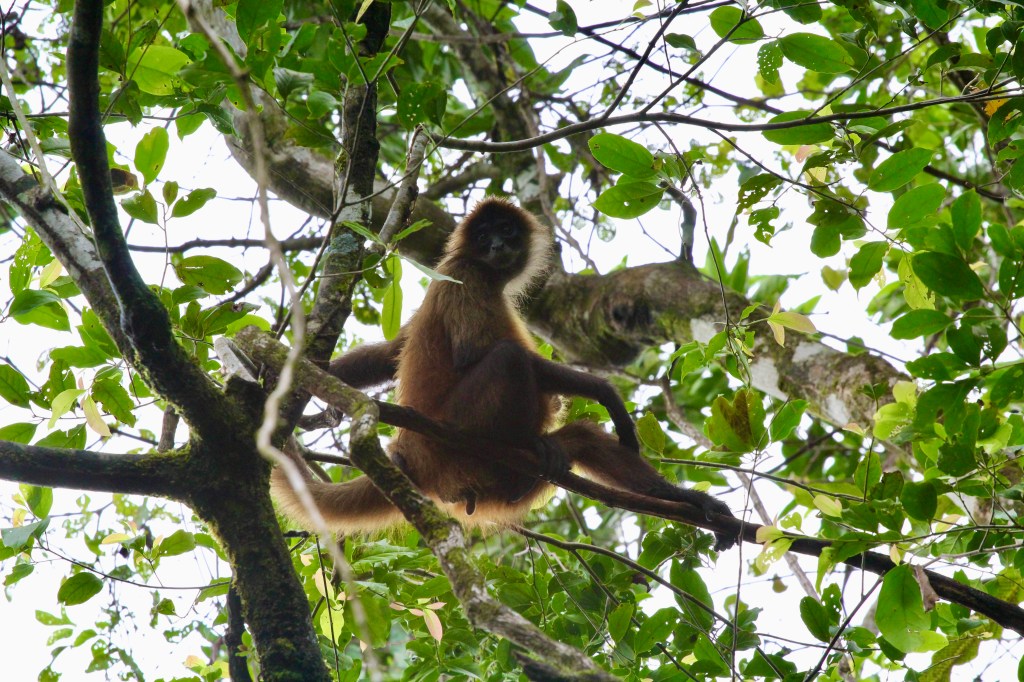
Central American Spider Monkey
The so called Geoffroy’s Spider Monkey belongs to some of the most agile species in Costa Rica. They have disproportionately long limbs and a long tail, what gives this primate its name. Spider monkeys live in the upper layer of the rain forest, where they search for food like fruit, leaves, flowers, and insects.
© 2020 Jonas Flachmeier. All rights reserved | Tortuguero National Park
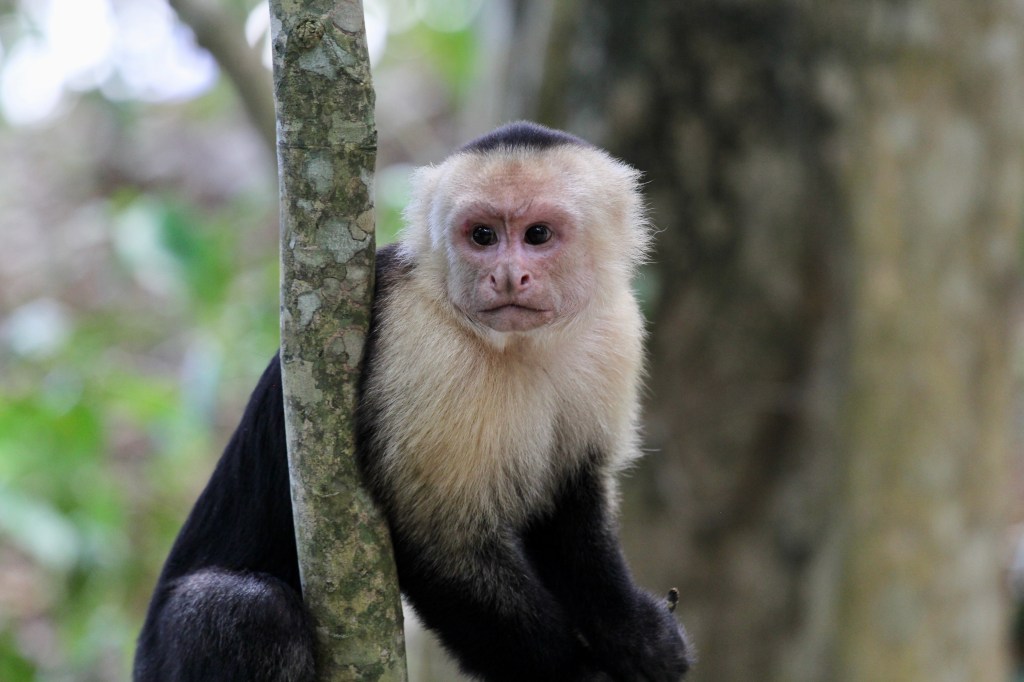
Capucin/White faced Monkey
It belongs to the smartest group of monkeys. Watch out for your belongings, as they can snatch your things when you’re not looking! They feed on an assorted diet, searching among the trees to find insects. Their tail is not capable of grasping, but does help them to balance.
© 2020 Jonas Flachmeier. All rights reserved | Manuel Antonio National Park
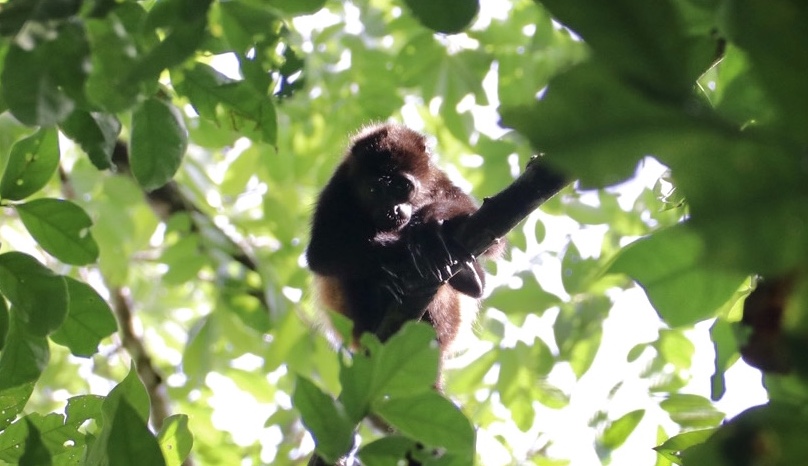
Mantled Howler Monkey/Congo
This is one of the largest monkey species in Costa Rica. Its tail serves as a 5th hand, which it uses to pick up branches. Feeding mostly on leaves, makes their metabolism really slow. Their powerful howl is used as an alert mechanism, or to protect their territory.
© 2021 Jonas Flachmeier. All rights reserved | Corcovado National Park
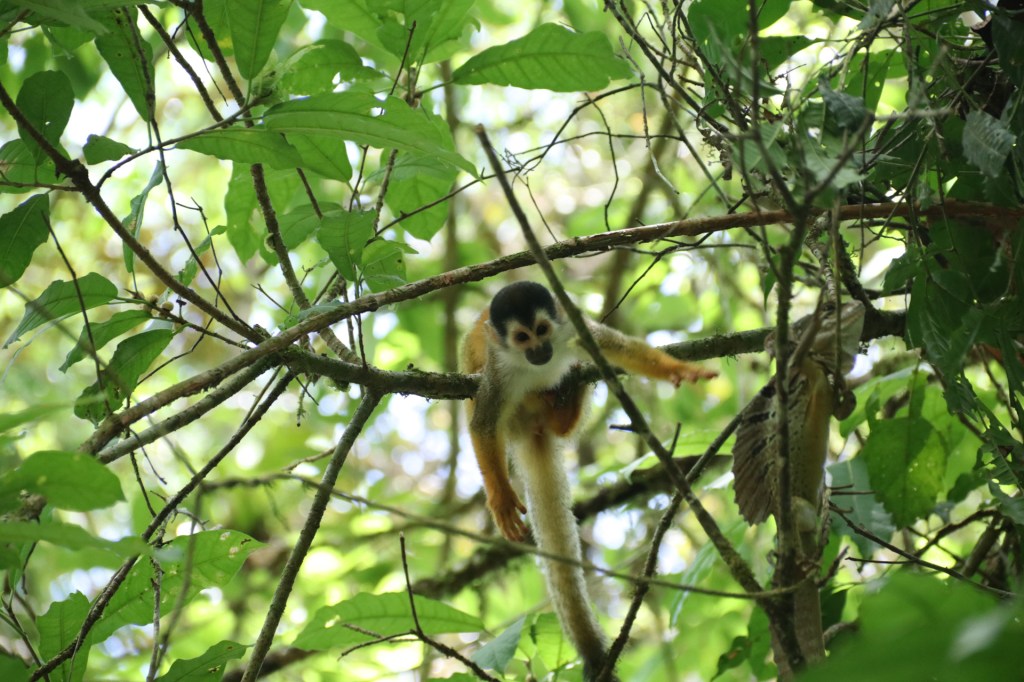
Squirrel/Titi Monkey
This diurnal mammal has the most restricted range of Costa Rican primates (endemic only in the southern tropical forests) and is the smallest of its kind. They keep in groups with a range of seven up to 500 monkeys. Besides fruits and insects they also feed on small bats.
© 2021 Jonas Flachmeier. All rights reserved | Corcovado National Park
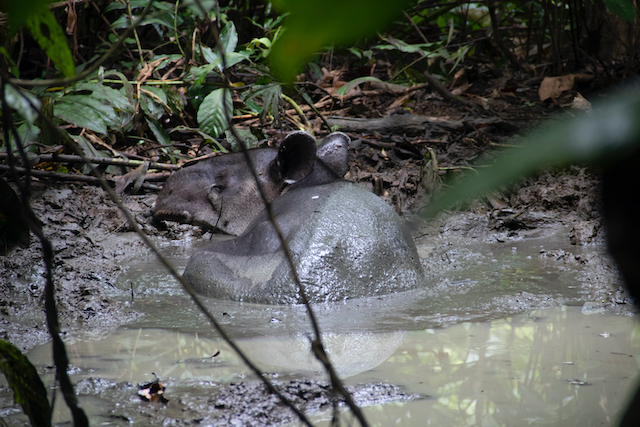
Baird’s Tapir
The Baird’s Tapir is the largest wild mammal in Costa Rica and likes to stay close to water. This herbivore is closely related to horses and rhinos and is currently classified as endangered.
© 2021 Jonas Flachmeier. All rights reserved | Corcovado National Park
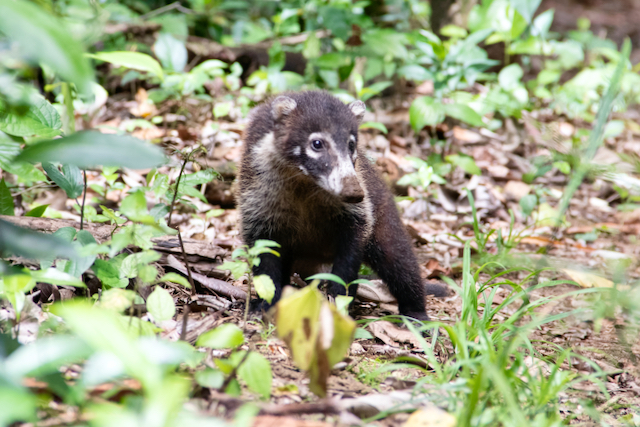
Coati
This white-nosed species is often mistaken for raccoons. It is primarily an omnivore, however, in Costa Rica it is accustomed to having people around and is known to plead for food.
© 2021 Jonas Flachmeier. All rights reserved | Corcovado National Park
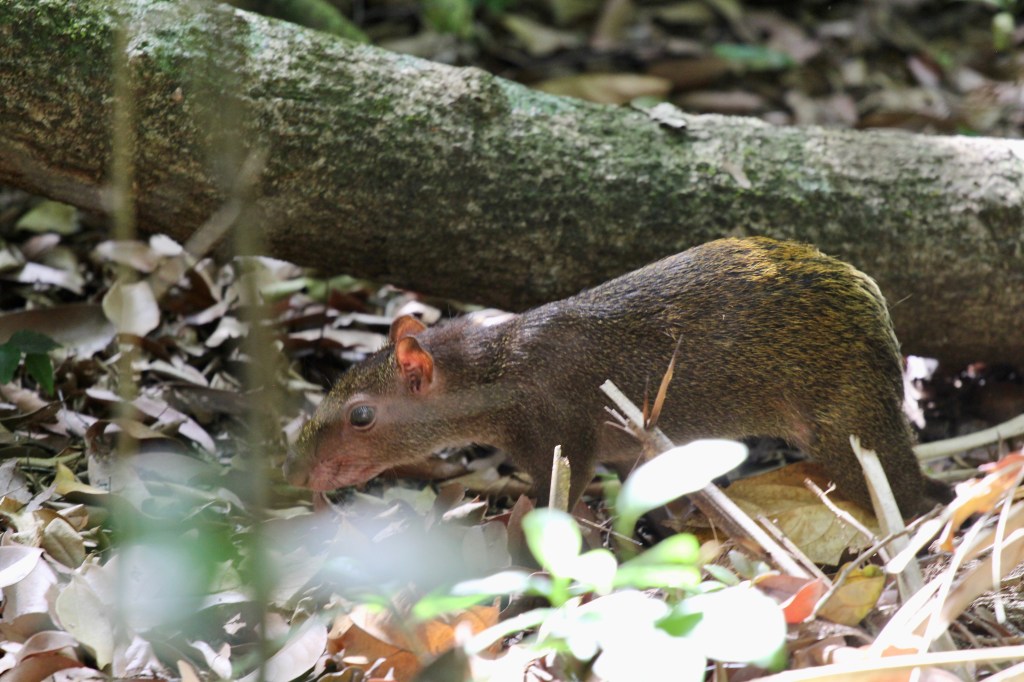
Agouti
These tiny mammals (40 – 60 cm) look like a mixture of a squirrel and a rabbit. They are monogamous and usually mate for life. Agoutis are blessed with a highly perceptive sense of hearing and smelling.
© 2020 Jonas Flachmeier. All rights reserved | Manuel Antonio National Park
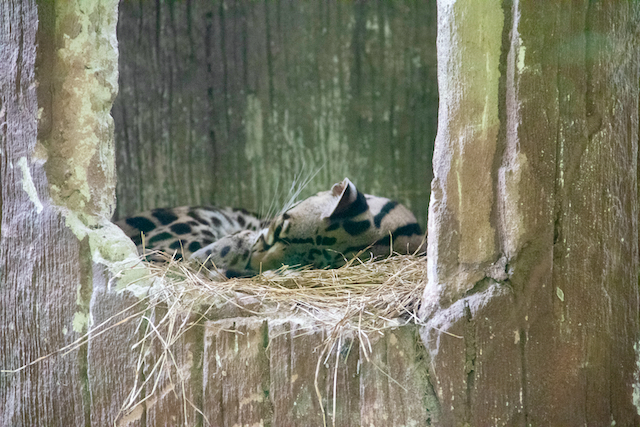
Margay
Very similar to the larger ocelot in appearance, its head is shorter and eyes larger. This small nocturnal wild cat is an excellent climber due to the ability to turn its paws 180 degrees. Therefore, it is the only wild cat in Costa Rica that can hunt monkeys through the canopy. It is also called Tigrillo.
© 2021 Jonas Flachmeier. All rights reserved | JRC, Puerto Viejo
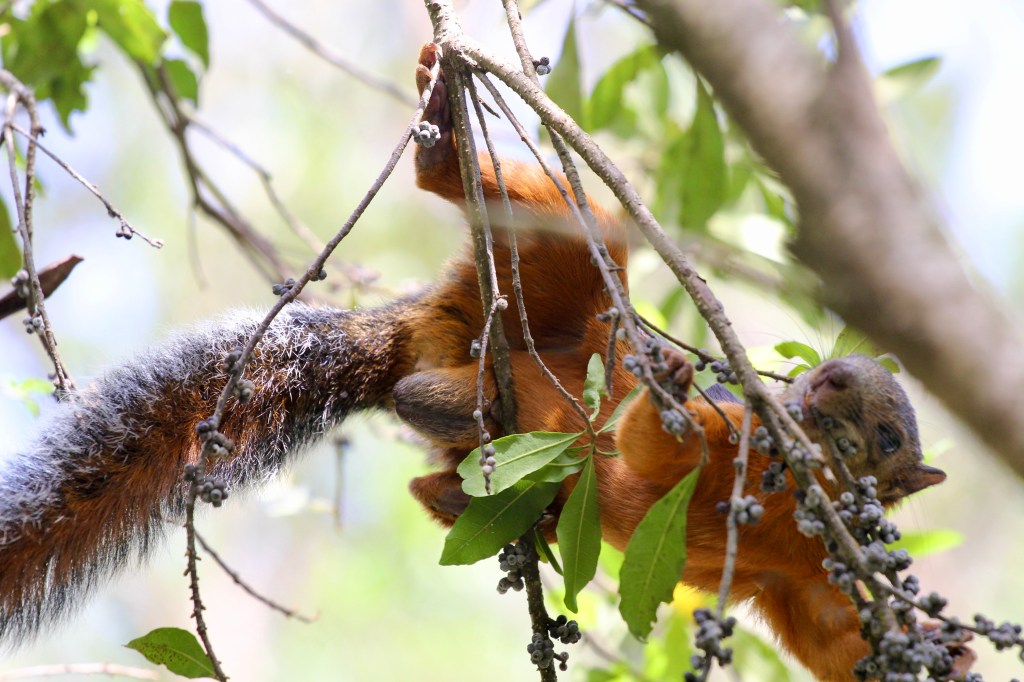
Variegated Squirrel (S. v. rigidus)
They are common all over Costa Rica – in a variety of colors from white with a black back to brown black, like this one in the Arenal National Park. Due to their high level of adaptability they can survive in almost any habitat.
© 2020 Jonas Flachmeier. All rights reserved | Arenal National Park
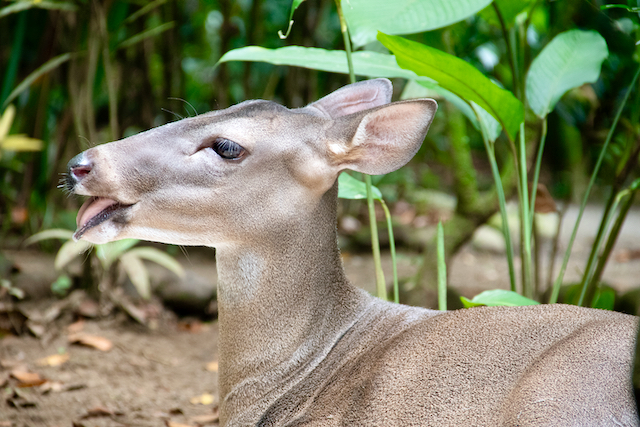
White-tailed deer
Declared in 1995 as the national symbol of Costa Rica to reduce hunting, due to facing extinction. The underside of the deer’s tail is white, to signal other deer when something or someone approaches. They flash the tail, stomp their hooves, and pant loudly as a signal to others. Common predators are the jaguar, the puma, and man of course.
© 2021 Jonas Flachmeier. All rights reserved | JRC, Puerto Viejo
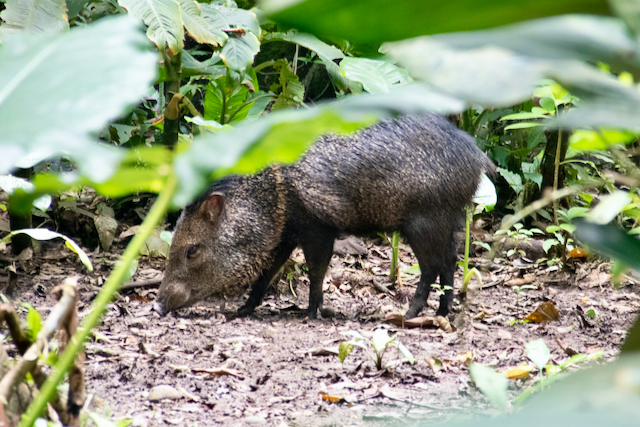
White-lipped peccary
It’s a very important species for tropical forests because they directly benefit the regional biodiversity. When it searches for worms and seeds on the ground, it moves around the soil making it possible for certain plant species to flourish. It’s the main prey of the jaguar and is therefore considered one of the best indicators of ecosystem health. Unfortunately, it is threatened due to excessive hunting and loss of habitat from deforestation.
© 2021 Jonas Flachmeier. All rights reserved | JRC, Puerto Viejo
Insects
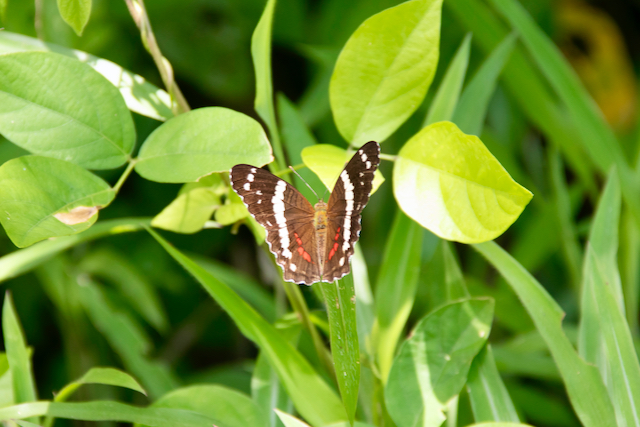
Banded Peacock butterfly (Anartia Fatima)
There are more than 1,200 different types of butterflies fluttering around Costa Rica. This butterfly prefers subtropical climates and woodland areas that have regrown after harvest. It is diurnal; active in the daytime and inactive at night. They face interspecies competition for nectar with other butterflies and must also compete with hummingbirds, who will chase them away.
© 2021 Jonas Flachmeier. All rights reserved | Corcovado National Park
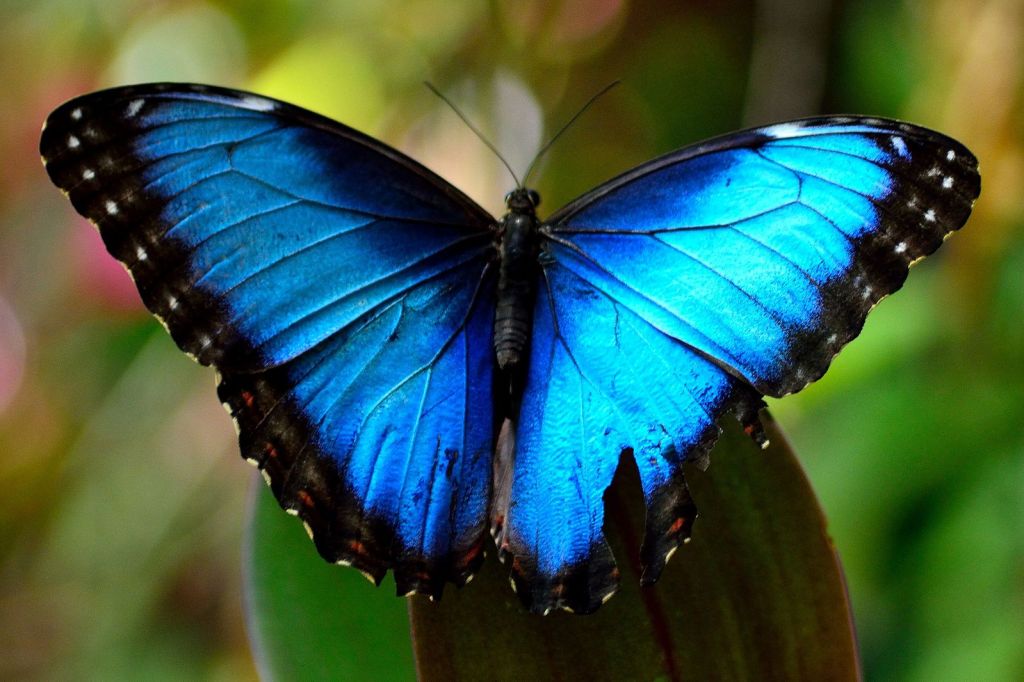
Blue morpho butterfly
This butterfly is one of the biggest in the world, with a wingspan of 20cm. The eyecatching iridescent blue color of the male wings is actually an optical illusion, as their wings aren’t actually pigmented that color but a result of the microscopic scales on the backs of their wings, which reflect light. The underside of their wings is a dull brown, that when closed, protects against predators.
© 5 January 2014 by Tom Hilton. Licensed under Creative Commons Attribution 2.0 Generic.
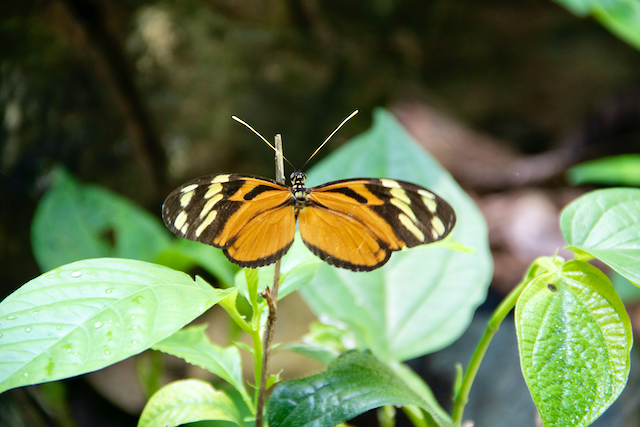
Tiger Longwing butterfly (Heliconius hecale)
These butterflies are part of the most important tropical butterfly group for the study of diversity and genetics. Each wing pattern has been tweaked by evolution, by mimicking other poisonous species, to help the creature survive.
© 2021 Jonas Flachmeier. All rights reserved | Carara National Park
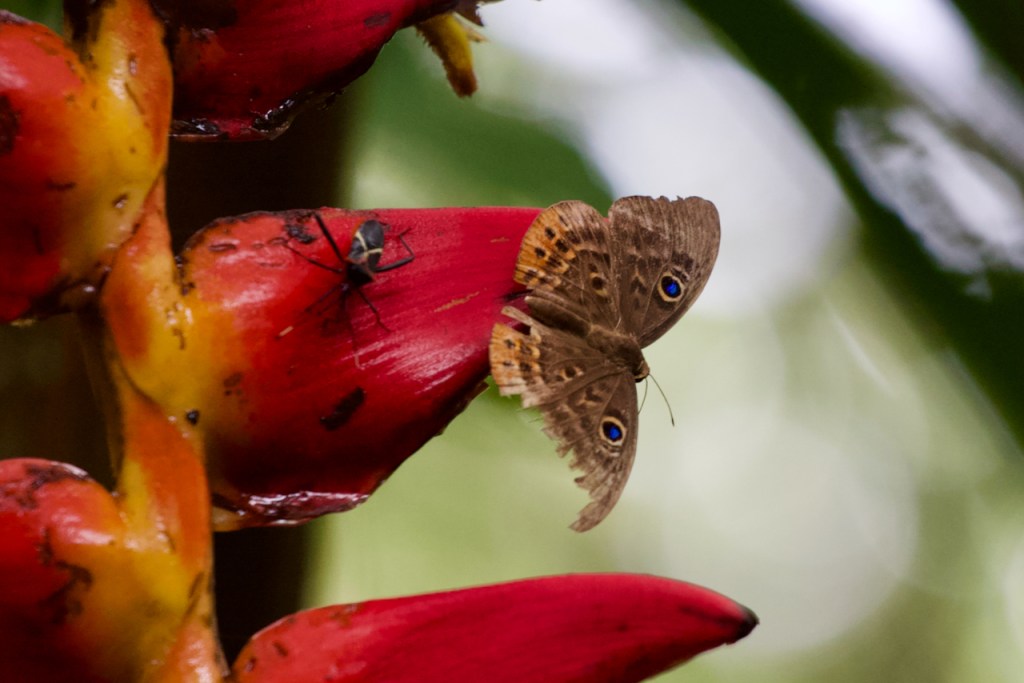
Eurybia butterly
This is a small but elegant butterfly species, in which the male uses mimicry as a defensive adaptation to ward off predators. The Eurybia is unusual among butterflies in that its tongue (proboscis) is much longer than its body allowing the butterfly the access of nectar in long tubular flowers.
© 2020 Jonas Flachmeier. All rights reserved | Tortuguero National Park
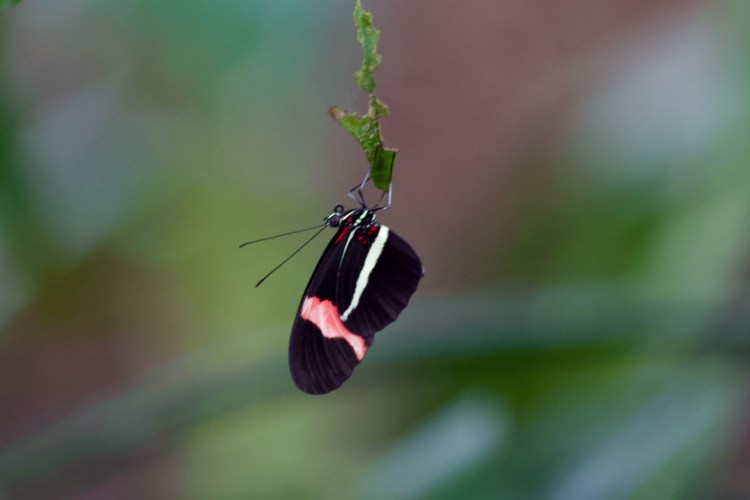
Small Postman butterfly (Heliconius erato)
They are most common along sunlit forest edges with flowers, particularly the Heliconia or Passionflower. Their aposematic (warning) coloration is meant to warn potential predators like birds that it is poisonous.
© 2020 Jonas Flachmeier. All rights reserved | La Fortuna
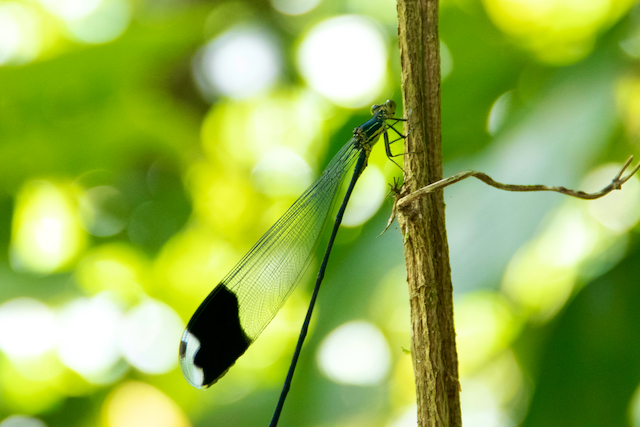
Megaloprepus caerulatus
This species has the greatest wingspan of any living damsel- or dragonfly (up to 19 cm). The markings on its wings have given it a description as “pulsating blue-and-white beacon”. As many as 13 females may oviposit in a single large tree hole, laying up to 250 eggs each.
© 2021 Jonas Flachmeier. All rights reserved | Corcovado National Park
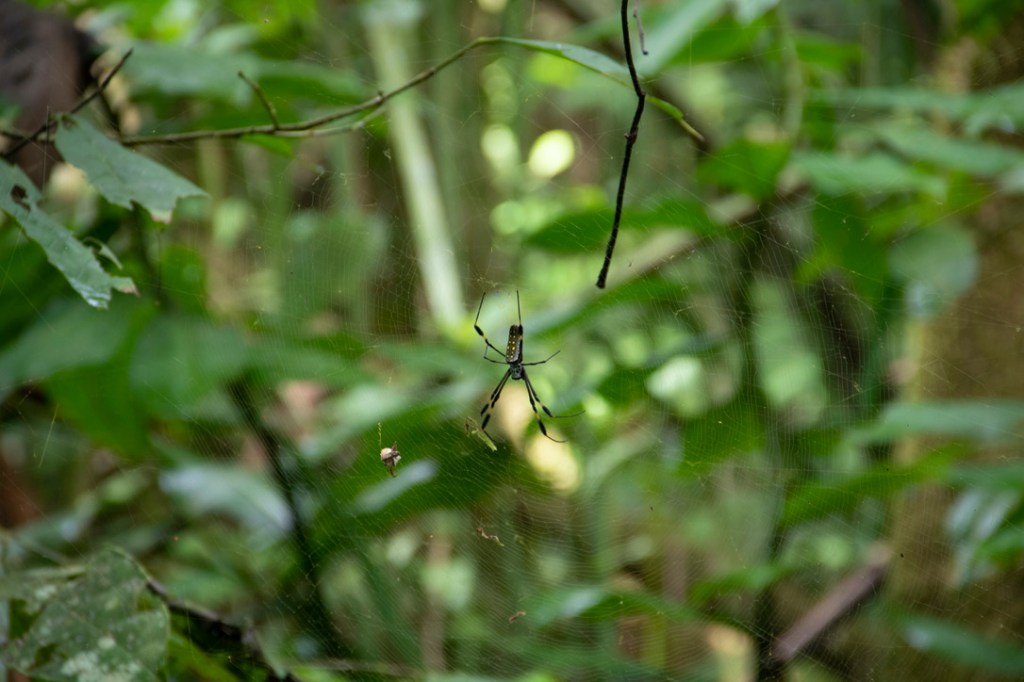
The Golden silk orb-weaver
This spider, whose body reminds a bit of a caper, is one of the largest in Costa Rica. Their name refers to the golden color of their webs which can be very big and complex.
© 2021 Jonas Flachmeier. All rights reserved | Corcovado National Park
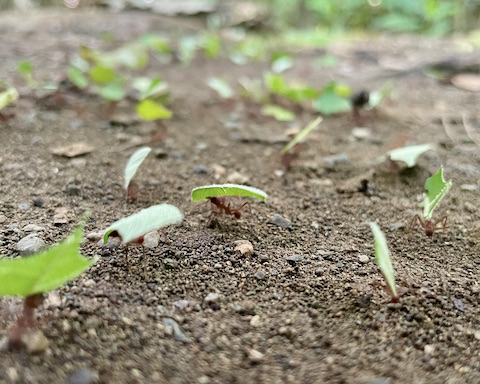
Leaf cutter Ants (Zompopos)
Leaf cutter ants (Zompopos) certainly look cute when you see them in long lines, carrying pieces of flowers and leaves. The ants can lift 10 times their own body weight. In a garden you nevertheless don’t want them as they can do great damage to your flowers and crop. They are gardeners themselves: they don’t eat the plant materials, instead they bring it to their underground gardens to cultivate a special, bread like fungus which they consume.
© 2021 Jonas Flachmeier. All rights reserved.
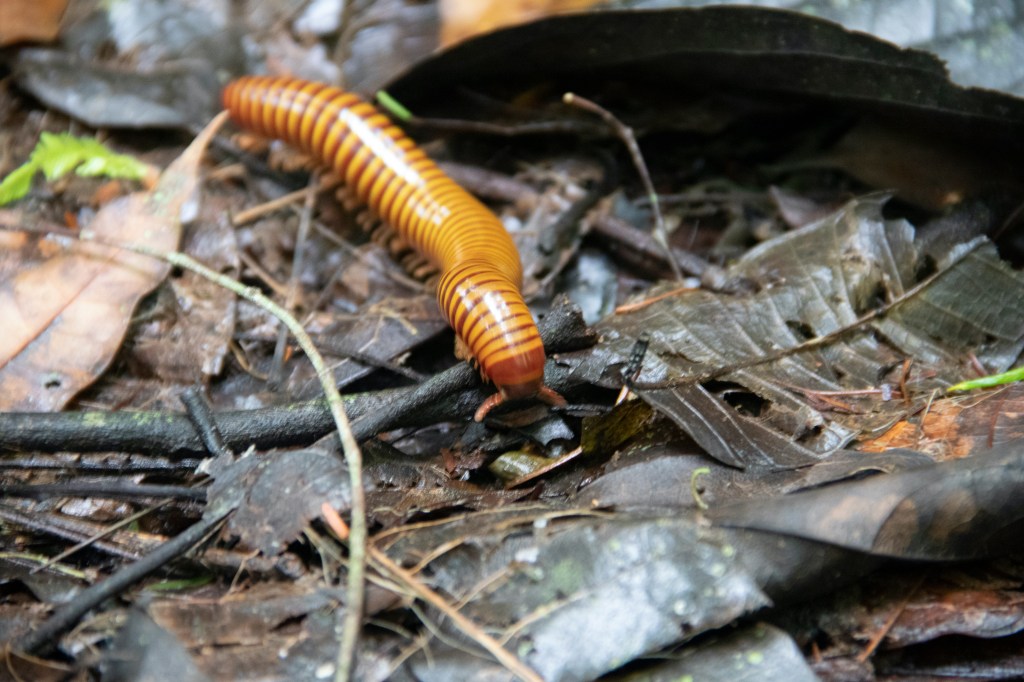
Spirobolida millipede
This millipede lives in the tropics of Central America and is brightly coloured. Matured males have two modified legs that are called gonopods: 8th/9th pair. The posterior gonopods are used in sperm transfer and the anterior gonopods are fused into a single plate-like structure. Millipeds assist in decomposition of dead plant matter.
© 2021 Jonas Flachmeier. All rights reserved | Carara National Park
Others
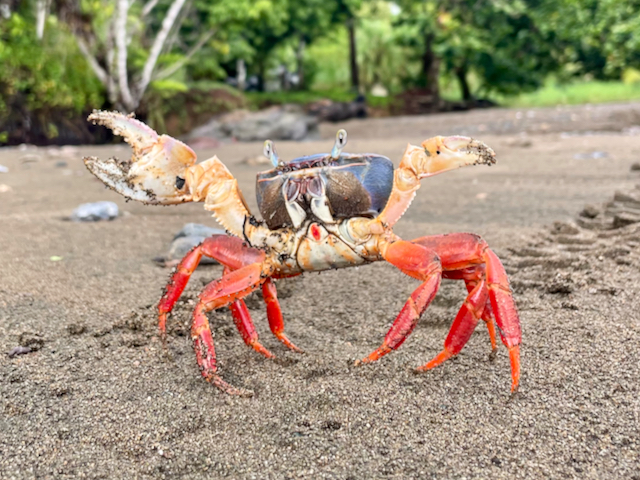
Halloween crab
This species is found in mangrove, sand dunes and rainforest along the Central American Pacific coast. The nocturnal crab digs burrows that reach a length of as long as 1.5 metres. During adulthood, the herbivore lives in the rainforests, but returns to the ocean to breed.
© 2021 Jonas Flachmeier. All rights reserved | Drake Bay
 Two Shoulder Straps
4 responses to “Costa Rica Wildlife”
There’s nothing like seeing wild animals in their natural habitat and what better place to do it then Costa Rica! Great post and fantastic photos! Thanks for sharing and safe travels 😀 Aiva
LikeLiked by 1 person
If you know about Costa Rica, you probably heard it in the context of bio-diversity, right? Time to read more into it!
LikeLike
[…] Drop off your bags at your hostel and go sloth spotting at the Bogarin Trail. The best time to spot sloths is either in the morning or late afternoon, when it isn’t so hot anymore. The Bogarin Trail is a 2km trail on a private reforested property offering high chances to see birds, Black Mandibled toucans, frogs and most importantly sloths! For more info about Costa Rican wildlife read our blog Costa Rica Wildlife. […]
LikeLike
[…] The daily tour at the Jaguar Rescue Center is unlike any animal experience you’ve had before. World-class educational tour guides will bring you in close proximity with monkeys, wild cats, sloths and more. The 1.5 hour tour is at 9:30a.m. or 11:30a.m. and costs $23. We saw toucans, baby sloths, a margay, a booby, a white-tailed deer (the national animal of Costa Rica), green and red scarlet macaws, owls and parrots. You may take pictures OF the animals but pictures of human to animal contact are against the Costa Rican Law. For more information about Costa Rican wildlife read our blog Costa Rica Wildlife. […]
LikeLike