
2 weeks in Costa Rica by bus
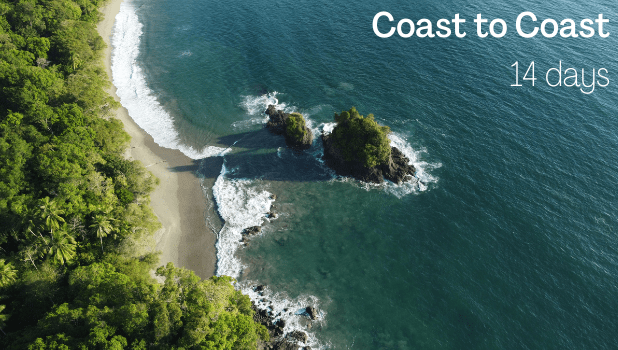
If you want to experience both the Caribbean and Pacific coasts of this bio-diverse country while having a truly off-the-beaten-path nature excursion, then this two-week itinerary by bus is for you. You’ll explore the vastness of Corcovado National Park, go whale watching and dolphin spotting, explore the beaches of the Pacific and Caribbean coasts and discover 5 unique national parks spread across the country, offering a wide range of interesting species.
Highlights
- Spot tapirs and pumas in Corcovado National Park
- Go whale watching in Marino Ballena National Park
- Go surfing on both Pacific and Caribbean beaches
- Discover the world’s biodiversity in Manuel Antonio National Park
- Support wild animals at the Jaguar Rescue Center
| Day | Destination | Overnight |
| 1 | Arrival in San José, Costa Rica | San José |
| 2 | San José to Corcovado National Park | Drake Bay |
| 3 | Corcovado National Park | Drake Bay |
| 4 | Caño Island Snorkeling | Uvita |
| 5 | Whale Tour in Marino Ballena | Uvita |
| 6 | Dominical & Nauyaca waterfall | Manuel Antonio |
| 7 | Manuel Antonio National Park | Manuel Antonio |
| 8 | Manuel Antonio & travel to San Jose | San Jose |
| 9 | Puerto Viejo & Chocolate Tour | Puerto Viejo |
| 10 | Jaguar Rescue Center & Cahuita | Cahuita |
| 11 | Travel to Tortuguero | Tortuguero |
| 12 | Tortuguero National Park & canoe trip | Tortuguero |
| 13 | Travel to San Jose | San José |
| 14 | San José departure |
Day 1: Arrival in San José
Welcome to Costa Rica, the land of pura vida! After arriving at Juan Santamaria International Airport (actually located in Alajuela and not San José), take a bus into the center of San José and check into your hostel. Note: There are MANY bus terminals in San José so bear your onwards plans in mind when booking your accommodation.
Take a stroll through Mercado Central (Central Market), the largest in the city, with over 200 shops, food stalls, and sodas (traditional restaurants). These sodas are perfect spots for an inexpensive lunch of casado—a traditional dish of rice, beans, and meat, served with tortillas. For more information about food in Costa Rica read our blog Top 5 Foods in Costa Rica. Then visit the Catedral Metropolitana (Metropolitan Church), whose interior combines Greek Orthodox, Neoclassical, and Baroque styles, and features wood carvings and stained-glass windows.
Be sure to explore Barrio Amón, a historic neighborhood home to cafetalero (coffee grower) mansions built during the late 19th and early 20th centuries. Many of this area’s historic buildings have been converted into hotels, restaurants, and galleries, making Amón a popular bohemian district.
Recommended accommodation: Stray Cat Hostel (12$/bed in 8 bed dorm incl. tax & breakfast). Centrally located 10 mins walk from airport bus, 15 mins walk to Gran Terminal del Caribe.
Day 2: Corcovado National Park
How to get to Drake Bay from San José?
- OPTION 1: Direct bus from San Jose to Sierpe: Depart from the Tracopa Station at Plaza Viquez (Calle 5 and Avendia 20) in San Jose: $12 one way; 8:30 a.m. Mon.-Sun.; 7-8 hours.
- Take the 1 hour boat ride from Sierpe to Drake Bay: The taxi boat is called Don Jorge and there are two departure times for Drake Bay: 11:30 AM ($15pp) and 3:30 PM ($20pp).
- OPTION 2: Indirect bus from San Jose to Sierpe through Palmar Norte: Depart from the Tracopa Station at Plaza Viquez (Calle 5 and Avendia 20) in San Jose: $12 one way to Palmar Norte ($1 local bus to Sierpe)
- Coastal route (5-6 hours): Mon.-Sun. at 6:30 a.m., 7 a.m., 7:40 a.m., 10:15 a.m., 1:05 p.m., 2 p.m., 3:30 p.m., 4:30 p.m. and 6:40 p.m.
- High mountains “El Cerro” route (6-7 hours): Mon.-Sun. at 5 a.m., 5:30 a.m.,7 a.m., 10 a.m., 1 p.m., 3:30 p.m. and 6:30 p.m.
- Once in Palmar Norte take the bus to Sierpe from the Auto Lasa station in front of the Gollo appliance store at 5 a.m., 6:30 a.m., 8 a.m., 9:30 a.m., 11:30 a.m., 2:30 p.m. and 5:15 p.m.; $1; 30 minutes
- Take the 1 hour boat ride from Sierpe to Drake Bay (see above)
Note: We opted to take the high mountains route at 5am from San Jose, and managed to catch the 11:30a.m. boat from Sierpe to Drake Bay (we arrived around 1p.m.)
Bahía Drake or Drake Bay is the gateway to the famed Corcovado National Park, located directly south of Drake. This famous protected area is known for its virgin rainforests and wind-swept beaches, which are all the more evocative due to the relative lack of crowds. Upon arrival from Sierpe to Drake Bay, walk into the small town and check into your hostel.
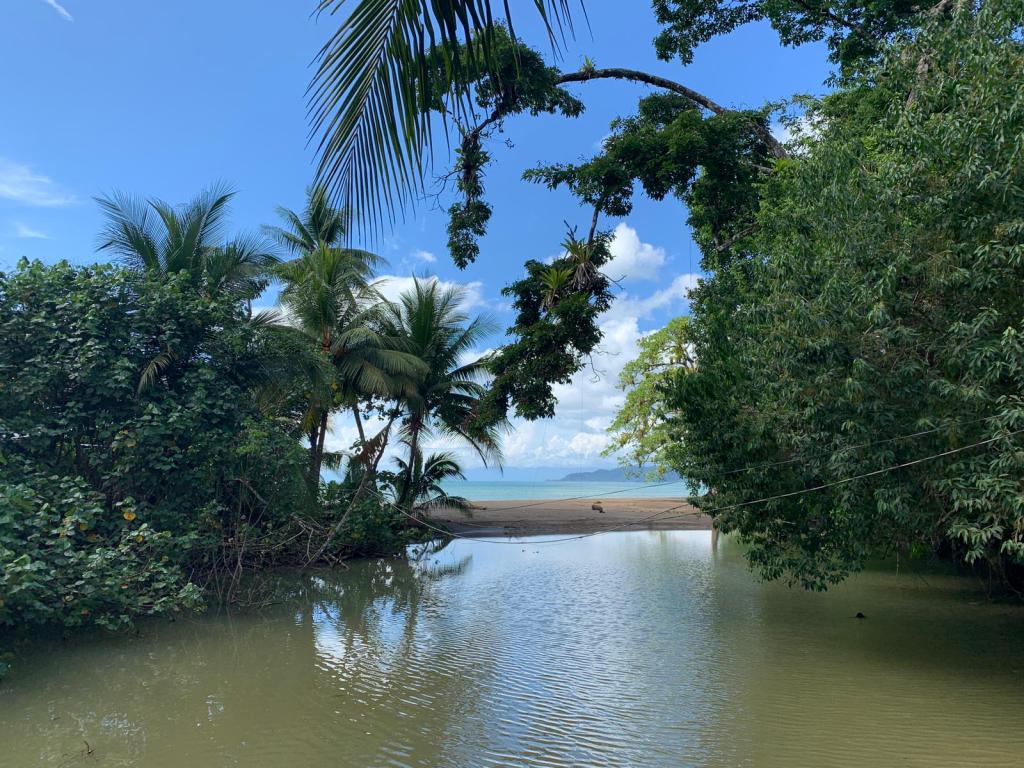
Recommended accommodation: Casita Happy Feet (≈$36 private room incl. tax & breakfast)
Day 3: Corcovado National Park
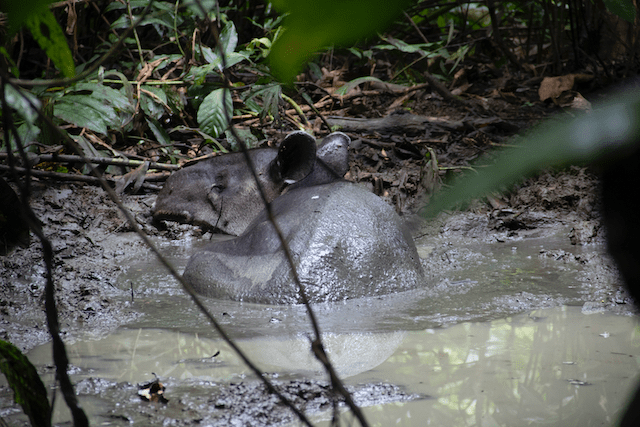
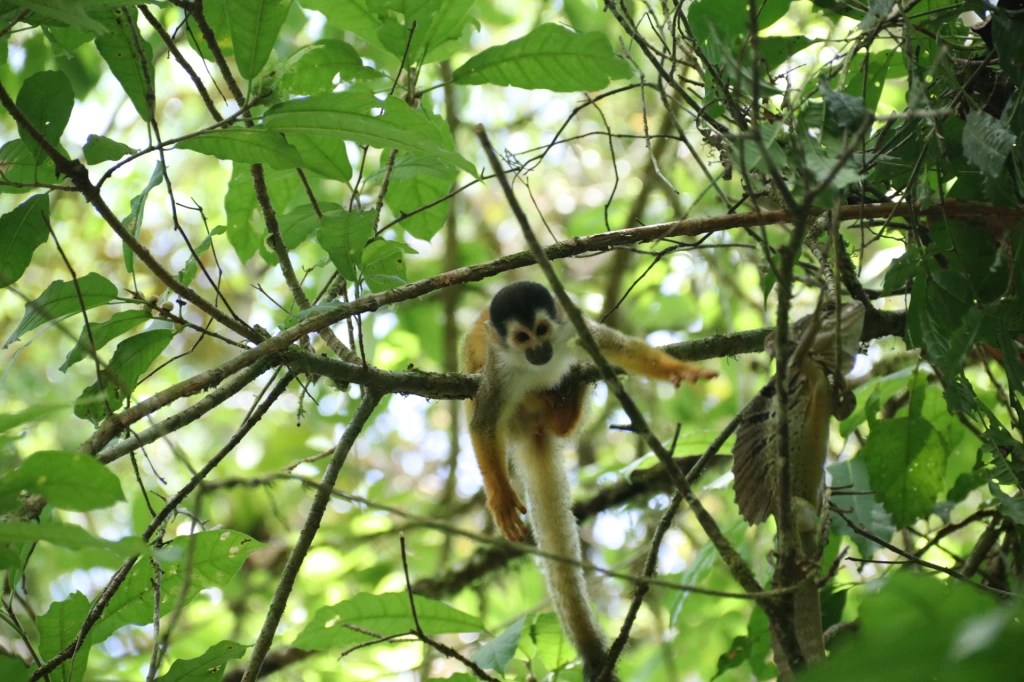
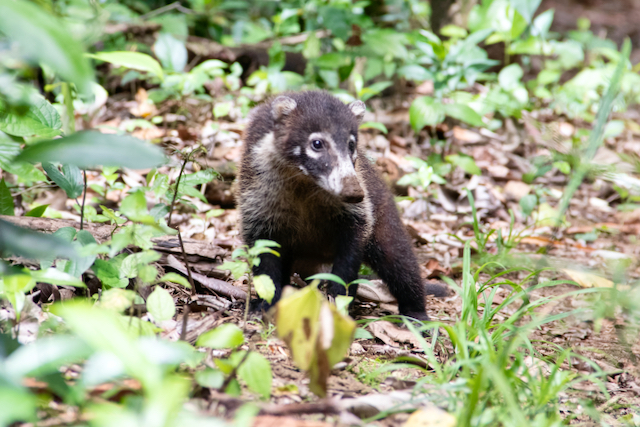
Take an organized trip to explore Parque Nacional Corcovado. As this is the most popular activity in Drake Bay many hostels offer this day trip for around $100pp. This is a really fair price, since it is one of the most bio-diverse and pristine places in the world and a ranger is required. The rainforest is home to a breathtaking range of wildlife, including the endangered giant anteater, harpy eagle, tapir, and felines like the jaguar, puma, and margay (can imitate monkeys to lure them in). From Drake Bay, you’ll take a 1 hour boat ride along the west coast of the Osa Peninsula to the Sirena Ranger Station park entrance. While on the water, be on the lookout for humpback whales or dolphins breaching and spinning in the ocean. After the wet landing (boats go in stern first and drop you a few feet from the beach), you’ll begin the rainforest journey. You may see capuchin, spider, and howler monkeys, as well as white-lipped peccaries, scarlet macaws, coati, and countless other birds and insects.
In the afternoon, set off on your own self-guided 10km beach hike from Drake Bay to San Josecito. The hike trail begins on the outskirts of Agujitas de Drake. You will have to walk down to the beach and head left, until you see the trail. To know you’re going right, you’ll see signs to “Playa Cocalito.” Portions of this trail cut right through the Punta Rio Claro National Wildlife Refuge, a large reserve that protects many of the same plant and animal species as the adjacent Corcovado National Park. Follow the route to see dream beaches, countless different trees, guacamayos and hanging bridges. About two hours into the hike, you will have to cross the Rio Claro. At low tide, this is as simple, at higher tides or after a recent rainstorm, however, the river will be much higher and you will have to cross by small boat. Luckily a local man named Ricardo offers to paddle people across for a small fee ($1-2), just blow the whistle hanging on the tree. About 20 minutes or so after the Rio Claro, you will finally reach Playa San Josecito. The hike will take between 2-3 hours one way, and you can go back with one of the tour boats from the beach or walk back yourself.
Day 4: Caño Island, Corcovado
Explore the waters of the Caño Island Biological Reserve on your snorkeling adventure. The half day trip costing 85$, starts at 7:30 am at Colorada beach in Drake Bay with a 45-minute boat ride to Caño Island, during which you’ll see many dolphins. After arrival, there are two snorkeling sessions, each roughly 45 minutes, during which you have a chance to see sea turtles, sharks and countless species of fish. After a short rest on the island, the boat departs on a 45 minute trip to San Josecito Beach for lunch. At 1:00 pm the boat leaves for a 15-minute ride back to Drake Bay.
- Drake Bay to Sierpe boat; 7:15a.m. ($15) and 2:30p.m. ($20), 1.15hr
- Sierpe to Palmar Norte (5:30a.m., 7:15a.m., 9a.m., 10:30a.m., 1:30p.m., 4p.m. and 6p.m) $1, 30 minutes
- Palmar Norte to Uvita (10:15a.m., 1p.m., 3p.m., 6:30p.m.); $5, 1hr
Note 1: We opted to take the boat from Drake Bay at 2:30p.m. and caught the 6:30p.m. bus from Palmar Norte to Uvita (we arrived around 7:30p.m. in front of the Pacifico Supermarket)
Note 2: Most accommodation in Uvita is located a bit up the hill, which will mean a walk uphill with your luggage. Depending on where you are staying, you might want to take advantage of the “cooperativo taxi”; local guys outside the Pacifico Supermarket offering rides for a small fee ≈$3.
Recommended accommodation: Cascada Verde hostel (≈$30 private room) – Amazing treehouse hostel located next to Uvita waterfall
Day 5: Uvita
Mario Ballena National Park was founded to conserve the abundant marine life in this coastal region of Puntarenas Province. The park attracts tourists from all around the world due to the famous “whale tail”, a surprising yet natural rocky sandy formation in the shape of a whale’s tail, around which humpback whales can be spotted between December and March as well as August and October. In addition to the humpback whale, species like the spotted dolphin, bottlenose dolphin, manta ray, hammerhead sharks, parrotfish and mackerel can be spotted.
The Whale spotting & snorkeling Tour departs from Punta Uvita around 8:30am and visits the great snorkelling treasures of the National Park: reefs of Ballena Island, Tres Hermans Islets and the Punta Uvita or Whale’s tail. This type of tour is offered by many hostels cooperating with local tour agencies, so its best to find out information directly from your hostel, especially about the probability to see whales. The price is ≈65$ and includes the park entrance of 6$. During the snorkelling, you can find parrotfish, butterflyfish, blue surgeonfish, and a great number of starfishes at a depth that ranges from 1 to 3 meters. However, of course the main attraction of the tour is trying to spot the humpback whale!
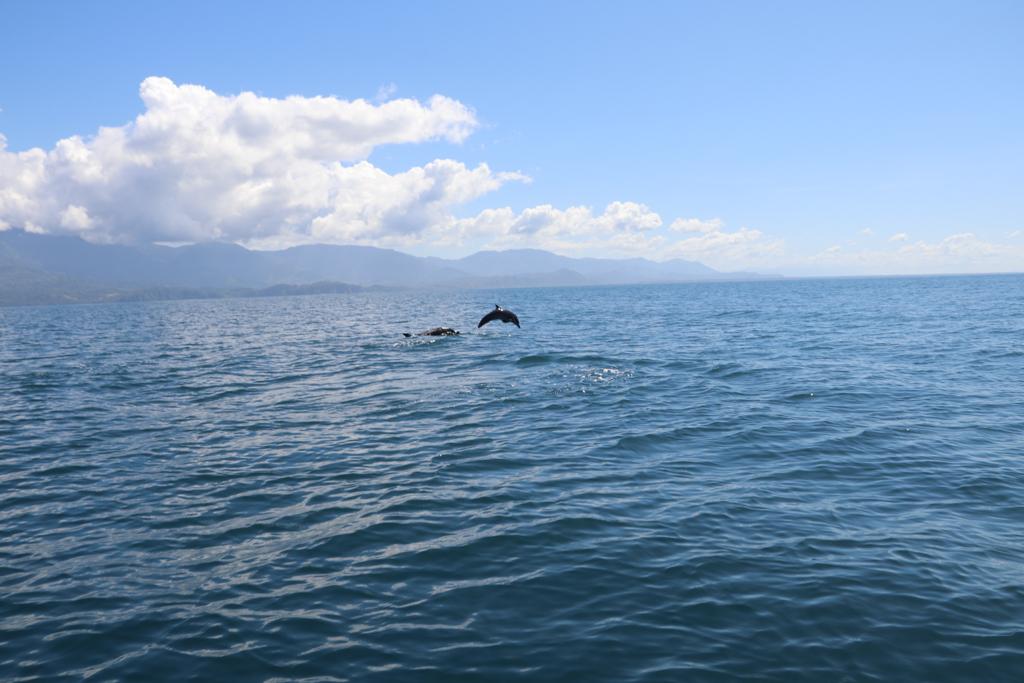
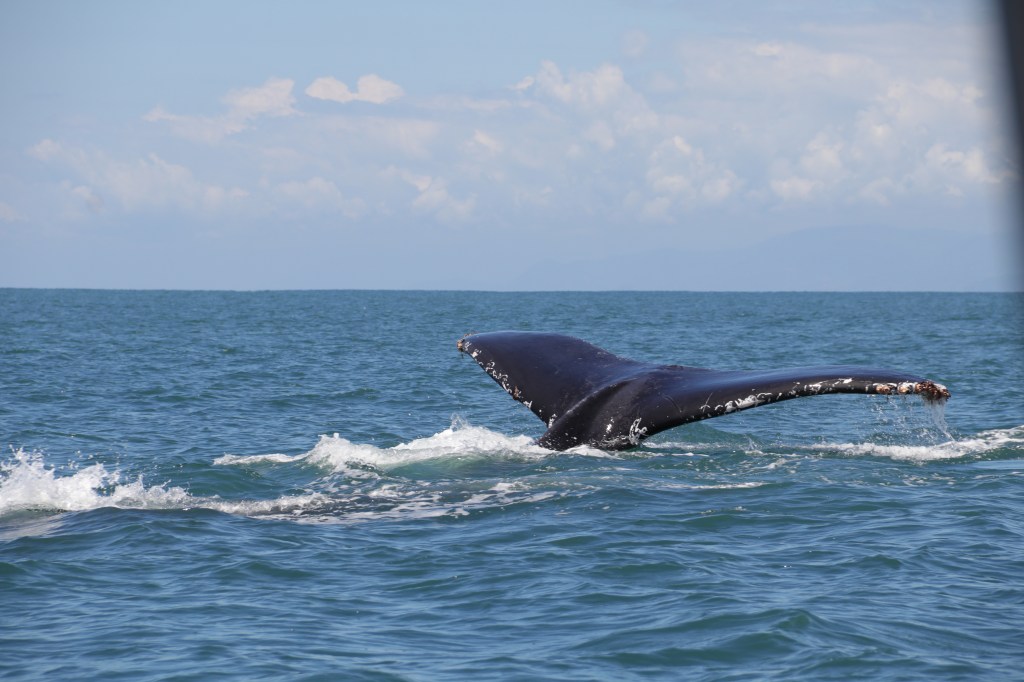
The tour lasts approx. 3.5 hours, after which you can opt to spend the rest of the day at Uvita Beach and walk onto the whale’s tail (after all your tour includes the park entrance fee already). If you prefer to continue spending the rest of the day in an active way, then Cascada Verde waterfall and other waterfalls in the Bamboo Forest area are a must. Hike up the hill, or take the cooperativo taxi and pay the small entrance fee of 1500colones to enjoy this natural waterfall (that you can even slide down, if you dare!).
Day 6: Dominical
Start today’s adventure early by catching the 6am bus toward San Isidro (bring your luggage), to discover Nauyaca Waterfalls. Get off at Nauyaca Waterfalls office (≈ 40mins) and choose the way you’d like to get to the falls (you can store your luggage). If hiking, the cost to get to Nauyaca Waterfalls by foot is $9. You can also buy any of their tours to the waterfalls, including horse-ride or 4×4 tours. The hike is 6km to the waterfall, and 6km back on the same route (≈ 3hrs roundtrip). The waterfalls themselves are absolutely beautiful, and worth every step of the hike. There are two waterfalls feeding into each other, one which you can swim in, both of which are absolutely awe-inspiring.
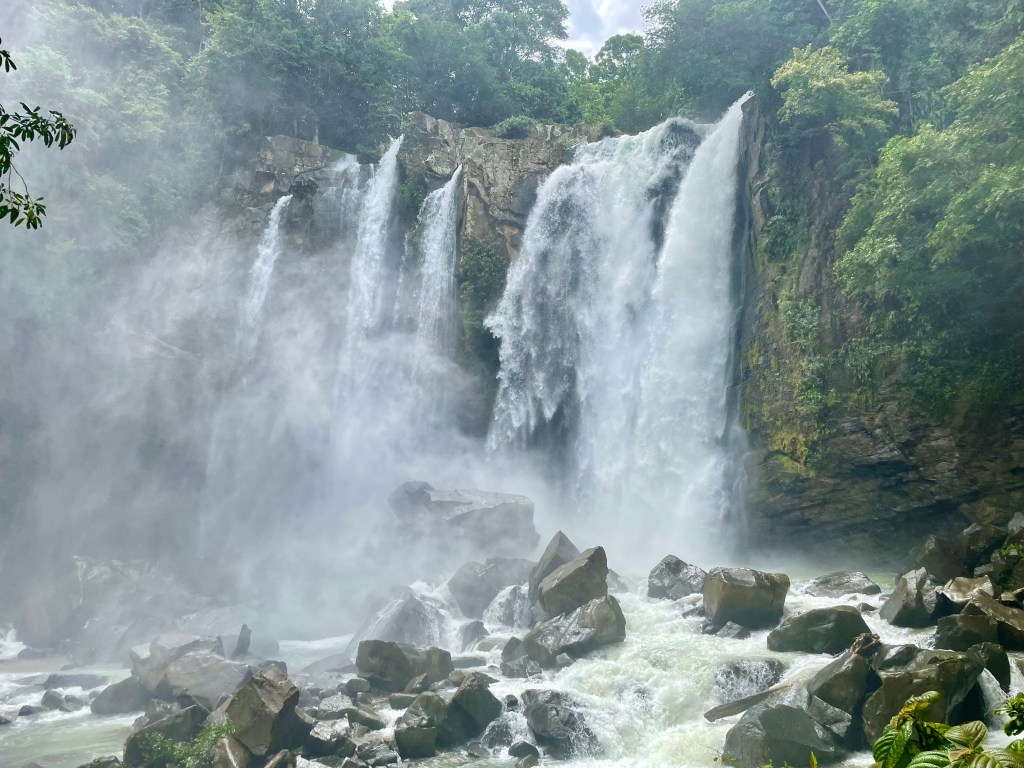
After your hike take the 12:15p.m. bus from the office to Dominical ($0.60; 20 minutes). Explore the surf town of Dominical and relax or surf at the beach. Catch the bus from Dominical to Quepos (3p.m., 4:15p.m., 4:35p.m. ≈ 1.15hrs) and check into your hostel for the evening.
Recommended accommodation: Hostel Plinio (16$/bed in 8 bed dorm incl. tax & breakfast) – Refreshing pool, clean kitchen, good wifi, big wooden dorm rooms w/ lockers and bathroom, lots of books, great chilling area (sofas, hammocks)
Day 7: Manuel Antonio
The town of Quepos could be described as the gateway to Manuel Antonio National Park. Quepos has a great selection of restaurants, bars, and souvenir shops. The streets of Quepos are easy to walk, with a mix of local shops, markets, and cafes. It is definitely cheaper and has a more local feel than the more expensive, touristic area closer to Manuel Antonio National Park.
From the main road leading from Quepos to Manuel Antonio wave down the local bus that goes regularly between the two areas. The journey takes approx. 15 minutes and costs 350₡pp. Trek into Manuel Antonio National Park, which is open 7 am to 4 pm but closed on Tuesdays. Admission costs ≈$18 and you must buy your ticket in advance on the SINAC website with a chosen entrance time (bring water, your swim stuff and a camera; no food, drones, cigarettes allowed). You can visit Manuel Antonio National Park with a guide or without a guide (we opted for self-guided). The hiking trails wind through virgin rainforest and over crystal-clear creeks.
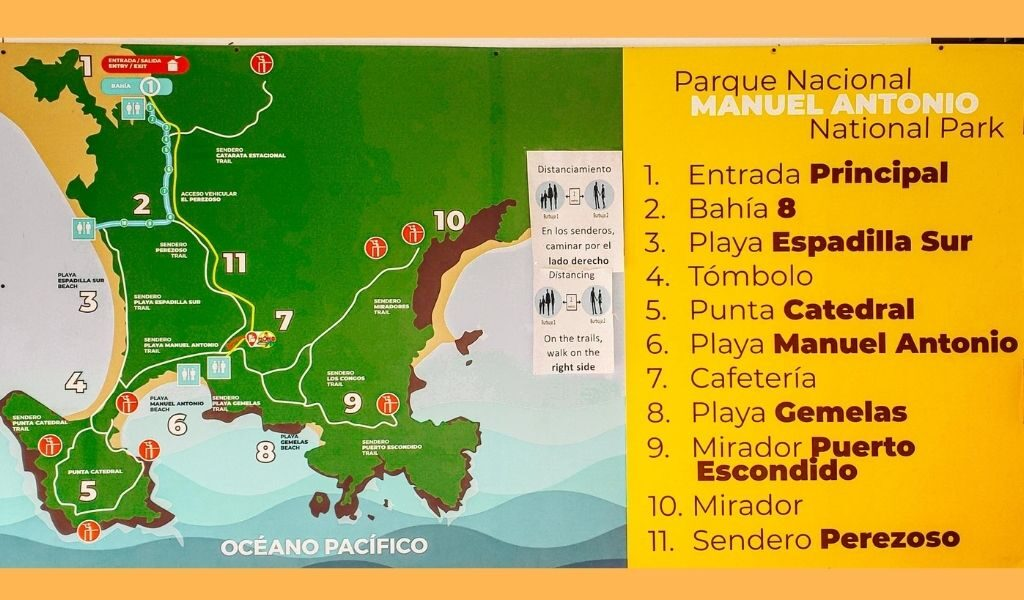
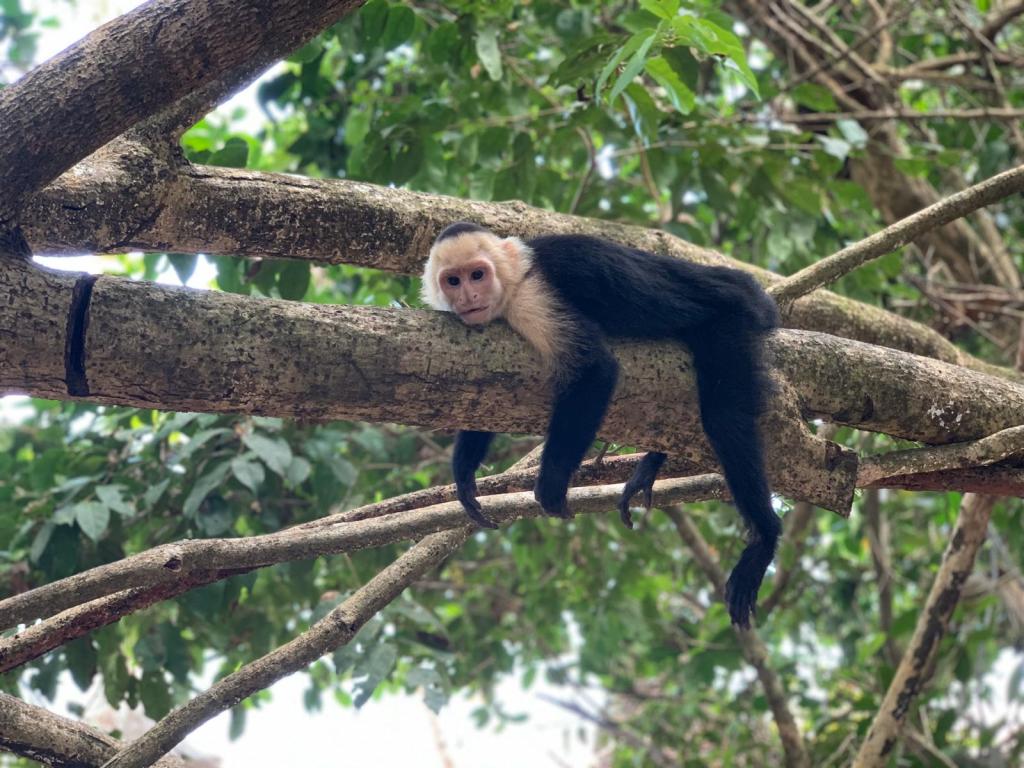
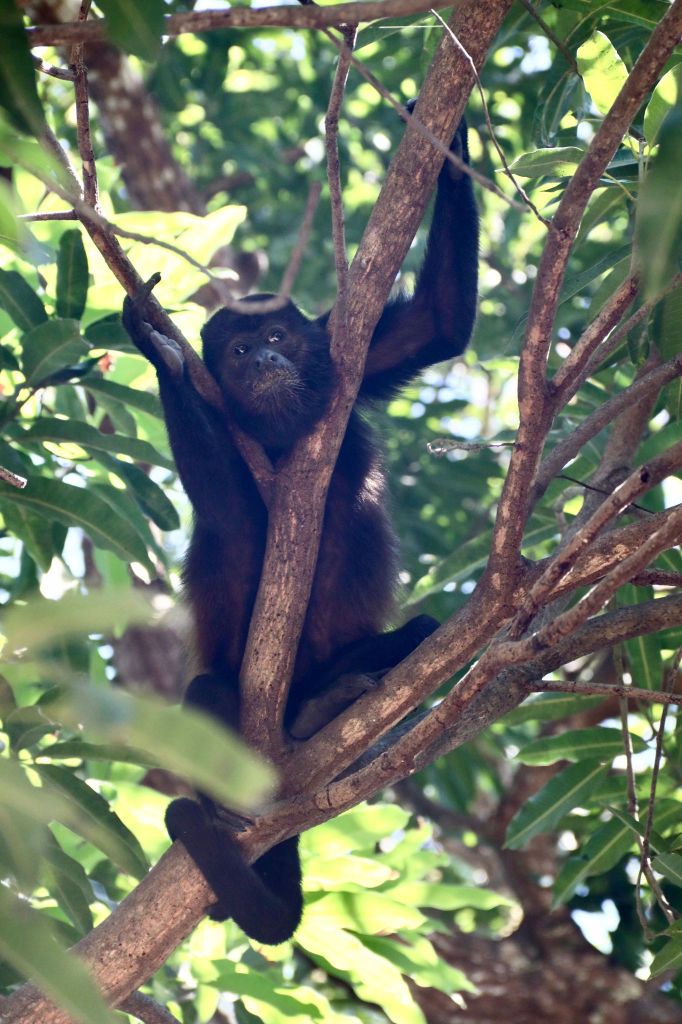
You will spot multiple monkey species on the trail (especially capuchins trying to steal your things), as well as sloths, coatis, toucans, and iguanas. For more information about animals in Costa Rica read our blog Top 5 Animals in Costa Rica. The national park also has two beautiful beaches that you can relax and swim at once you’ve enjoyed the trails. Head back to your hostel and go to one of the restaurants in Quepos or closer to Manuel Antonio National Park in the evening.
Day 8: Manuel Antonio
Spend the day at Playa Espadilla beach, a white sand, free public beach surrounded by palm trees and with a view on Manuel Antonio Park. It’s perfect for relaxing or taking up surfing!
Take the bus from Quepos to San José (2:45p.m., 4:45p.m., 5:15p.m.≈ 3hours). Check into your hostel in San Jose, preferably near the MEPE bus terminal.
Day 9: Puerto Viejo
Take the bus from San Jose Terminal MEPE to Puerto Viejo de Talamanca (6a.m., 8a.m., 12p.m.≈ 4.5hours). If you take the earliest bus you’ll arrive around 10:30a.m. Drop off your luggage at your hostel and explore the charming town lying on the Caribbean sea, lined with souvenir shops and local Caribbean style restaurants. It has a “historical” nucleus made up of a group of inhabitants of Afro-Jamaican origin, mostly hunters and fishermen, who settled in the rainforest in the first half of the 19th century, when there was still no connection with the rest of the country.
In the following decades, the profitable cocoa crops made this small town wealthy as well as a large area of the Caribbean, but the subsequent introduction of the intensive cultivation of bananas by multinational companies quickly upset local productions, changing the social fabric and the very shape of the territory. The entire coastal area, which goes from Cahuita to Manzanillo and known as “Caribe Sur”, is articulated on a narrow strip of land about twenty kilometers long and the impact of the “built” on the territory, very rich in vegetation, is still modest and all in all acceptable .
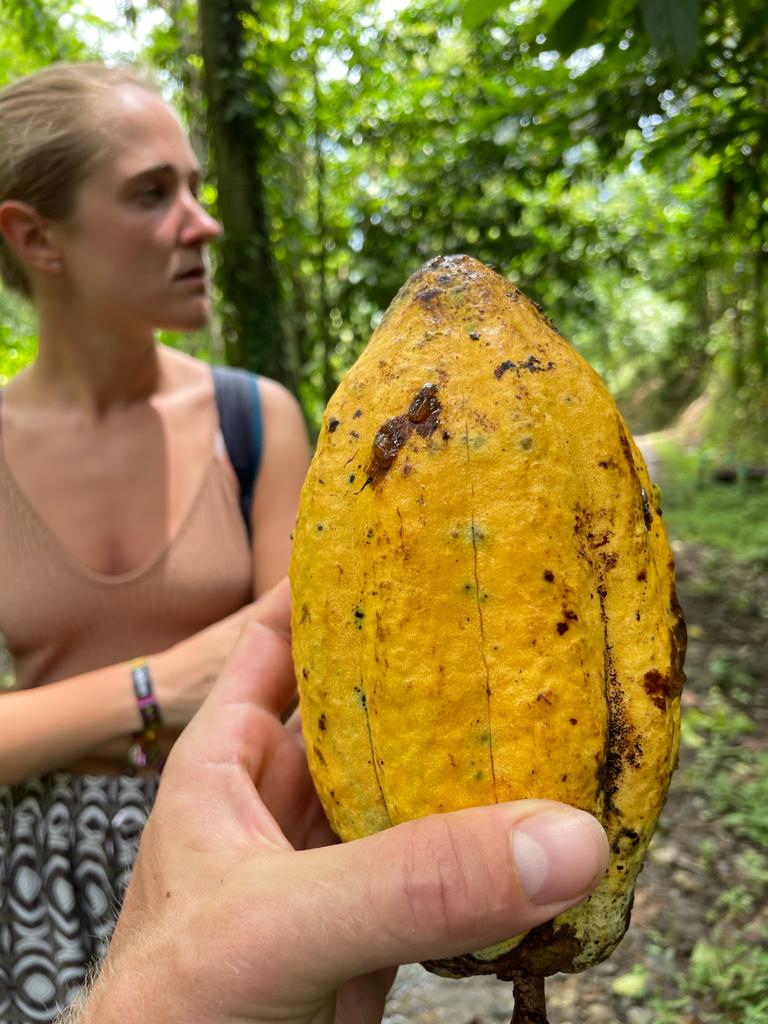
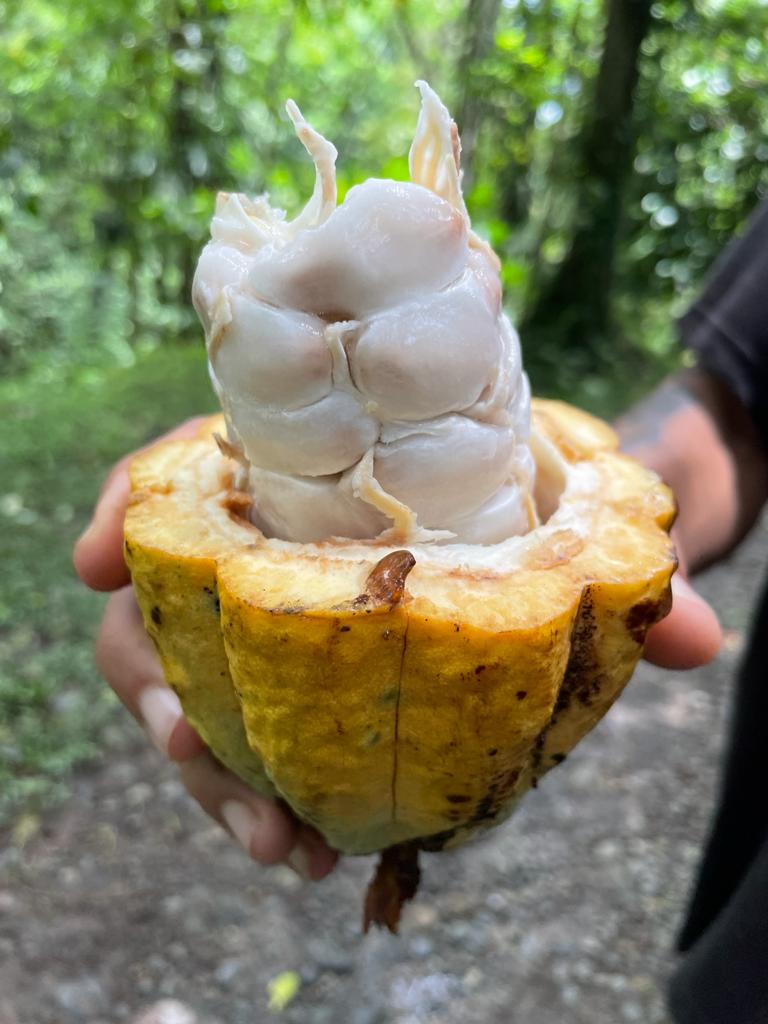
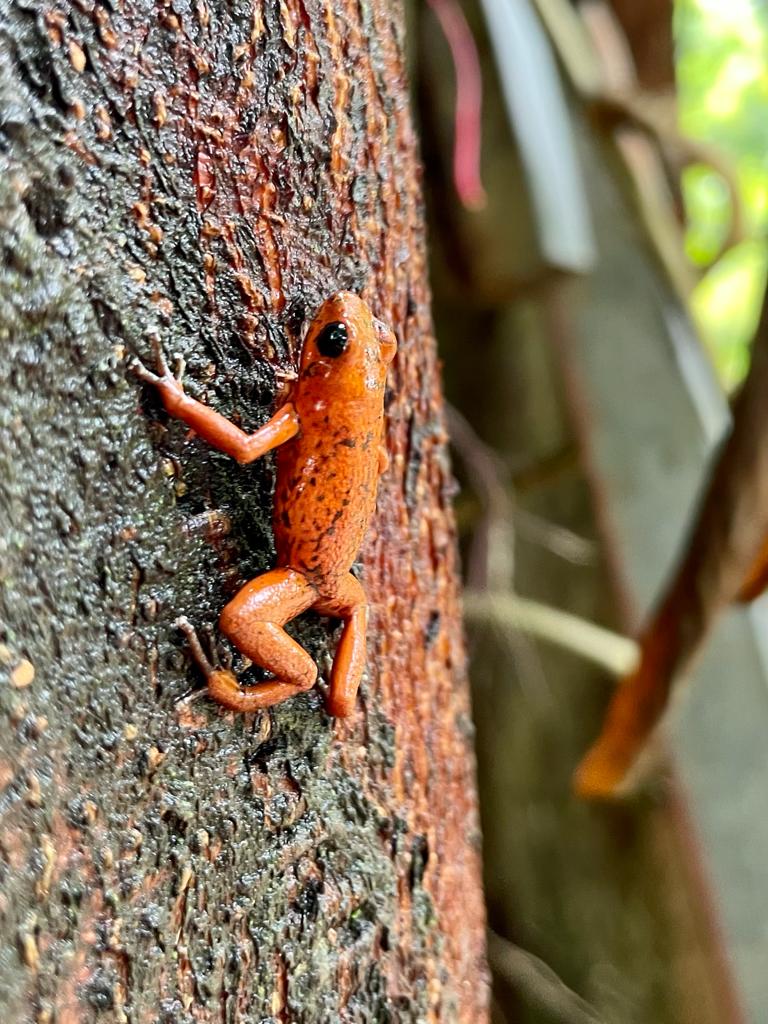
Go to the beach to relax and soak up the sun. Head over to Caribeans Coffee Shop (closed Sundays) for 2p.m. for a Chocolate Tour ($32pp). Hike through a sustainable cacao forest, taste the fruit of the cacao tree harvested from the cacao farm, discover the bean to bar process at the chocolate workshop and to finish off by taste testing the chocolate with amazing ocean views. This is a walking/hiking tour which last 2 hours, appropriate footwear is recommended and some physical exertion is required. Keep your eyes open for strawberry dart frogs!
Finish the day off by hitting the waves at Playa Cocles, either by renting a board or taking a surf lesson. It’s just a 15-minute walk from the center of town, and offers strong waves for intermediate and advanced surfers. Beginners can surf here with the help of an instructor.
Recommended accommodation: Oasis (39$/double room incl. tax) or Roots (46$/double room incl. tax)
Day 10: Cahuita
The daily tour at the Jaguar Rescue Center is unlike any animal experience you’ve had before. World-class educational tour guides will bring you in close proximity with monkeys, wild cats, sloths and more. The 1.5 hour tour is at 9:30a.m. or 11:30a.m. and costs $23. We saw toucans, baby sloths, a margay, a booby, a white-tailed deer (the national animal of Costa Rica), green and red scarlet macaws, owls and parrots. You may take pictures OF the animals but pictures of human to animal contact are against the Costa Rican Law. For more information about Costa Rican wildlife read our blog Costa Rica Wildlife.
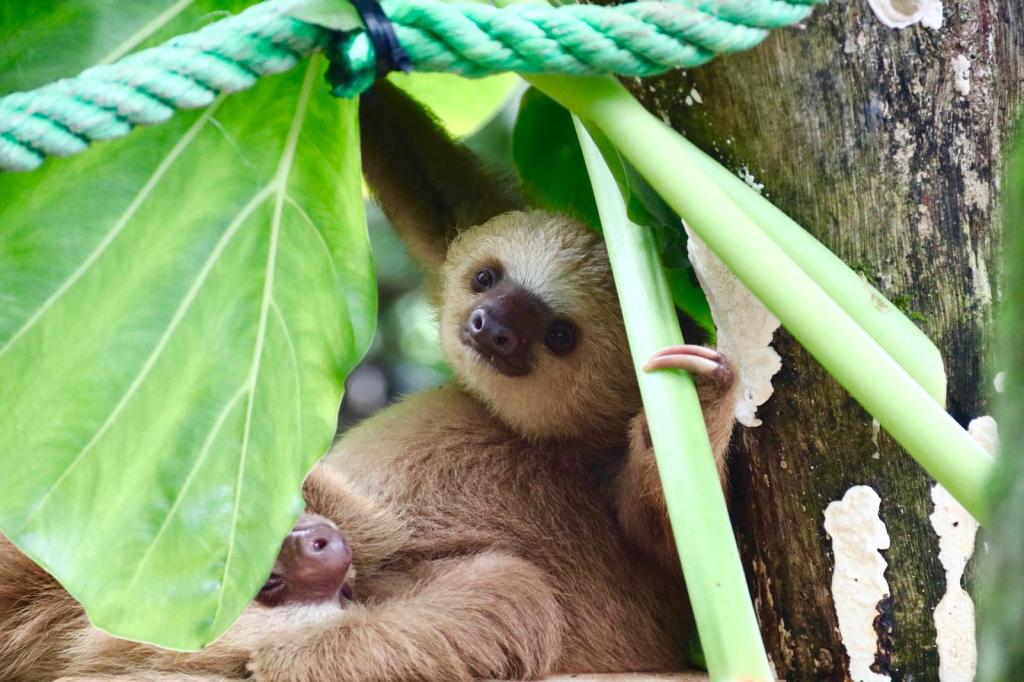
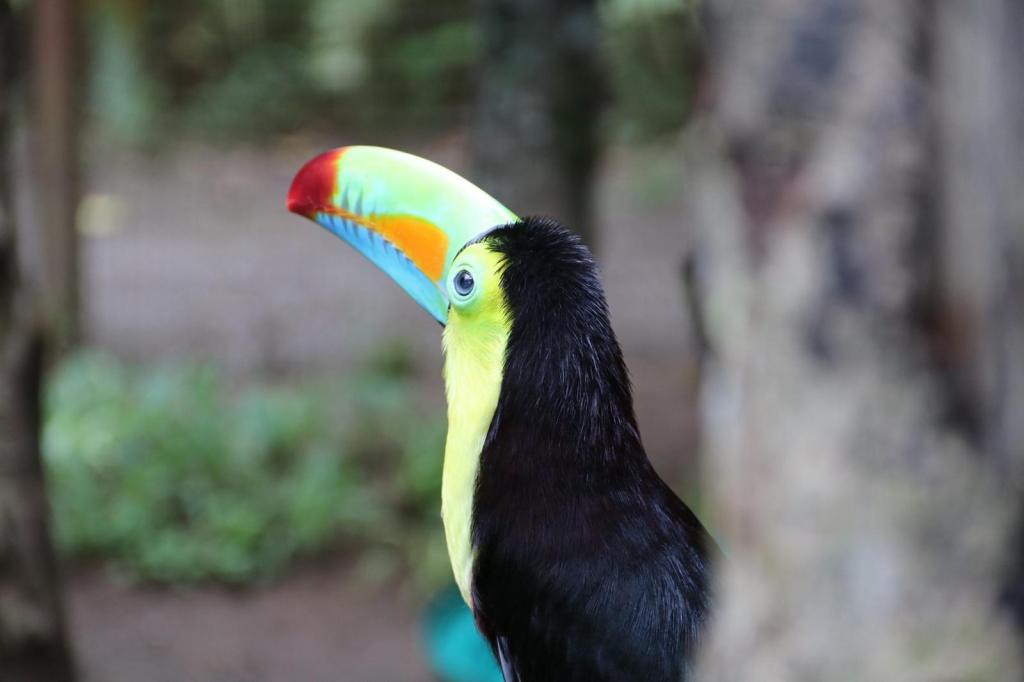
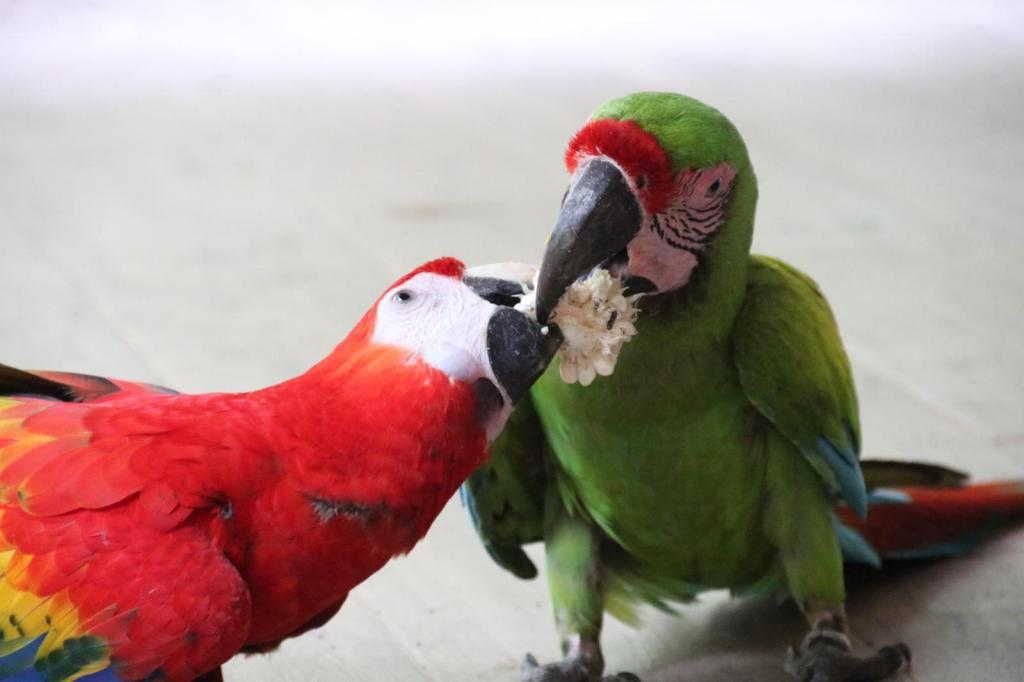
Established in 2008, the JRC is a organization dedicated to helping animals in need. With uncompromising care and love, the JRC rehabilitates injured, sick and orphaned animals and releases those who are restored to good health back to their natural habitat. Through educational outreach, the JRC provides environmental awareness, promotes a harmonious relationship with native wildlife, and encourages the community to protect our delicate ecosystems.
The name “Jaguar” Rescue Center comes from one of the first calls for help, the founders Sandro and Encar received from a man who had found a large wild cat in distress and who mistakenly identified it as a Jaguar. It was actually a large female Ocelot who was unfortunately showing signs of having been poisoned. This inspired the duo to help animals in distress. To this day the JRC has never actually cared for a Jaguar.
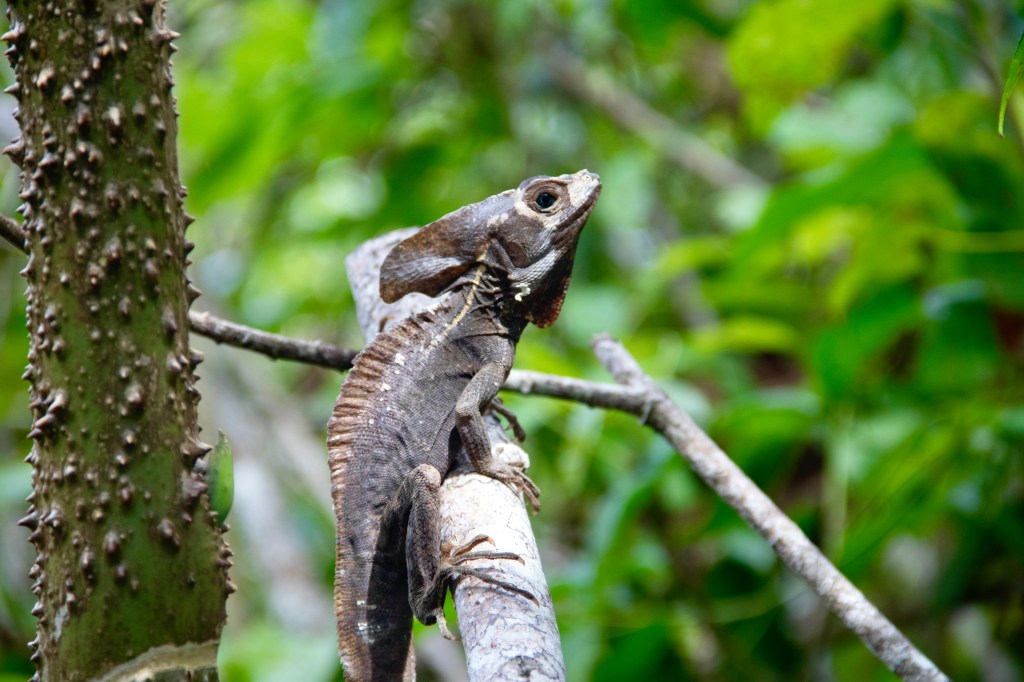
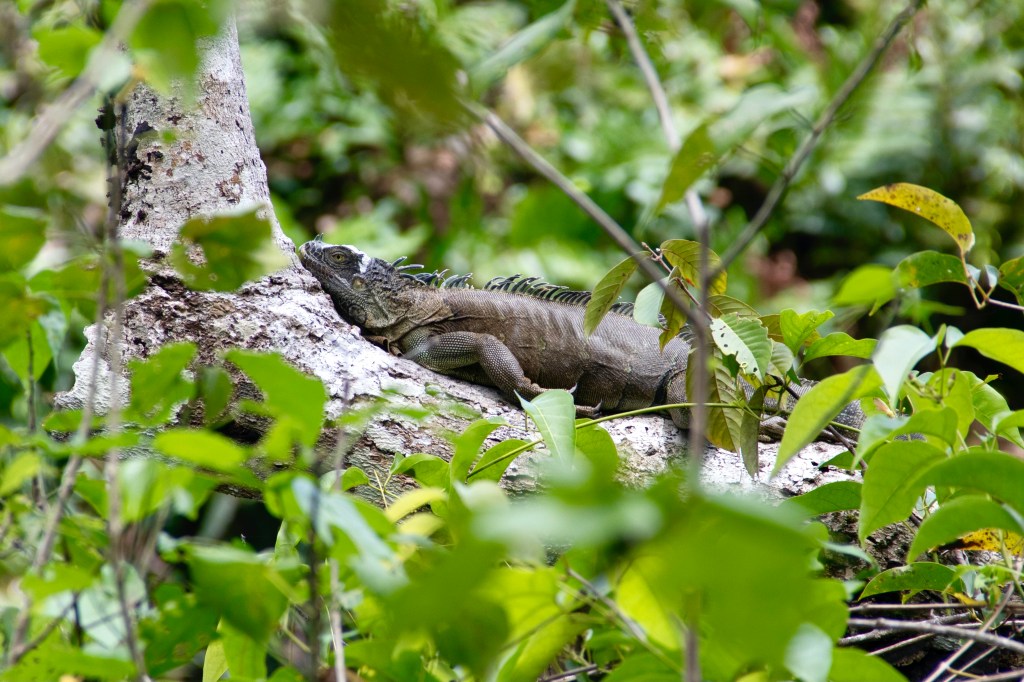
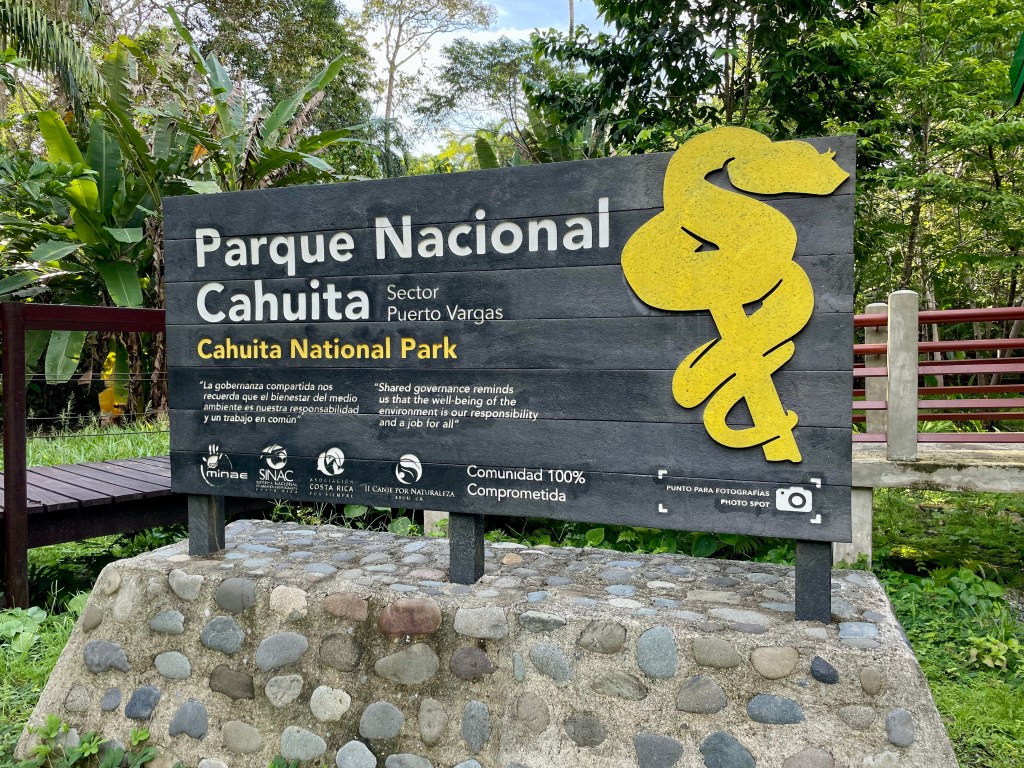
After your tour of the JRC, which will end around 11a.m. if you opted for the first tour, take a 30 minute bus ride towards Cahuita. Get off at the north entrance to Cahuita National Park which is free (south entrance has a fee), you can give a small donation if you’d like. Explore the park on your own, in search of more wild animals; sloths, iguanas, monkeys and snakes. The park was established in 1970 to protect a large coral reef off the Caribbean coast. Unfortunately the reef is struggling for survival. In the dry season (December – April), there is good snorkeling during which you’re likely to see light yellow brain, elkhorn, and blue staghorn corals, sea fans, and gorgonians as a back drop to the more than 500 species of fish that live on the reef.
Day 11: Tortuguero
How to get from Puerto Viejo to Tortuguero?
- Puerto Viejo to Limon; 5:30a.m., 6:30a.m., 7:30a.m. ($3, 1.5hours)
- Limon to Guapiles; 7a.m., 8a.m., 9a.m., 10a.m. ($4, 1.5hours)
- Guapiles to Cariari; 6a.m. every 20 minutes ($1, 45mins)
- Cariari to La Pavona; 9:30a.m., 12p.m., 2p.m. ($2, 1.5hours)
- La Pavona to Tortuguero by boat; 6a.m., 11a.m., 12p.m., 3p.m. and 4:30p.m. ($5, 1hour)
Note: The canals are very curvy and you can get wet. Keeps your eyes open for iguanas, caimans and birds.
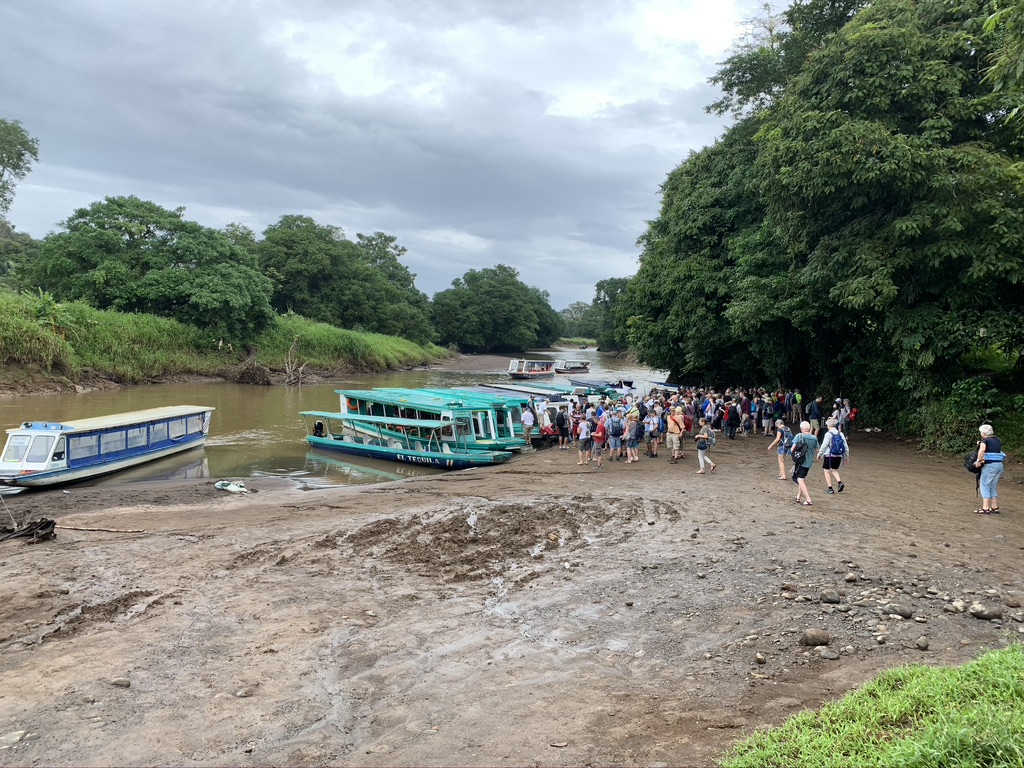
The town of Tortuguero is a small village with a population of approx. 1.500 people. Due to the ban of cars and scooters, it is a super tranquil place that offers everything from 3 supermarkets and multiple B&B’s to a couple of restaurants and beaches. You see more locals “ticos” than tourists in the streets – which is due to the inconvenient way of getting there (only a 30 min expensive flight from San Jose is another option). Check into your hostel and then go explore the beach and town and try some local food. We recommend pechuga (fried chicken), papas (fries) and fried patacones. Find out more about local Costa Rican food in our blog Top 5 Foods in Costa Rica.
What’s special about the beach in Tortuguero?
Swimming is strictly prohibited at the beach in Tortuguero. The strong currents in this part of the Caribbean Sea are quite important for the migration of turtles to the beach, but they are too dangerous for people. There are also crocodiles around the shore that might not be your best friend.
Recommended accommodation: Hostel Tortuguero 7BackPackers ($14/bed incl. tax & breakfast)
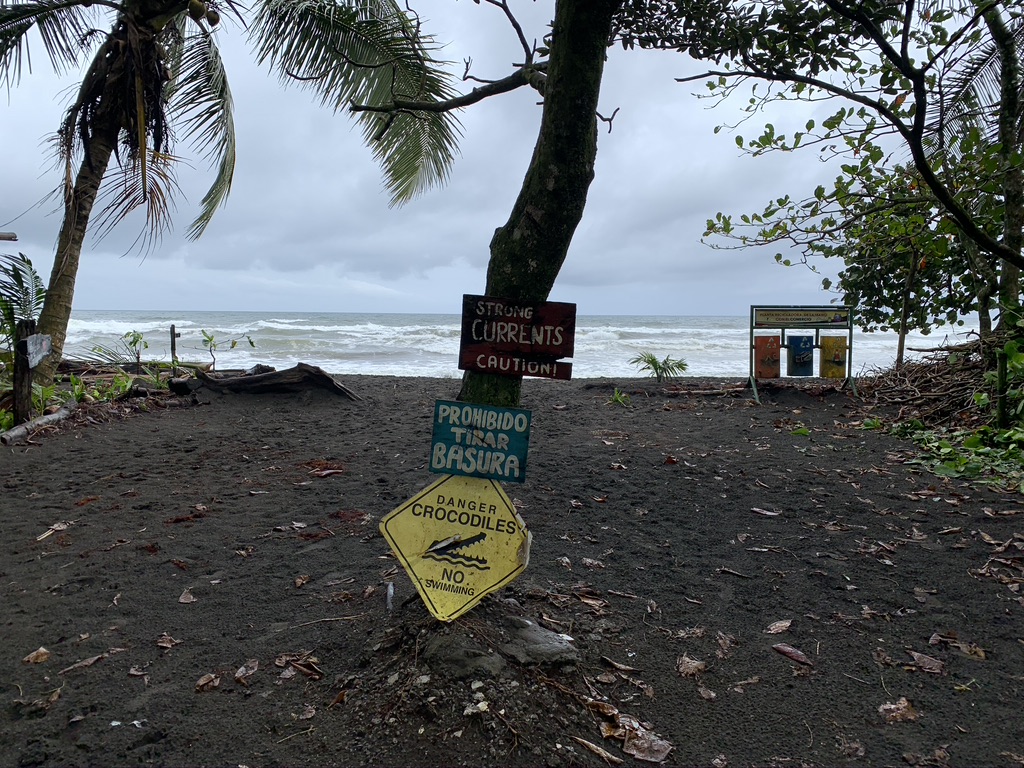
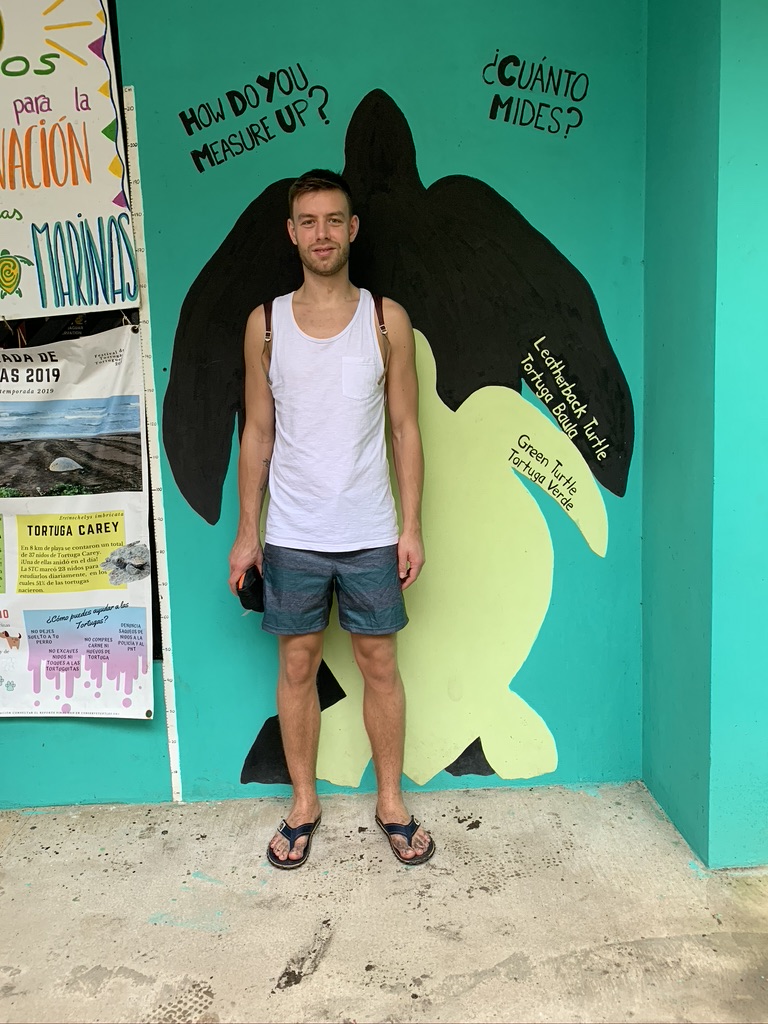
To learn more about the biotope in Tortuguero, take a walk on the beach to the Turtle Conservation Center. The different species of turtles, that come to the Costa Rican coast, nest between April and August. Every year it’s a spectacle that brings a high flow of tourists to Tortuguero to watch it.
Turtle nesting facts
- A baby turtle swims for the first six days (without stopping) after touching water for the first time. The proteins in the yolk give the baby turtle enough energy for its first trip.
- Female green turtles not only have an ability to locate a particular home nesting shore, but also tend to return again and again to the same part of the beach. During each breeding migration they generally nurse from 2 to 5 times, and intervals of about 12 days.
- An individual female never nests in consecutive years, most often returning at intervals of two, three or four years. The female turtle lays about 100 eggs each time she comes ashore. Incubation time is about 60 days and the sex of the hatchling is determined by the incubation temperature; the warmer the nest, the higher the percentage of females.
Day 12: Tortuguero
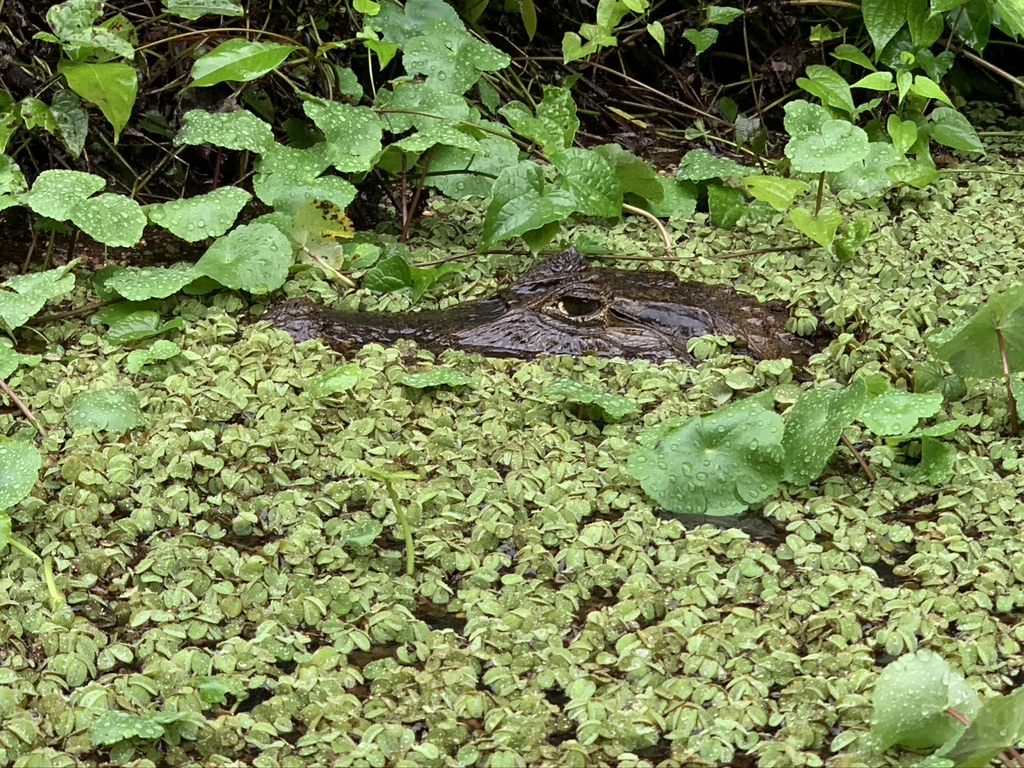
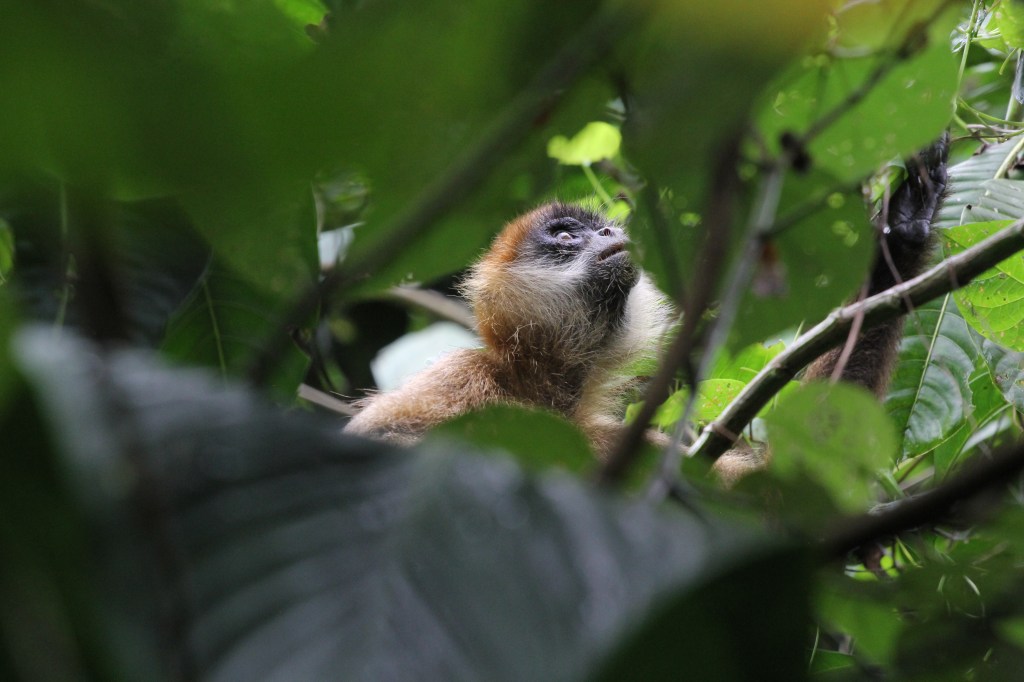
Start the day early with a 6am guided canoe trip around the waters of Tortuguero National Park ($25pp; approx 2.5 hours). We booked our tour through our hostel, and our tour guide Alex paddled the 6 person canoe around the rivers and between the mangroves and lush green trees; all we could see above our heads was the vast jungle canopy. We were able to spot tiger herons, collared aracaris (a type of toucan), kingfishers, green herons, anhingas, blue herons, Jesus Christ lizard (can run on water), iguanas, two toed sloths and howler monkeys (roaring in the rain), a caiman and a boa constrictor.
Heron fun fact: When young, the birds are white and after about a year their plumage turns a grey/blue color.
After returning to the mainland disembark the canoe and head back to your hostel for a hearty Costa Rican breakfast of Gallo pinto, scrambled eggs and sweet plantains.
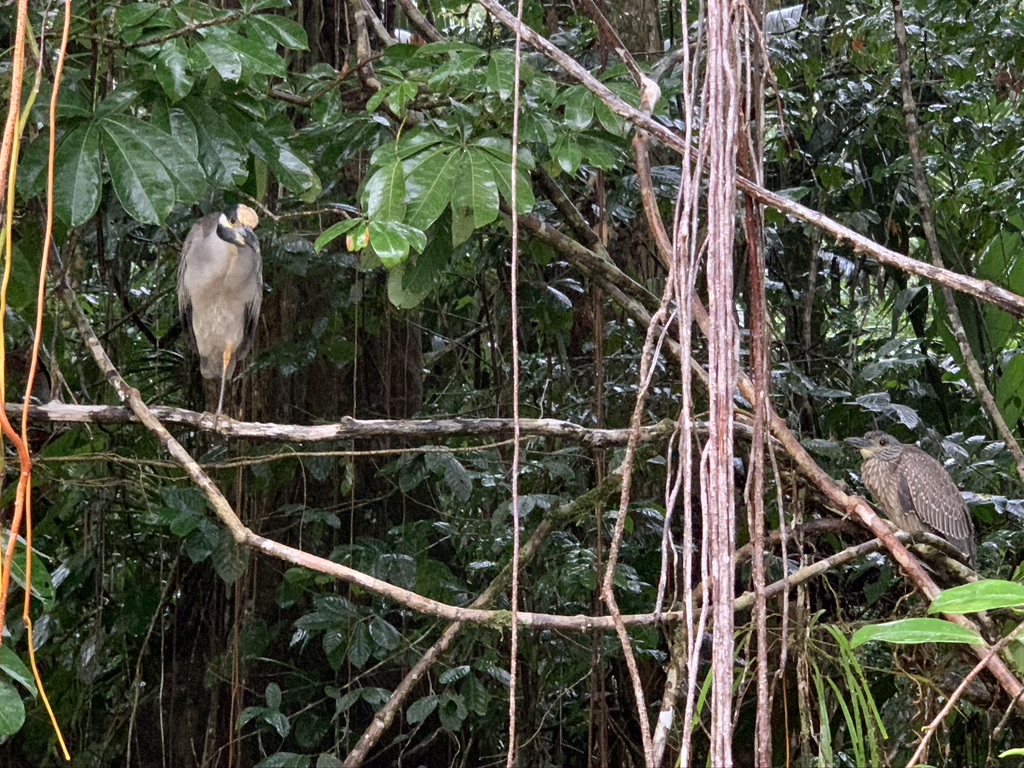
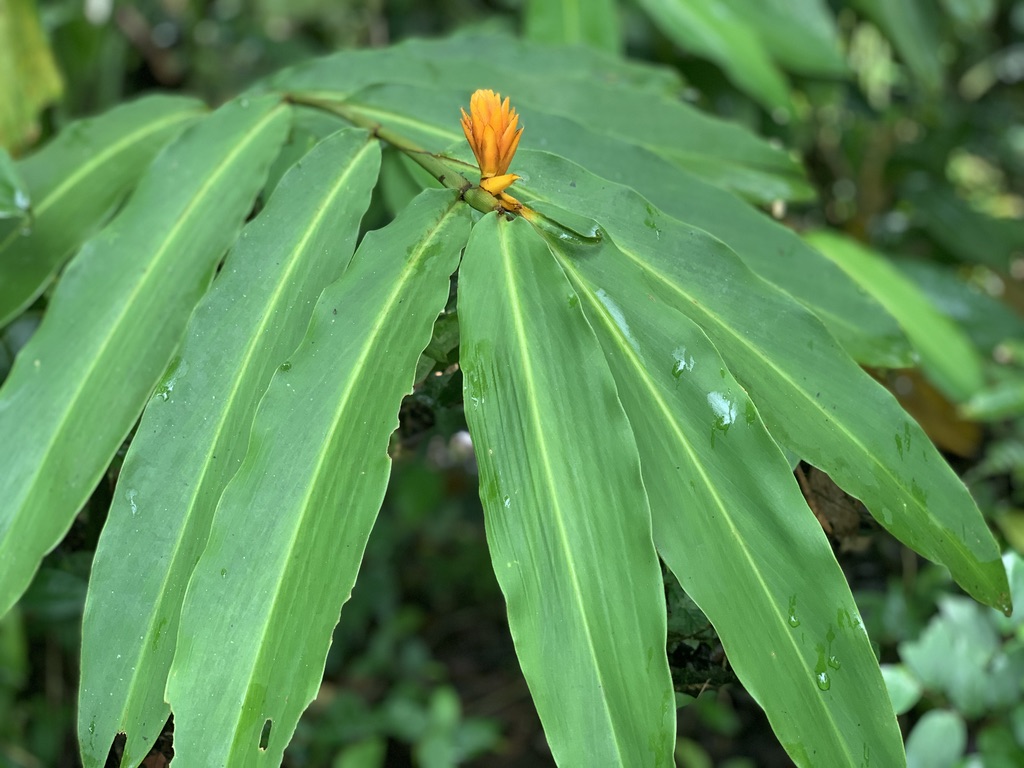
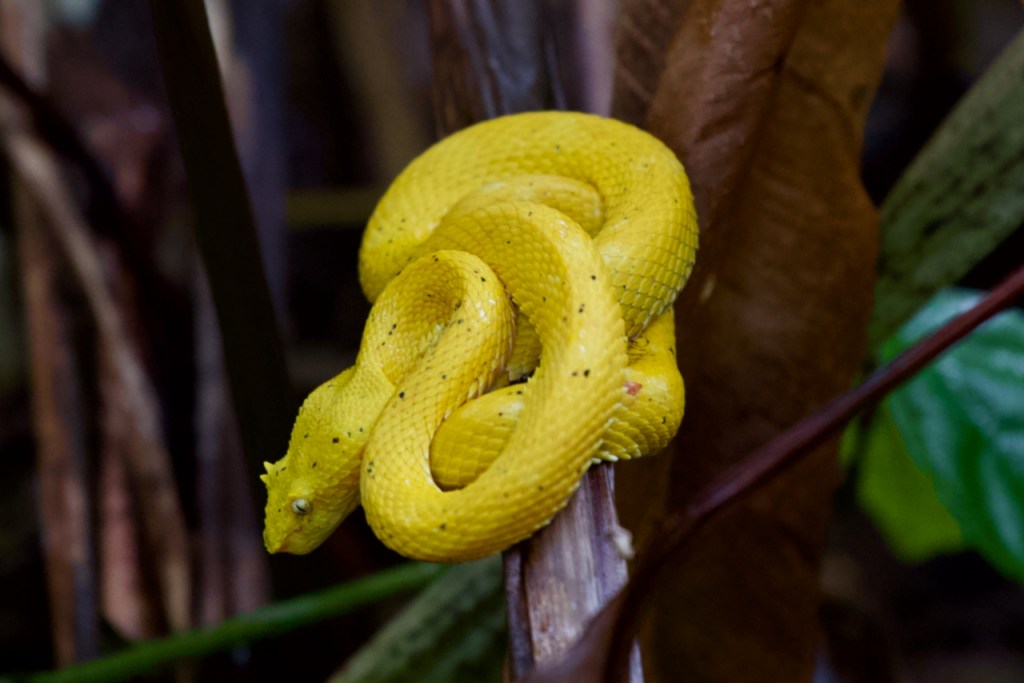
After filling your belly, set off to explore Tortuguero National Park, a wet tropical forest, home to 751 species of plants, 125 mammals, 375 birds, 104 reptiles and 65 species of amphibians and covering an area of more than 75,000 hectares. The price of admission is $15 and the park is accessible from 6a.m. – 12p.m. and from 1p.m. – 4p.m. You will have a chance to discover all sorts of species (such as monkeys, sloths, insects, snakes), just keep your eyes open, and look high AND low!
Day 13: Tortuguero
How to get from Tortuguero to San Jose?
- Tortuguero to La Pavona; 5:20a.m., 9a.m., 11a.m. ($5, 1hour)
- La Pavona to Cariari; 7:30a.m., 10:30a.m., 1p.m. ($2, 1.5hours)
- Cariari to San Jose; 9a.m., 1p.m., 3p.m. (2 hours) or bus first to Guapiles (buses from 5:30a.m. every hour to San Jose)
Recommended accommodation: Stray Cat Hostel (12$/bed in 8 bed dorm incl. tax & breakfast).
Day 14: Departure from San José
It’s time to say Adios to the “rich coast” and head home on your international flight. Take the public bus or uber to Juan Santamaria International airport.
 Two Shoulder Straps
One response to “Itinerary #2: Coast to Coast”
[…] If you want to experience both the Caribbean and Pacific coasts of this bio-diverse country while having a truly off-the-beaten-path nature excursion, then this two-week itinerary by bus is for you. You’ll explore the vastness of Corcovado National Park, go whale watching and dolphin spotting, explore the beaches of the Pacific and Caribbean coasts and discover 5 unique national parks spread across the country, offering a wide range of interesting species.Discover the Costa Rica from coast to coast! … […]
LikeLike